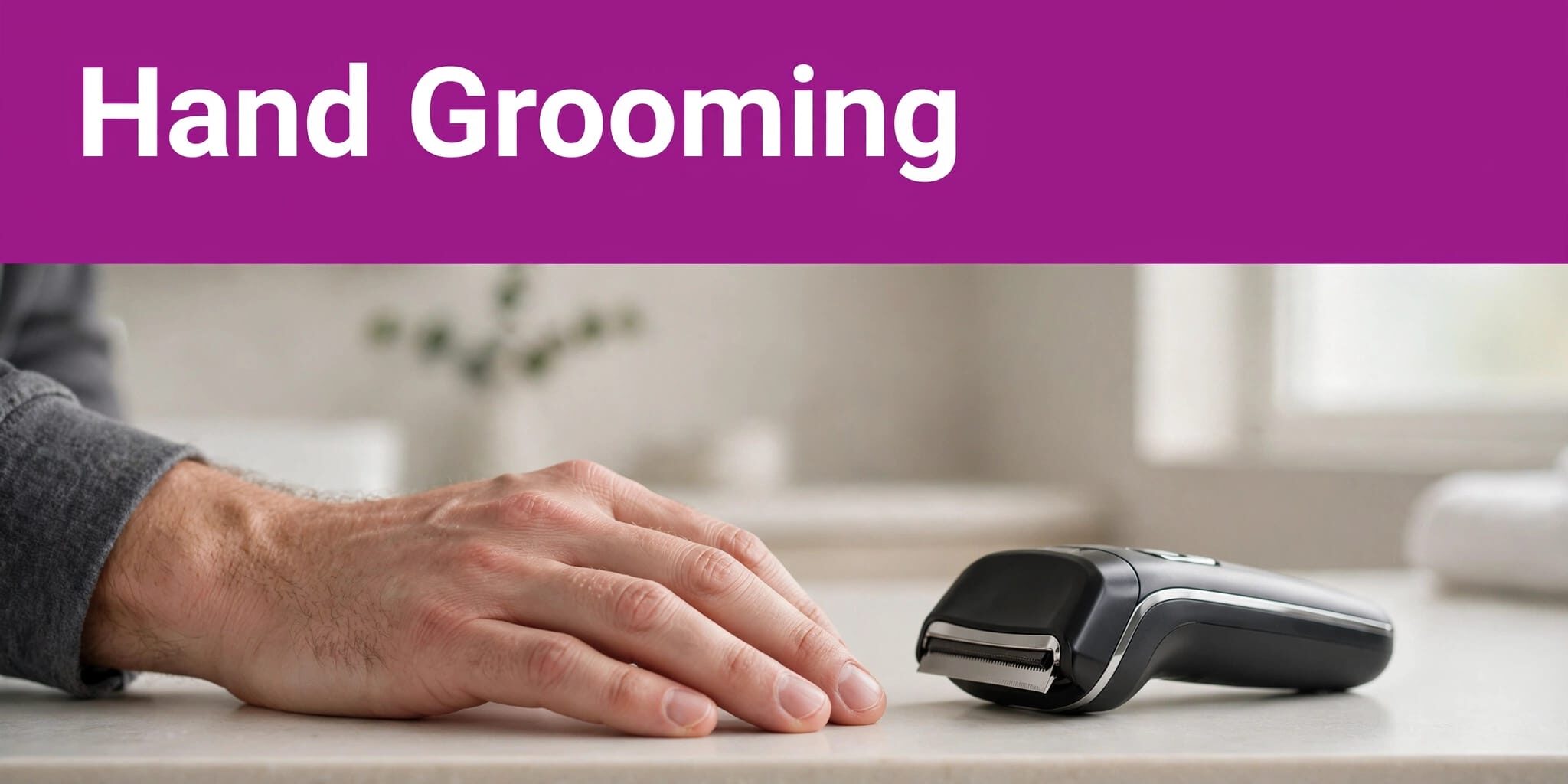
For men’s hand hair grooming, start with a guarded body groomer before you decide whether to shave. Use its guard for body grooming on the backs of your hands, and trim to leave some length and limit skin contact. Shaving gives a smoother finish, but may require more upkeep and care around fingers and knuckles.
Keeping the hair is also a comfortable choice. Start with your preferred finish, then choose a routine that puts skin comfort first.
Key Takeaways
- Begin with a longer guard and shorten gradually.
- Work carefully around knuckles, wrists and finger joints.
- Leave irritated skin alone and moisturize after grooming.
Choose Between Trimming and Shaving
Trimming reduces visible bulk without cutting body hair at skin level. We favor this approach for everyday men’s grooming, especially when close shaving causes discomfort.
Choose shaving when smooth skin is your priority. However, hands have small, uneven surfaces that need more attention than broad areas such as the forearm. Hair removal is optional, and ordinary washing is sufficient for hygiene.
How to Groom Hands and Fingers Safely
Prepare Skin and Equipment
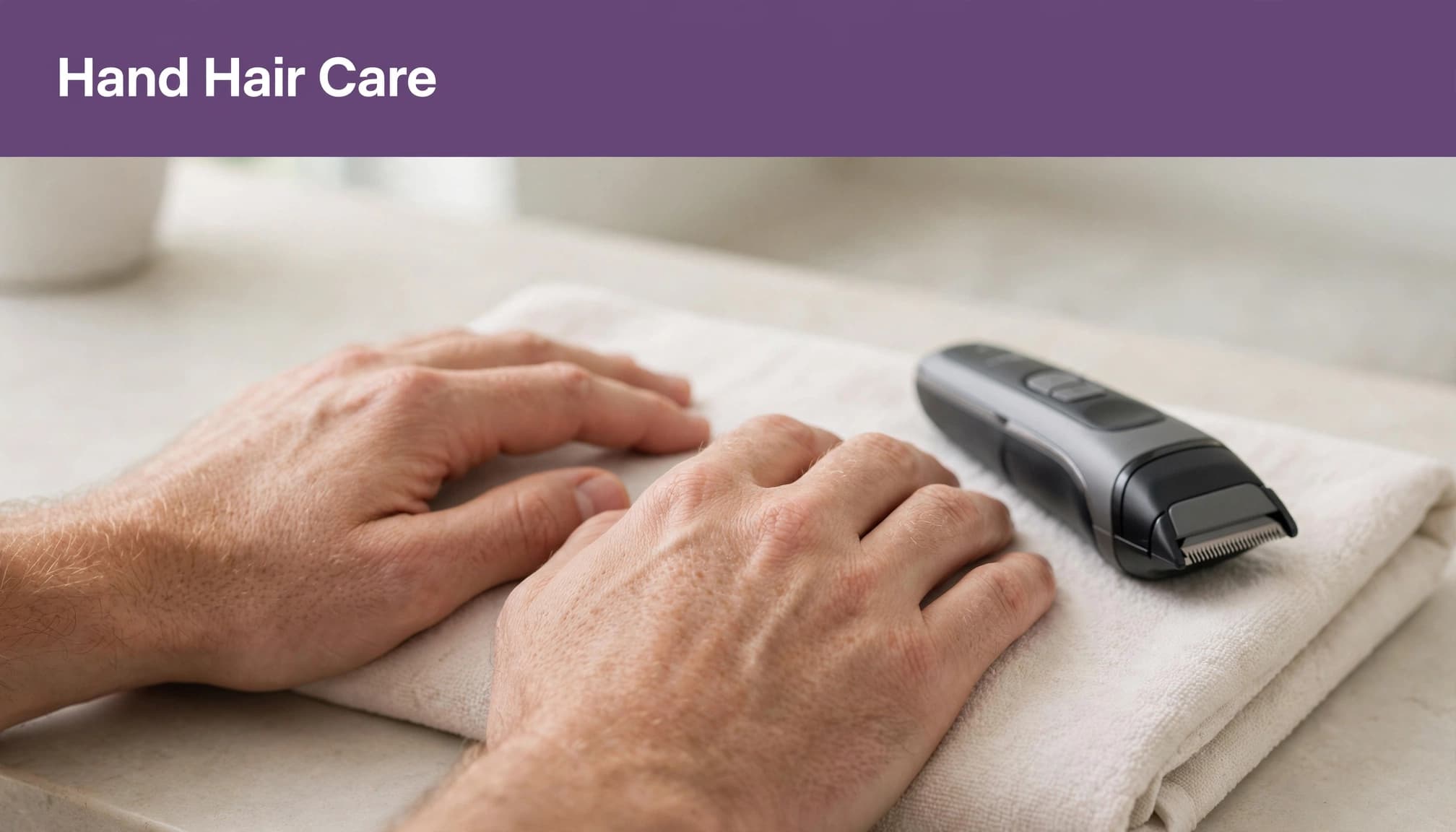
For men’s hand hair grooming, remove rings and watches, wash gently, and inspect your hands under good lighting. Leave cuts, cracked knuckles, and sore patches untouched.
Use a body-rated trimmer or guarded clipper with a secure comb attachment. Dry thoroughly before dry trimming, and use damp hair only when your device permits it. Guard numbers aren’t universal, so choose by the millimeter marking rather than assuming every #3 cuts alike.
Trim First, Then Shave If Desired
- Start with a longer guard and make light passes to trim the hair on the backs of your hands.
- Reposition individual fingers so you can see the cutting path. Avoid pressing the head into joints or dragging it across raised knuckles.
- Brush away clippings and compare both hands before shortening further.
- For a close shave, soften the remaining hair with warm water, apply shaving gel, and use short, gentle strokes with hair growth.
Cleveland Clinic’s shaving guidance recommends cream or gel to help the razor glide. Rinse between strokes, and stop rather than repeatedly working over a missed patch.
Blend Hand Hair Into the Arms
A softer transition at the wrist usually looks more natural than a sharp hairline. Shorten gradually rather than creating a bare band.
NIVEA recommends trimming longer arm hair first to help preserve razor sharpness, soaking in warm water, using shaving gel and moisturizing afterward. Its routine includes exfoliation with a loofah or scrub; we recommend avoiding abrasive scrubbing on sensitive skin.
For full-arm shaving, NIVEA advises the forearm first, elbow to hand, then the upper arm, shoulder to elbow. It describes stubble returning within days and recommends at least weekly shaving.
Reddit commenters suggest #3 or #2 guards, or 6 to 7 mm coverage. These are personal preferences, not interchangeable settings. Trimming can also tidy hair that overhangs narrow forearms without removing everything.
Other Body Areas Need Different Care
Manscaping methods shouldn’t be copied unchanged across every body area. Body hair texture, skin folds and your preferred finish all affect comfort.
Underarms
NIVEA links removing armpit hair with less trapped sweat and scent around apocrine glands, though body odor also involves skin bacteria.
Bakblade suggests shaving with the grain before a few strokes against the grain. We favor stopping with the grain when skin is sensitive. Its guide also warns that cuts in warm, damp, dark armpits can become infected.
Chest, Back and Legs
Bakblade says chest hair can feel rough within hours of shaving. Leg hair is generally less coarse, grows more slowly and may stay smooth for several days. Individual growth varies.
Its guide puts professional back waxing at $40 to $100 per treatment, not a price for our services. It recommends professional treatment to reduce problems such as ingrown hairs, acne and infection.
For depilatory cream, Bakblade recommends a patch test, then waiting a day or two before wider use. Follow the product’s application limits and body-area restrictions.
Groin and Genitals
Bakblade describes faster groin regrowth and suggests shaving every two to three days. That schedule shouldn’t override irritated skin.
For genital skin, its advice is to use a groin trimmer with a specialized head rather than a razor. We recommend a dedicated protective guard, clear visibility and leaving difficult folds untouched. A low setting doesn’t make loose skin safe.
Aftercare Helps Keep Skin Comfortable
Rinse away clippings and shaving products, pat dry, and apply a familiar fragrance-free moisturizer. Pause grooming if skin irritation develops. Clean equipment as directed, wash only washable parts, and dry before storage.
NIVEA lists irritation, ingrown hairs, razor burn, elbow nicks and dryness among arm-shaving drawbacks. Our guidance on preventing razor bumps supports gentler maintenance.
Cleveland Clinic’s ingrown-hair guidance recommends pausing shaving on affected skin. Don’t pick bumps; increasing pain, swelling or pus needs medical assessment.
Frequently Asked Questions
Will Shaving Make Hand Hair Darker or Thicker?
No. Shaving doesn’t change hair thickness, color or growth rate. The blunt cut end can feel coarser as it emerges, which explains the difference in texture.
Do Men Need to Remove Arm or Leg Hair?
No. Grooming is a personal appearance choice, and other people’s preferences vary. We recommend choosing the finish you find comfortable rather than following pressure to look hairless.
Keep the Finish Comfortable and Personal
A guarded trim is a practical starting point for tidier hands and fingers. If you prefer shaving, gentle preparation and fewer passes help protect skin comfort.
At Theresa’s Face and Body in Cape Coral, we offer personalized waxing and manscaping options. Call Theresa’s Face and Body for an appointment to discuss your preferred finish and suitable care.