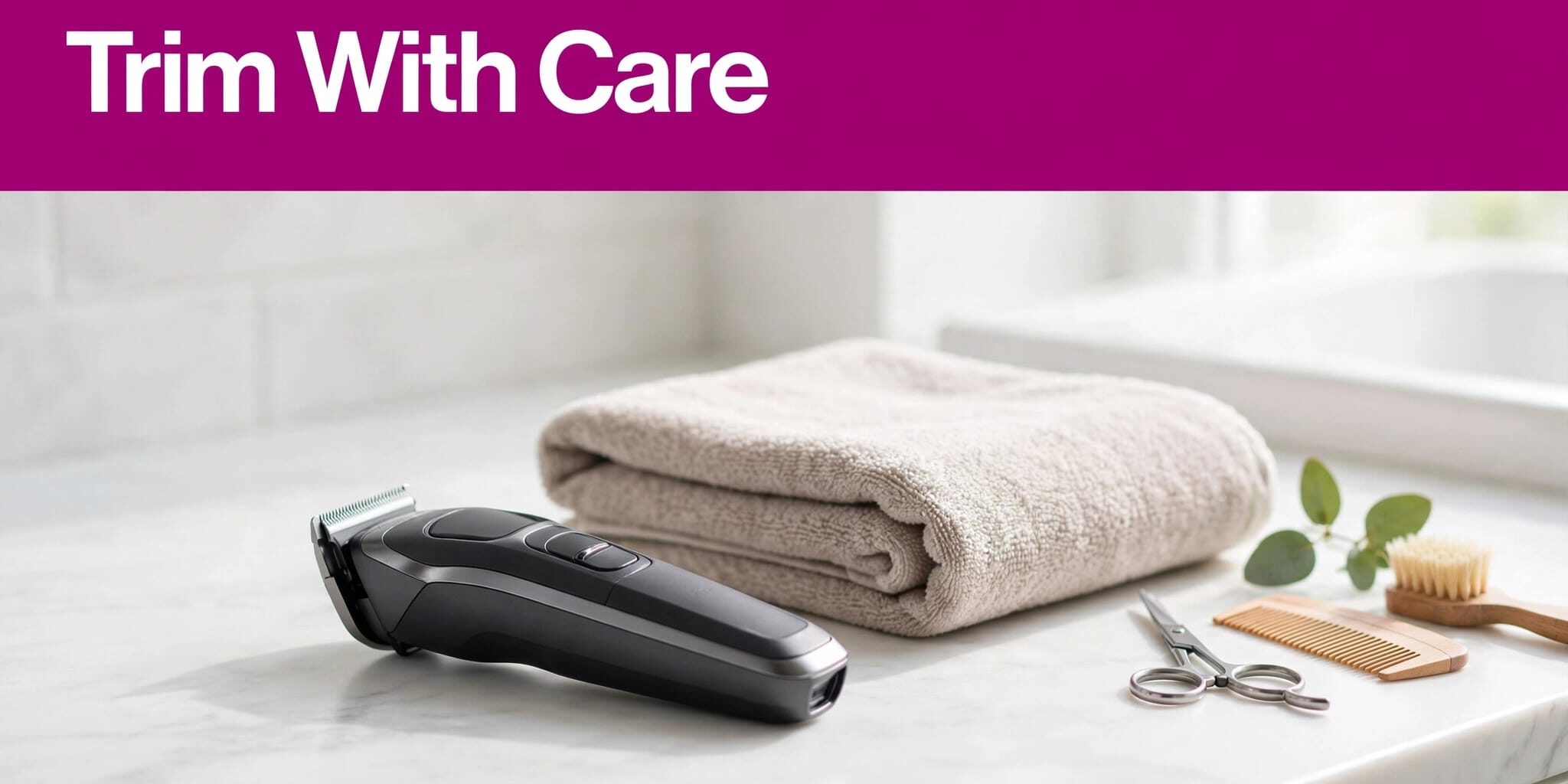
To trim pubic hair with less risk of nicks, use a guarded body groomer, leave some length, and work slowly. We recommend comfort before closeness, particularly around delicate skin.
Manscaping is optional, although 46.7% of men in a U.S. pubic hair removal study reported removing pubic hair during their lifetime. Start with clean equipment and a gentle routine that treats the main pubic area differently from the shaft and scrotum.
Key Takeaways
- Use a dedicated body groomer with a secure attachment, rather than bare blades or ordinary hair clippers.
- Begin longer and shorten gradually, keeping sensitive skin smooth and visible.
- Leave irritated skin alone, and give aftercare the same attention as trimming.
Choose Gentle Tools and a Comfortable Length
Guarded Body Trimmers
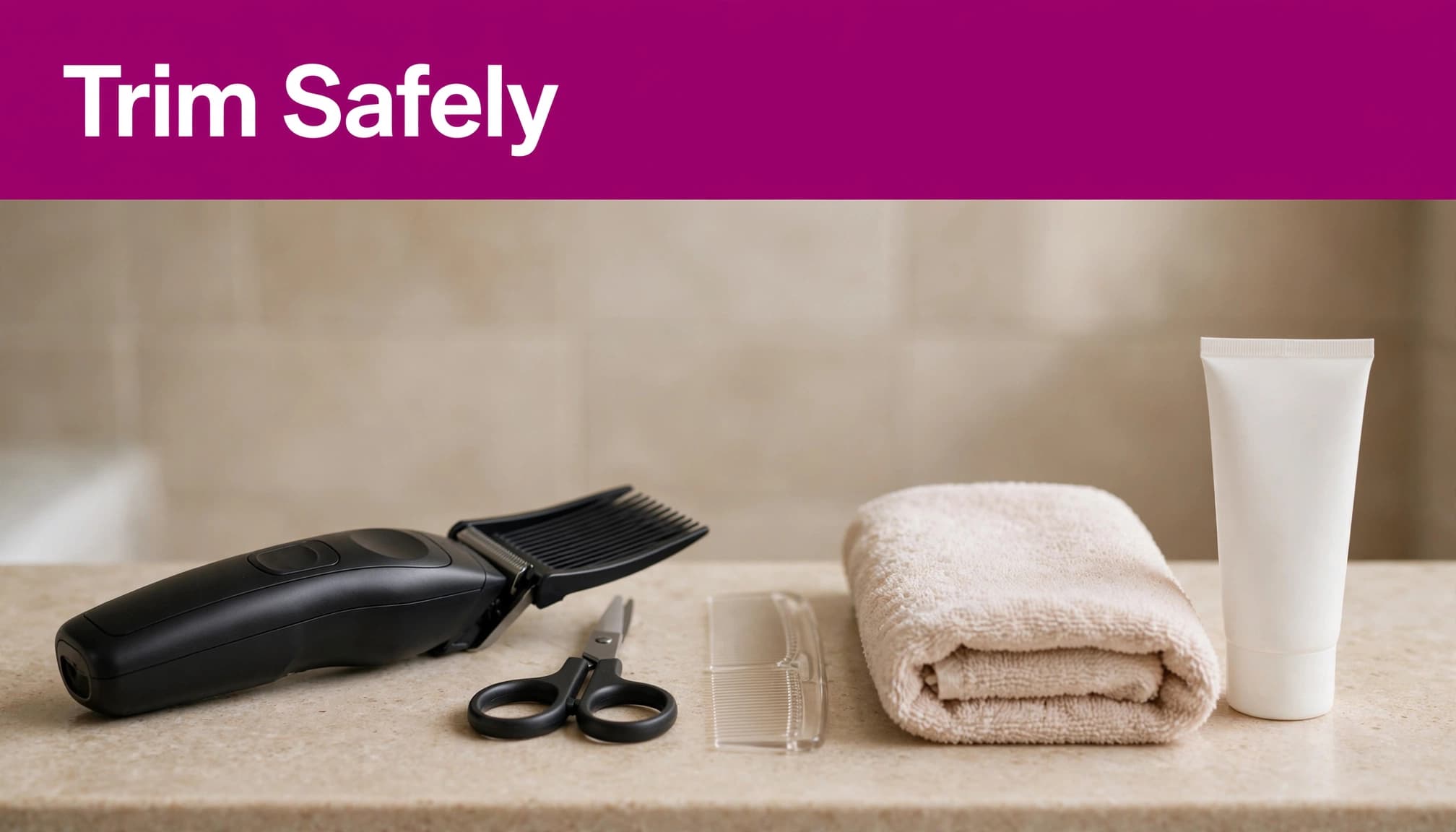
An electric trimmer or body groomer with an adjustable comb is a practical starting point for men’s grooming. Choose equipment intended for external intimate areas, with a dedicated cutting head rather than the attachment used on your face.
Start with a longer cutting length, such as a #4 or #5 where available. Guard numbers aren’t universal, so use the millimeter marking to understand the cutting length. Around 6 mm, approximately one-quarter inch, leaves visible coverage.
Our guidance on choosing a face and body trimmer explains attachment differences.
Scissors and Razors
Small, rounded-tip grooming scissors can shorten protruding hair on the main pubic area. Place a plastic comb between the hair and skin, then cut only the ends extending beyond it.
A dedicated razor gives a closer finish, but shaving adds opportunities for irritation. For a neat appearance without a skin-level shave, we recommend stopping after guarded trimming.
How to Trim Men’s Pubic Hair Safely
Prepare and Shorten the Main Area
- Take a warm shower or bath and gently wash the area. Warm water softens hair; avoid harsh scrubbing.
- Inspect the skin under good lighting, using a hand mirror if needed. Skip broken skin, painful bumps, active irritation, or signs of infection.
- If long hair needs shortening, use rounded-tip scissors and a comb to bring the longest ends toward one-quarter inch before closer grooming.
- Secure the longer guard and make slow, light passes with the grain, in the direction of hair growth. Use one hand to smooth the skin while the other guides the trimmer with light pressure.
Use damp hair only with a device approved for wet trimming. If your groomer requires dry hair, dry thoroughly after washing.
Keep the cutting head against the surface without pressing. Stop if hair pulls. Switch off the trimmer before clearing trapped hair, and rinse only washable parts.
Protect the Shaft and Scrotum
Loose scrotal skin can catch between blades, even when a guard is attached. Never run a naked trimmer blade or high-speed clipper directly across it.
Only use a head and protective guard intended for this area, keeping the skin gently taut and the cutting path visible. Even a very short guard doesn’t remove the risk. Leaving this hair untouched is a reasonable choice.
Near the penis, a plastic comb can shield skin while scissors shorten projecting ends. Don’t cut blindly, point scissors toward skin, or chase hairs along folds. If you can’t see the cutting path, stop rather than trim.
The attachment controls hair length, but it doesn’t make loose folds safe to trim without careful positioning.
Gentle Aftercare and Irritation Prevention
Rinse away clippings with cool or lukewarm water, then pat dry with a clean towel. Apply a light, fragrance-free, alcohol-free moisturiser or soothing aftershave balm to external skin.
Wear loose, breathable underwear to reduce friction. Avoid fragranced products, alcohol-based aftershave, talcum powder, and exfoliating acids while skin feels sensitive. Don’t exfoliate irritated skin.
If you choose razor shaving, apply fragrance-free shaving cream and use short strokes with hair growth. Careful strokes may help reduce razor burn. Rinse between strokes rather than tapping the razor head, which can damage its blades.
For good hygiene, clean grooming tools before and after use according to their care instructions. Don’t share them, and replace damaged or pulling cutters.
For ingrown hairs, pause hair removal and apply a warm, wet washcloth. Cleveland Clinic’s ingrown hair guidance recommends warm compresses for 10 to 15 minutes. Don’t dig at bumps or pull trapped hairs out with tweezers.
Recurrent or worsening inflamed bumps may be folliculitis, so seek medical care. For a small nick, stop and apply steady pressure with clean gauze. Seek medical attention for persistent bleeding, increasing pain, swelling, spreading redness, or pus.
Pubic Hair Trimming FAQ
Is It Fine to Leave Pubic Hair Natural?
Yes. Trimming is a personal preference, not a requirement for cleanliness. Pubic hair has a limited growth cycle, so leaving it alone doesn’t mean it grows indefinitely.
Partners have different preferences, and no style, including a landing strip, suits everyone. Choose a finish that feels comfortable rather than removing more hair than you want.
How Short Should Pubic Hair Be, and How Often Should It Be Trimmed?
Around one-quarter inch is a useful starting point for a neat appearance, although sensitive skin may feel better with longer coverage. No length guarantees freedom from itching or ingrown hairs.
Trim again when regrowth needs attention and your skin feels comfortable. Timing varies by person. Avoid repeated passes or frequent touch-ups over sore areas, and allow extra time when learning the technique.
Comfortable Grooming Starts With a Gentle Plan
Clean tools, a longer guard, and controlled passes support a neat result without needing a close shave. We recommend keeping skin comfort ahead of speed.
For help choosing a preferred finish, our men’s waxing and manscaping services offer professional options in Cape Coral.
Call Theresa’s Face and Body for an appointment to discuss your grooming preferences and skin-care needs.