
How often you need to touch up depends on the body area, hair growth rate, preferred length, and personal style. For a neat finish, try weekly chest and underarm touch-ups, pubic trimming every one to two weeks, and monthly maintenance elsewhere. Body hair trimming should follow your preferred length and skin comfort, rather than a rigid calendar.
We recommend a gentle manscaping routine for body grooming that leaves some length and gives sensitive skin time to settle. Start with the suggested intervals below, then adjust each area separately.
Key Takeaways
- Keep the protective guard attached and begin with a longer setting.
- Touch up areas when their shape needs attention, rather than repeatedly chasing shorter hair.
- Pause grooming over sore skin and give aftercare the same attention as trimming.
A Body Hair Trimming Schedule by Area
Meridian Grooming suggests these intervals as starting points for keeping body hair neat.
| Body area | Suggested interval |
|---|---|
| Chest hair | Weekly |
| Underarms | Weekly |
| Pubic hair | Every 1 to 2 weeks |
| Arms and legs | Monthly |
| Back | Monthly |
Intervals vary by body area, hair growth rate, preferred length, and personal style. Fuller styles may need less attention, while short styles show changes sooner. Between sessions, check for stray hairs and make small, guarded touch-ups instead of trimming the whole area again. Start with a longer setting, then choose a shorter length if you prefer. If you’re maintaining professional waxing results, avoid cutting hair too short before your next appointment.
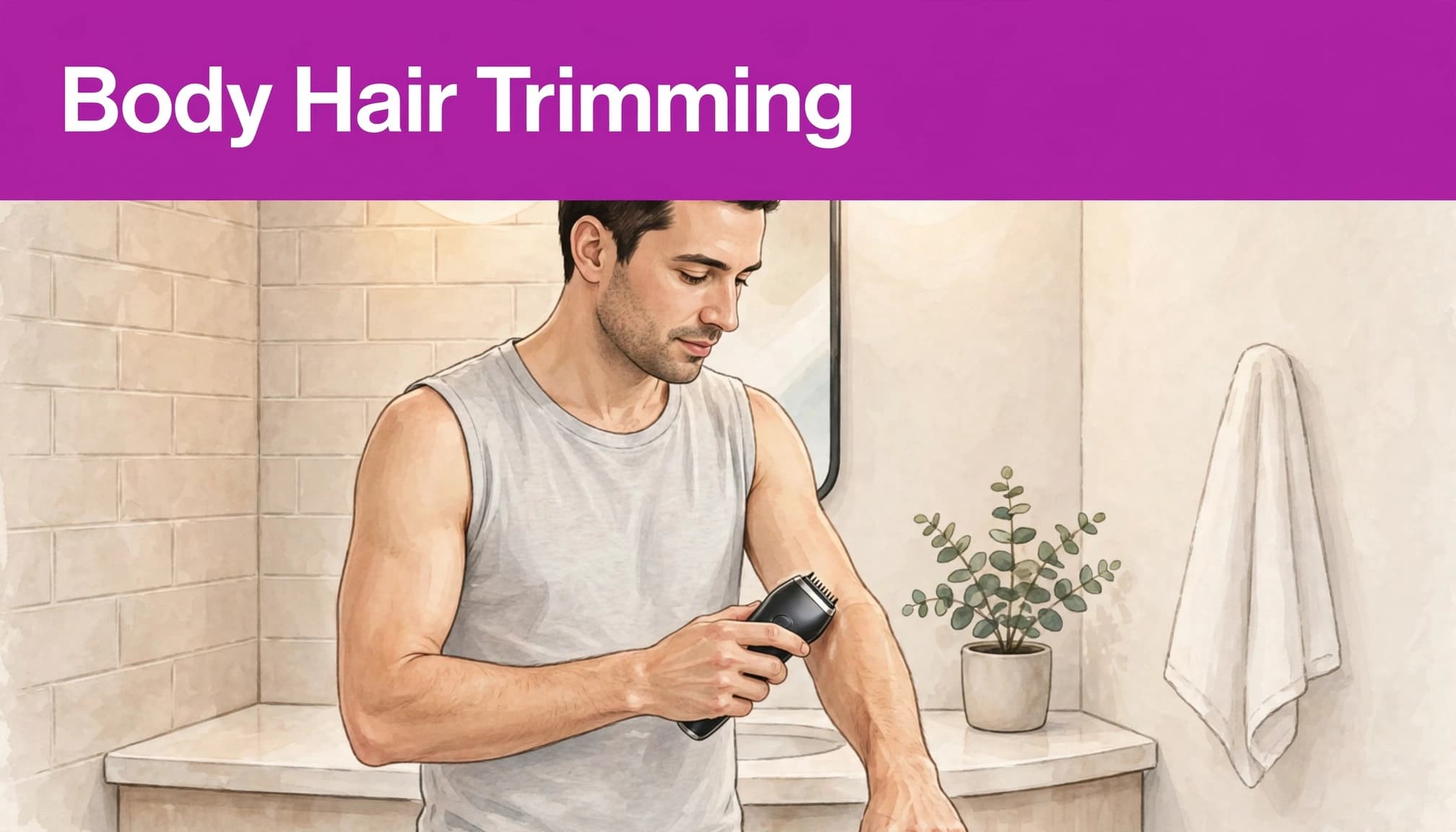
Tools and Preparation for Comfortable Trimming
Choose a Guarded Body Groomer
We recommend body-rated equipment with a secure, compatible guard. A body groomer or body trimmer commonly has rounded or protected attachments, while its wider head can make detailed edging less precise than a beard trimmer.
Check that the electric trimmer’s body-use attachment is compatible and securely fitted before trimming.
Begin with a higher guard setting and trim slowly. You can shorten hair on a second pass, but you can’t restore length after cutting too close.
Prepare Skin Gently
Take a warm shower to cleanse the skin and soften hair. Gentle exfoliation beforehand can remove surface buildup, but skip it or wait if your skin feels irritated.
Dry thoroughly if your trimmer requires dry use. Comb longer hair to release tangles, and look for sore spots before starting. Don’t trim over broken or inflamed skin.
Body-Area Techniques for a Neat Finish
Chest and Underarms
Use slow, light passes with the grain across your chest. Keep pressure even instead of repeatedly working one patch.
For underarms, raise an arm overhead to see the growth, then lower it to identify the tuft between your arm and chest. Reposition for a clear view and trim the tuft without pressing into skin folds.
Pubic Area
Use a head and protective guard intended for intimate grooming. Work only where you can see the cutting path, gently smoothing external skin and leaving difficult genital folds alone. Never run an exposed blade across the scrotum.
We recommend leaving hair between the buttocks untouched during home grooming. It helps cushion friction, and close cutting can leave the area uncomfortable.
Arms, Legs, and Back
Work slowly around elbows and knees without pushing the guard into curved skin. Use the same setting across matching areas before deciding whether to shorten further.
Ask someone to help trim back hair in areas you can’t see clearly rather than working blindly.
Neckline and Finishing Touches
For the beard neckline, use a beard trimmer to shape a U behind both ears, meeting around two fingers above the Adam’s apple. This isn’t a guide for cutting the back hairline.
Spot-check with a fine-toothed comb against the grain to lift stray hairs. Keep the protective guard attached when shortening them.
Aftercare and Equipment Cleaning
Rinse clippings away with lukewarm water, pat dry, and apply a light, fragrance-free moisturizer. Loose, breathable clothing helps limit rubbing. Skip strong fragrance, exfoliating acids, and rough scrubs while skin feels sensitive.
Switch the trimmer off before clearing trapped hair. Wash only washable parts, dry fully before storage, and don’t share grooming equipment. Replace cutters that pull or show damage.
A guarded trim may reduce ingrown hairs compared with a close shave, but it can’t prevent every bump. Our razor bump prevention advice covers gentle maintenance. Increasing pain, pus, or recurring bumps need medical assessment.
Trimming Compared With Other Hair Removal Methods
As a body hair removal option, trimming shortens hair while leaving it in place. Shaving cuts closer to the skin, while waxing and sugaring pull hair from the root. Depilatory cream dissolves hair near the skin surface without removing the root. Electrolysis treats individual follicles for permanent hair removal.
For sensitive skin, we generally favor controlled trimming over repeatedly pursuing a close shave. If you shave, use light pressure and follow the AAD’s shaving guidance, including shaving with hair growth.
In men’s grooming, the right method depends on your preferred finish and skin tolerance.
Frequently Asked Questions
Does Every Man Trim Body Hair?
No. Wikipedia’s body-grooming overview reports grooming among 20% of US men aged 15 to 90 and 50% of German men in that range. These figures include shaving, waxing, sugaring, and trimming, rather than trimming alone.
Does Trimming Replace Regular Washing?
No. Hair can retain sweat, but regular cleansing still matters. Cleveland Clinic explains that bacteria breaking down sweat cause odor. Removing hair isn’t a requirement for cleanliness.
Keep Maintenance Comfortable and Personal
The right schedule maintains your preferred appearance without leaving skin sore. We recommend controlled length, clean tools, and gentle aftercare instead of treating every area alike.
For personalized grooming advice or professional waxing in Cape Coral, Call Theresa’s Face and Body for an appointment.