
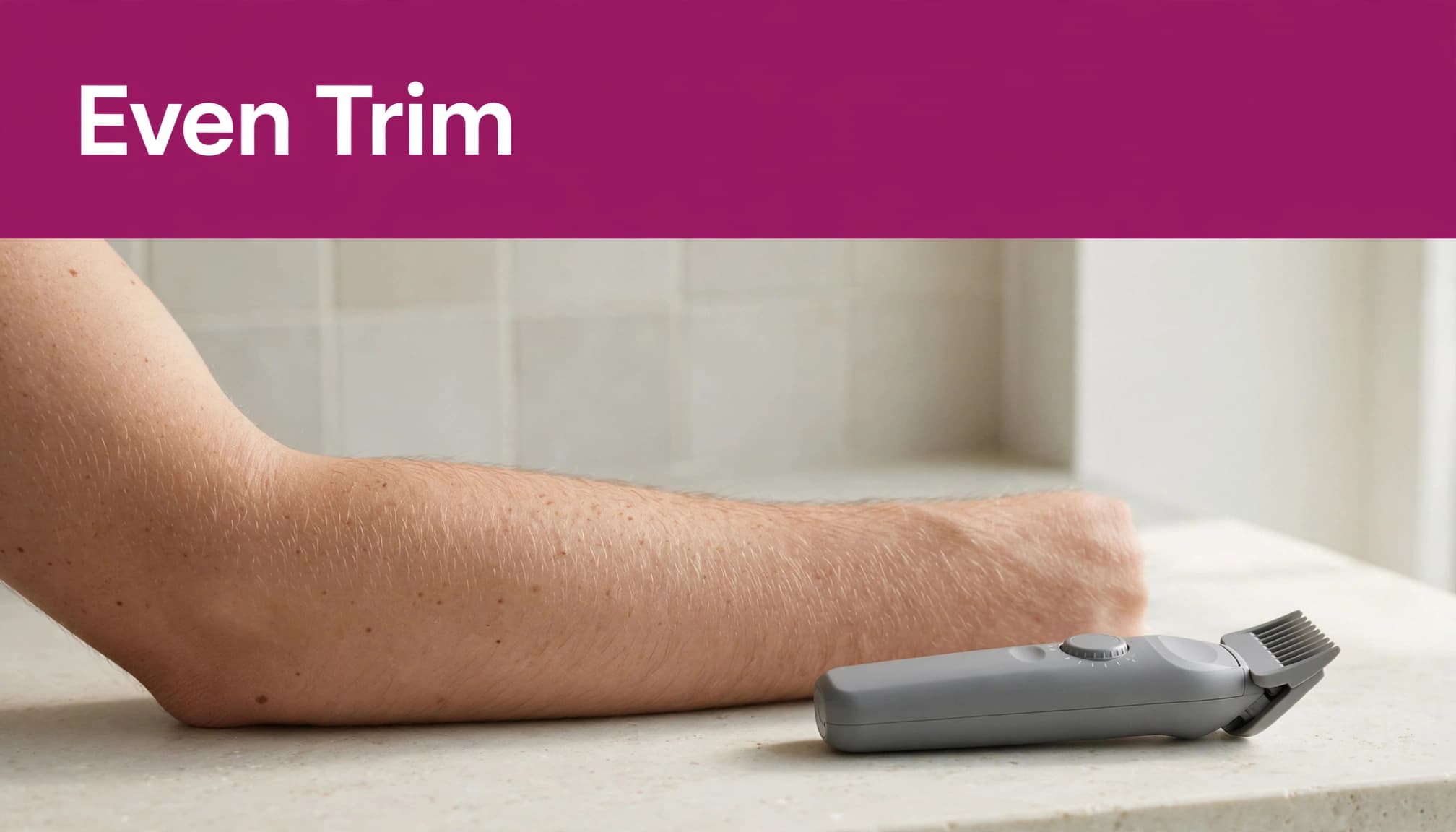
To trim arm hair evenly, use a guarded body trimmer, begin around 6 mm, and work in small sections with light pressure. We recommend keeping some length first, since you can shorten it gradually without creating bare patches.
A natural finish depends on consistent pressure, especially around wrists and elbows where the surface changes. Start with your preferred appearance, then choose a routine that keeps your skin comfortable.
Key Takeaways
- Start with a longer guard, using its millimeter measurement rather than its number.
- Complete both arms at one setting before deciding to go shorter.
- Leave naturally sparse areas alone instead of shortening surrounding hair to match.
Choose Between Trimming and Shaving
Trimming for Natural Coverage
Guarded trimming reduces bulk while leaving visible hair. It can help with hair caught beneath watches or jewelry and make muscle definition more visible, although very short cuts may feel prickly.
For everyday manscaping, we recommend this approach when you want a tidy appearance without bare skin.
Shaving for Smooth Skin
Some men choose to shave arms when they prefer silky-smooth skin. Razor shaving cuts closer and needs more frequent upkeep. Leaving your arms untouched is also a comfortable, valid choice.
A POPSUGAR personal essay describes unshaved hair feeling itchy beneath sleeves and shaved arms needing regular moisturizing. These are individual experiences, so choose according to your own comfort.
How to Trim Arm Hair Evenly
- Prepare clean, dry skin. Wash away sweat and products, then dry thoroughly unless your device and attachment allow wet trimming. Our body hair trimming preparation guide explains shower timing. Leave irritated or broken skin untouched.
- Choose a secure guard. Use a body-rated electric trimmer with an intact cutting head. Begin with a longer guard, around 6 mm, and check the measurement printed on the attachment. Guard numbers vary by brand. Consider 3 to 4 mm only after checking the longer finish.
- Follow the growth direction. In good lighting, work across the forearm and upper arm with slow, lightly overlapping passes. Keep the comb against the skin without pressing. Turn your arm to see the underside before trimming.
- Match both arms before shortening. Use the same setting on each side, brush away clippings, and compare with your arms relaxed. Hair density varies naturally. Stop and switch off the trimmer if strands pull or collect beneath the guard.
- Blend the boundaries gently. Avoid abrupt lines at the wrist or around the upper arm. Use a longer setting near fuller neighboring hair. Make one light correction pass over missed strands instead of repeatedly cutting one patch.
Pressing harder around an elbow can create a shorter patch, even when the guard setting hasn’t changed.
If you cut too short, let that area grow rather than shortening both arms to match.
Shave Carefully If You Prefer Bare Arms
Soften Hair and Protect the Skin
When shaving arms, Gillette Venus recommends shortening long or thick arm hair first with a trimmer, electric razor, or scissors to help preserve razor sharpness. Then soak your arms in warm water for about three to five minutes to soften hair for a closer shave.
Venus also suggests that you gently exfoliate to remove dead skin and help limit bumps. Avoid rough loofahs or abrasive scrubbing on sensitive skin.
Apply shaving gel to retain moisture, improve glide, and show where you’ve already shaved. The American Academy of Dermatology recommends moisturizing shaving cream.
Work in Sections With a Sharp Razor
Shave elbow to wrist, then shoulder to elbow, using short, light strokes. Follow hair growth and rinse the razor after each stroke. Bend your arm around the elbow and take extra care over bony areas.
Venus allows an against-the-grain pass if needed for closeness, but we recommend stopping with the grain when skin irritation is a concern.
Venus estimates blade life at five to ten shaves. Replace a blade sooner if it tugs or if you notice a dull razor. Arm shaving has no unique risk category, but cuts, razor burn, and ingrown hairs remain possible.
Keep Aftercare and Maintenance Gentle
Rinse away clippings and products, pat your skin dry, then moisturise with a familiar, fragrance-free, alcohol-free lotion. An oil you already tolerate is another option after shaving.
The AAD’s razor bump prevention guidance recommends a cool, damp washcloth after shaving. This may soothe skin and help reduce razor bumps.
Rinse and dry the razor. Switch off your trimmer before cleaning, wash only approved components, and don’t share tools.
We suggest assessing your trim every one to two weeks. Let visible growth and comfort guide touch-ups, and record the guard length for consistent results.
Frequently Asked Questions
Does Shaving Make Arm Hair Grow Back Thicker?
No. As Gillette explains, shaving doesn’t increase thickness or growth speed. Blunt-cut ends can feel coarser as they emerge, creating stubble.
Are Scissors Enough for a Neat Finish?
Rounded-tip scissors suit a few long strands. For even coverage across both arms, we recommend a guarded trimmer rather than cutting individual sections freehand.
Is Armpit Grooming the Same?
Underarms need separate positioning and lighter pressure because armpit hair can grow in different directions. Reddit commenters describe less odor after shaving, easier antiperspirant application after trimming, and sparse hair reducing sticky skin contact. These are personal reports, not guarantees.
Neither method reduces sweat production. Our gentle underarm trimming advice covers this sensitive area separately.
Keep the Finish Natural and Comfortable
An even arm trim starts with controlled length and gentle passes. We recommend leaving enough coverage for comfort rather than chasing every difference in density.
For personalized men’s grooming advice or help choosing between trimming and professional waxing, Call Theresa’s Face and Body for an appointment. Your preferred appearance should work with your skin’s comfort.