
Waxed hair can show uneven hair growth because follicles emerge at different times, so hairs don’t all reach the skin’s surface together. Patches can also appear when short hairs remain behind or a hair breaks during removal.
We understand that scattered hairs can be disappointing when you’re enjoying smooth skin, but they don’t automatically mean your treatment failed. Your growth pattern, hair length, and skin comfort help us decide how to plan your next appointment.
Key Takeaways
- Hair follicles grow independently, so some hairs become visible sooner than others.
- Waxing removes hair at the root, but the follicle remains and can produce another hair.
- Suitable hair length, consistent appointments, and gentle aftercare support smoother results without guaranteeing completely even regrowth.
What Causes Uneven Hair Regrowth After Waxing?
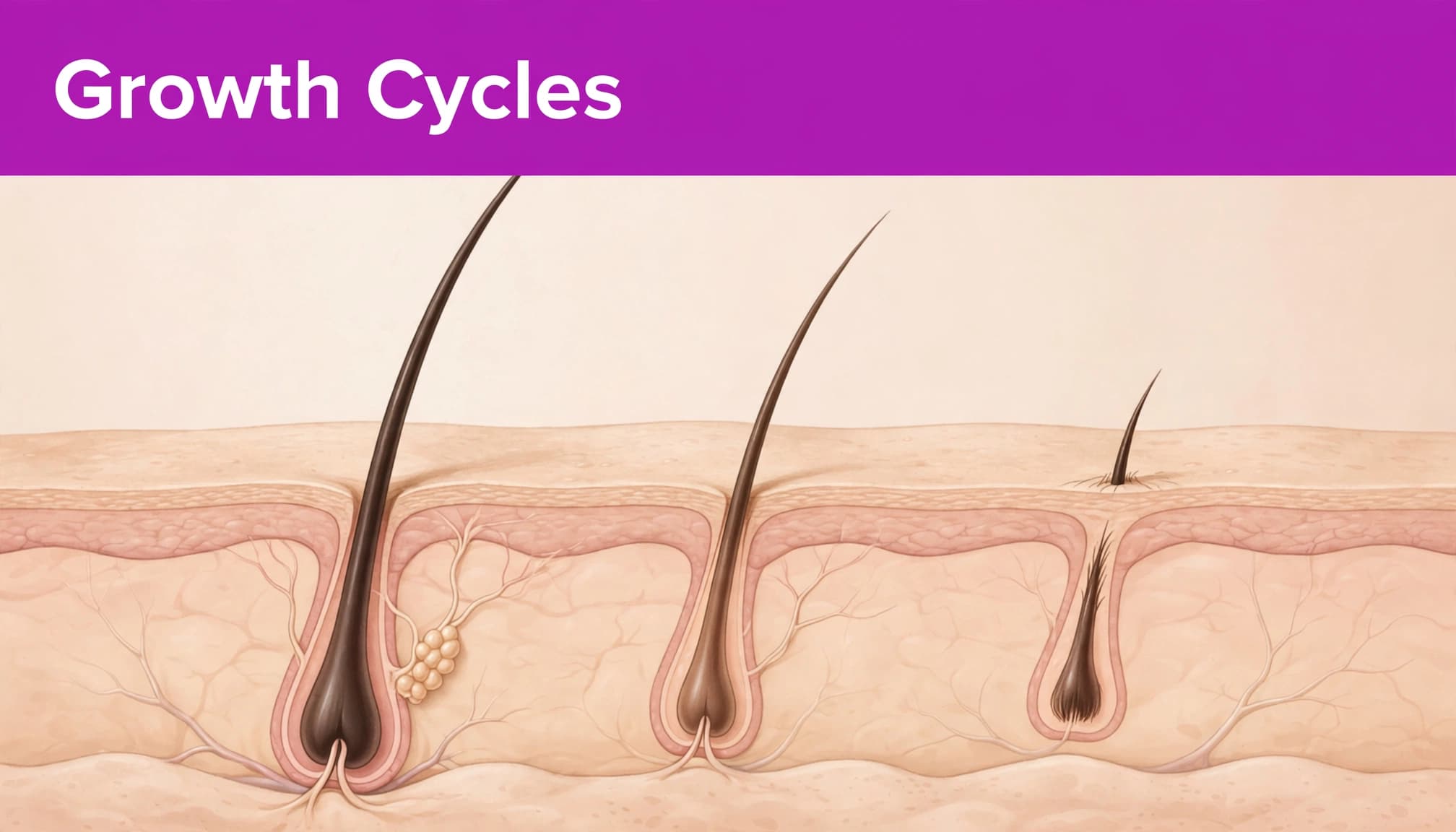
Hairs Follow Different Growth Cycles
Each hair goes through growing, transitional, and resting stages. While one hair is visible and long enough for waxing, another may still be below the surface.
This explains why scattered hairs can appear after an otherwise smooth treatment. Some are newly visible hairs that weren’t accessible during your appointment, rather than the same hairs immediately growing back.
Waxing doesn’t make every follicle start growing together. We recommend looking at the overall pattern between appointments instead of judging your results by a few early hairs.
Short Hairs Can Remain or Break
Wax needs enough exposed hair to grip effectively. Very short hairs may remain behind, while a shaft that breaks instead of being removed at the root can become noticeable sooner.
Hair length, growth direction, preparation, and removal technique all matter. If an area feels stubbly immediately afterward, mention it rather than repeatedly waxing or picking at the same spot. We can discuss whether remaining short hairs or breakage may explain the texture.
What to Expect With Regular Waxing
Waxing removes the hair without removing the follicle itself, so returning growth is expected. We generally recommend appointments every four to six weeks, adjusted to the area, your growth, and your skin’s comfort.
For men’s grooming, chest, shoulder, and back hair may become noticeable at different times. You don’t need to treat every area on an identical schedule. Our guidance on chest waxing and aftercare explains maintenance expectations for that area.
Some people notice finer or sparser growth with repeated treatments, but reduced density isn’t guaranteed. Hair can also feel softer than shaved stubble because it hasn’t been cut bluntly.
A regular schedule helps with maintenance, but it doesn’t promise that every hair will return at the same length or speed.
How to Care for Uneven Regrowth
Prepare With Enough Hair Length
Allow hair to reach at least one-quarter inch before waxing. After shaving, two weeks can be a useful starting point, but the actual length matters more than the calendar.
Arrive with clean skin and avoid heavy lotions or oils on the treatment area. Tell us about medications, retinoids, recent peels, or irritation so we can consider your skin’s needs before treatment.
For manscaping, you can choose complete removal, selected areas, or a combination of waxing and trimming. We recommend deciding which areas you want kept smooth before shortening hair that may need to be waxed.
Keep Aftercare Gentle
For the first 24 hours, avoid hot showers, saunas, intense workouts, and clothing that rubs the treated area. A cool compress and a gentle, fragrance-free moisturizer can help with temporary discomfort.
Wait until redness and sensitivity settle before restarting gentle exfoliation, usually several days afterward. Exfoliation may help reduce trapped hairs, but it won’t speed up follicles or make their growth cycles match.
Don’t pick, squeeze, or dig at bumps. If returning hairs feel uncomfortable, our advice on soothing itchy hair regrowth covers ways to keep your routine gentle.
When Regrowth Needs Closer Attention
Scattered hairs on otherwise comfortable skin are different from worsening irritation. Spreading redness, pus, increasing pain, or persistent bumps need medical attention rather than another waxing session.
Sudden bald patches or unexplained hair loss outside the treated area also deserve medical assessment. A clinician can evaluate the cause of hair loss rather than assuming waxing explains every change.
Tell us if your growth pattern changes quickly or if you have a condition such as PCOS. Hormonal changes can affect body-hair growth, so your plan should reflect what your hair is doing.
Scalp hair loss is separate from waxing-related body-hair changes. An uneven hairline or hair thinning on one side of the head needs its own assessment. Genetics or DHT can contribute to a receding hairline, including male pattern baldness. Traction alopecia can also change hairline or density.
For sudden or persistent hair loss, consult a clinician about hair loss treatment. They may discuss finasteride and minoxidil, and explain whether finasteride or minoxidil fits your situation. Don’t assume a hair growth oil addresses the cause. A clinician can discuss whether you’re a candidate for a hair transplant and explain hair transplant surgery.
Frequently Asked Questions
Does Waxing Make Hair Grow Back Thicker?
Waxing doesn’t make hair grow back thicker or darker. Returning hairs may look more noticeable when several appear close together, but appearance alone doesn’t show that the hair has become coarser.
We don’t promise that repeated waxing will permanently reduce growth either. Your results depend on your individual hair pattern.
Should You Shave Between Waxing Appointments?
We recommend avoiding shaving if you’re maintaining a waxing schedule. Shaving cuts hairs at the surface, leaving different lengths and potentially making them too short for your next appointment.
If the in-between appearance bothers you, discuss appointment timing with us instead of repeatedly removing scattered hairs.
A Waxing Schedule That Fits Your Growth
Uneven hair regrowth usually reflects independent growth cycles, with hair length and breakage sometimes adding to the patchy appearance. Comfortable maintenance starts with suitable preparation and gentle care, rather than trying to remove every emerging hair immediately.
We help you plan waxing around your preferences and actual regrowth in Cape Coral. Call Theresa’s Face and Body for an appointment to discuss the areas you’d like treated and a schedule that suits your skin.