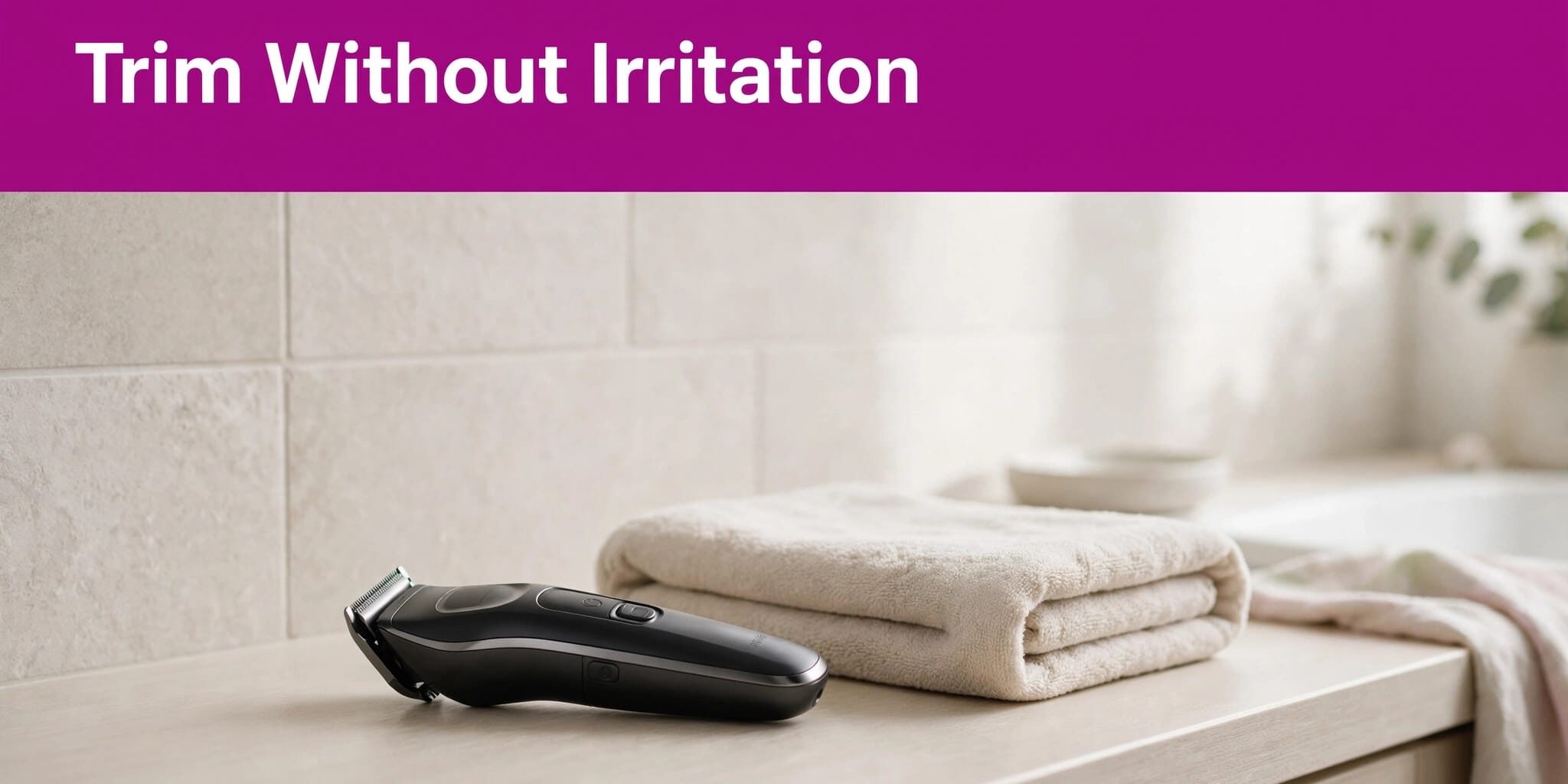
To trim underarm hair comfortably, use a guarded body trimmer, start longer, and avoid repeatedly passing over the same skin. We recommend trimming rather than close shaving for skin comfort, particularly if you’re prone to razor bumps.
The underarm’s hollow shape means light pressure and a clear view matter when you trim armpit hair. Start by choosing a comfortable length.
Key Takeaways
- A guarded body trimmer leaves length and keeps cutting blades away from skin.
- Clean equipment, gentle passes, and simple aftercare help reduce irritation.
- Leave sore areas alone, even when your next grooming session is due.
Choose a Comfortable Length and Suitable Trimmer
How Much Hair Should Remain?
Because armpit hair varies, there isn’t one irritation-free hair length for everyone. These options help you choose your finish.
| Remaining length | Appearance and comfort |
|---|---|
| 3mm | Very short; may feel prickly |
| 6mm | Short, with some coverage |
| About 13mm, or half an inch | Fuller, while reducing bulk |
| 19mm to 25mm, or three-quarters to one inch | Longer, natural-looking coverage |
Bevel recommends three-quarters to one inch to limit scratchiness, but this isn’t a medical minimum. The Beard Club suggests half an inch or less for easier upkeep; hair around an inch or longer may retain more moisture.
Start longer, then shorten only if comfortable.
Which Guard and Tool Should You Use?
Use a body-rated electric trimmer with a secure comb. Bevel’s Frankie Payne recommends a #4 guard for beginners; The Beard Club suggests #1 or #2 for short trims and #3 or higher for natural coverage. Guard numbers aren’t universal, so check the listed millimeters to choose the right guard length.
Alpha M suggests 3mm monthly for a very short finish, or 6mm for longer coverage. If you have thicker body hair, start longer and shorten gradually, reducing another millimeter after the first pass if needed. Sensitive skin may prefer more length.
Rounded-tip scissors suit protruding ends, but a guarded trimmer gives beginners more consistent results. If you trim in the shower, check that the model is waterproof and approved for wet use.
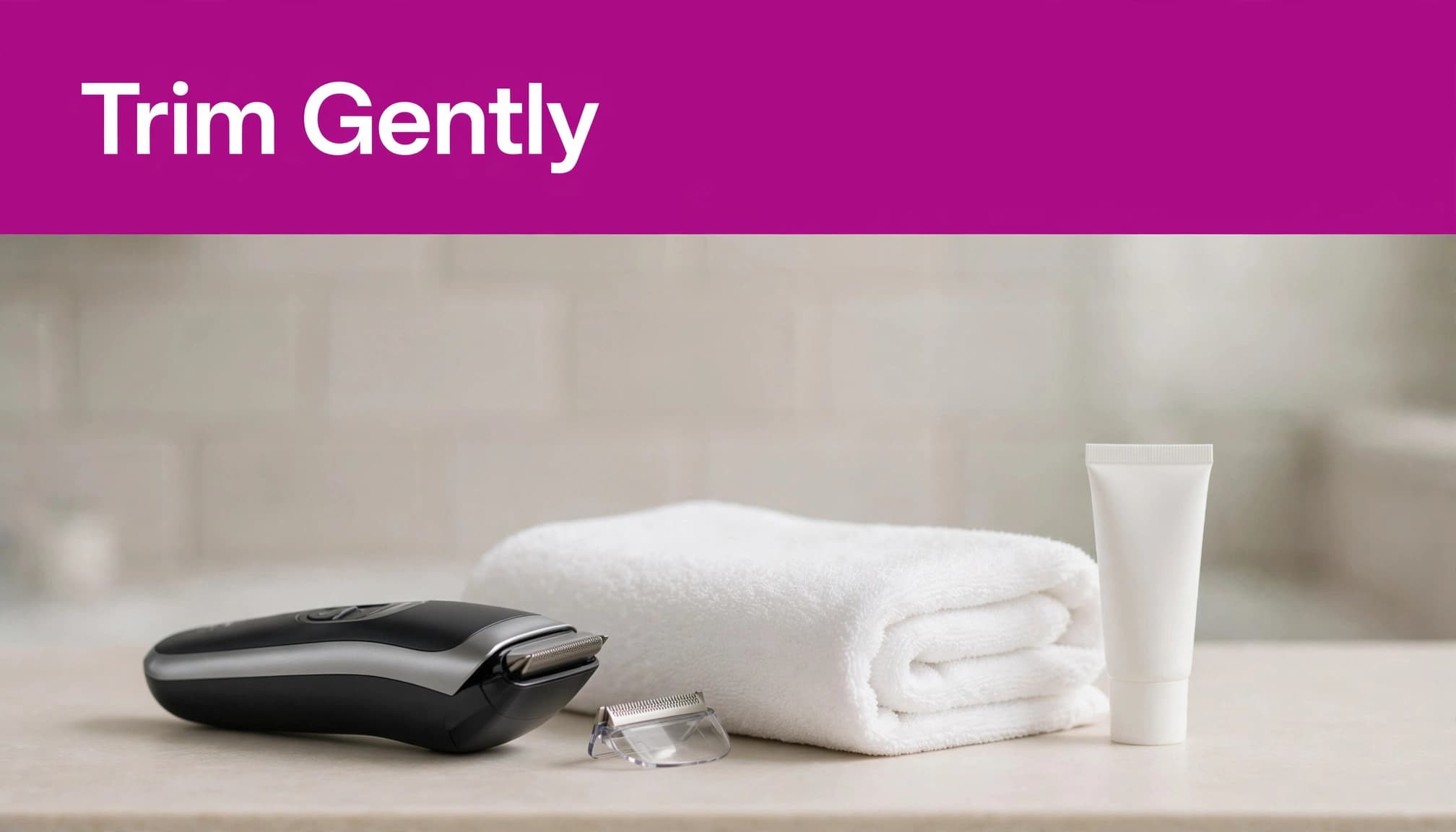
How to Trim Underarm Hair Gently
- Inspect your skin first. Leave rashes, broken skin, and tender bumps untouched. Wash away deodorant and sweat with a mild cleanser, then dry unless your tool permits wet trimming.
- Prepare clean equipment. Remove trapped hair, secure the guard, and replace pulling or damaged cutters. Don’t share tools. Braun includes exfoliation in its routine, but skip abrasive scrubbing before trimming sensitive skin.
- Raise your arm and use a mirror. Gently flatten folds without overstretching the skin. Keep the comb against the area without pressing.
- Follow hair growth using short strokes. Underarm hair grows in different directions, so adjust your approach rather than repeatedly working one patch.
- Lower your arm and assess the shape. GQ suggests raising and lowering your arms, then shortening the tuft that remains visible. Keep enough length to avoid stubble rubbing against skin.
Switch the trimmer off before cleaning. Wash only washable parts and dry them before storage.
Keep Shaving and Aftercare Gentle
If You Want a Closer Shave
Always shorten long hair first because it can clog razors. Apply fragrance-free gel or cream rather than heavily fragranced foam; pre-shave oil is optional.
Use a clean, sharp razor and follow hair growth, as the American Academy of Dermatology’s shaving guidance recommends. Rinse between strokes.
Avoid automatic up-and-down passes, sideways dragging, or stretching skin tightly. These can add irritation. Don’t scrub with a loofah or dig at trapped hairs, which can contribute to ingrown hairs.
Soothe Skin Without Adding Irritation
Rinse away loose hairs and products, pat dry, then moisturize with a light, fragrance-free product you already tolerate. Avoid alcohol-based aftershave, exfoliating acids, and strong fragrance while skin feels sensitive.
Wear loose, breathable clothing to limit friction. Pause deodorant if it stings, and resume gentle exfoliation only when comfortable. Our gentle body trimming advice covers recurring irritation.
Increasing pain, swelling, pus, or persistent bumps need medical assessment.
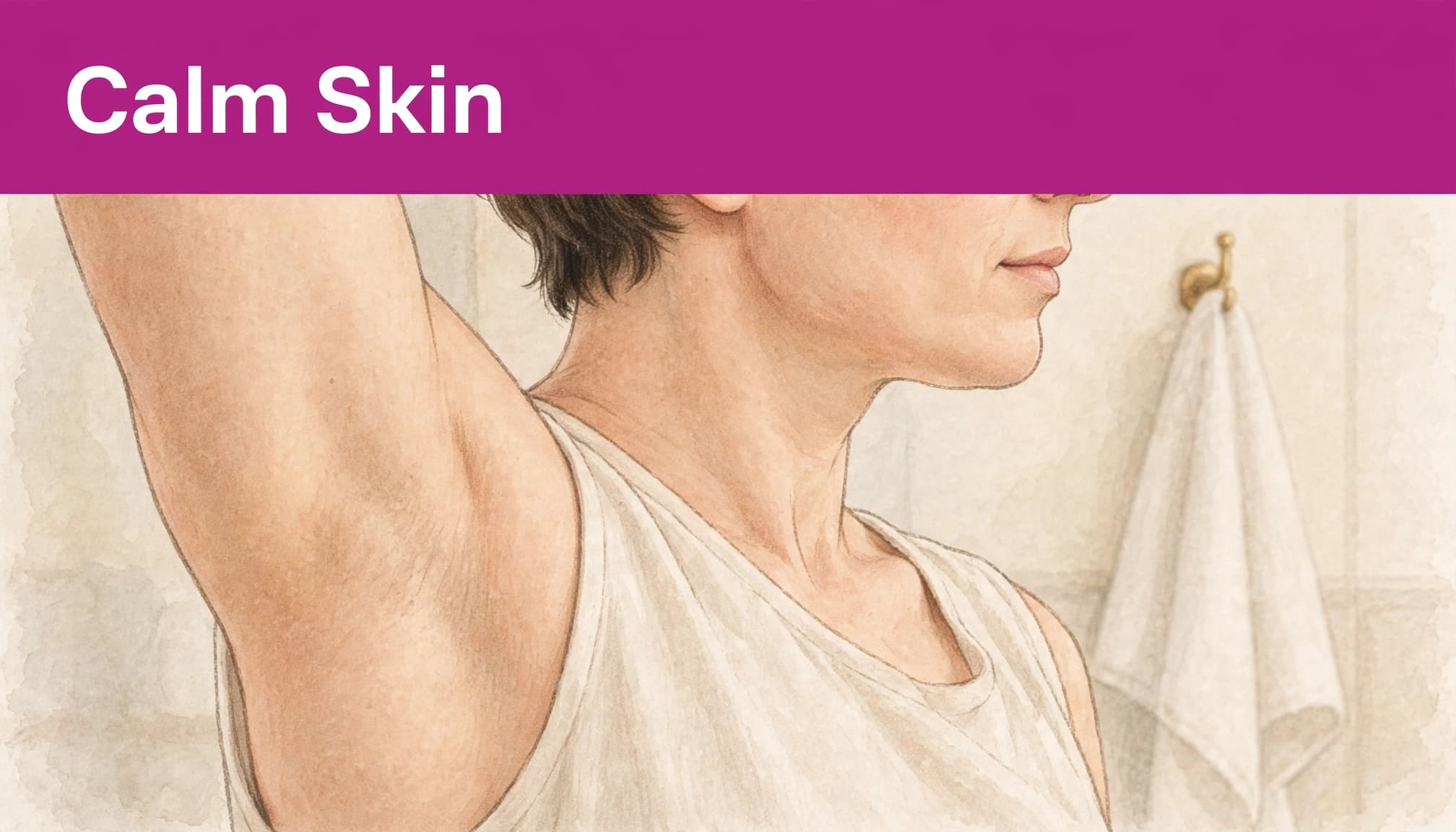
Underarm Grooming FAQ
Is Trimming Necessary, and How Common Is It?
Trimming is optional for men and women. Manscaping and men’s grooming should reflect your preferences, not pressure.
Bevel describes a Men’s Health survey of 4,044 men as finding 68% trimmed underarms and 52% cited aesthetics. Alpha M describes the 68% figure as shaving. That inconsistent wording doesn’t establish a reliable trimming-versus-shaving split.
Does Trimming Reduce Sweat or Body Odor?
Trimming doesn’t reduce sweat production. Less hair may make washing easier, reduce retained odor, and help stick deodorant apply evenly. Shaving can offer similar practical benefits, but neither replaces cleansing.
Deodorant controls odor without stopping sweat. Antiperspirants usually contain aluminum salts that temporarily block sweat ducts.
Underarm hair can reach a terminal length of a couple of inches, although growth varies. It helps move moisture and disperse scent; claims about proven human pheromone signaling go beyond established evidence.
How Often Should Underarms Be Trimmed?
Braun suggests about every two weeks. Weekly touch-ups can maintain a precise shape, while longer styles may need monthly attention. We recommend letting comfort and visible growth guide your schedule.
Make Comfortable Grooming the Priority
Comfortable armpit grooming doesn’t require bare skin. We recommend keeping enough length for comfort and allowing sensitive areas to settle between sessions.
For personalized grooming advice, Call Theresa’s Face and Body for an appointment. Your preferred appearance should work with your skin’s comfort.