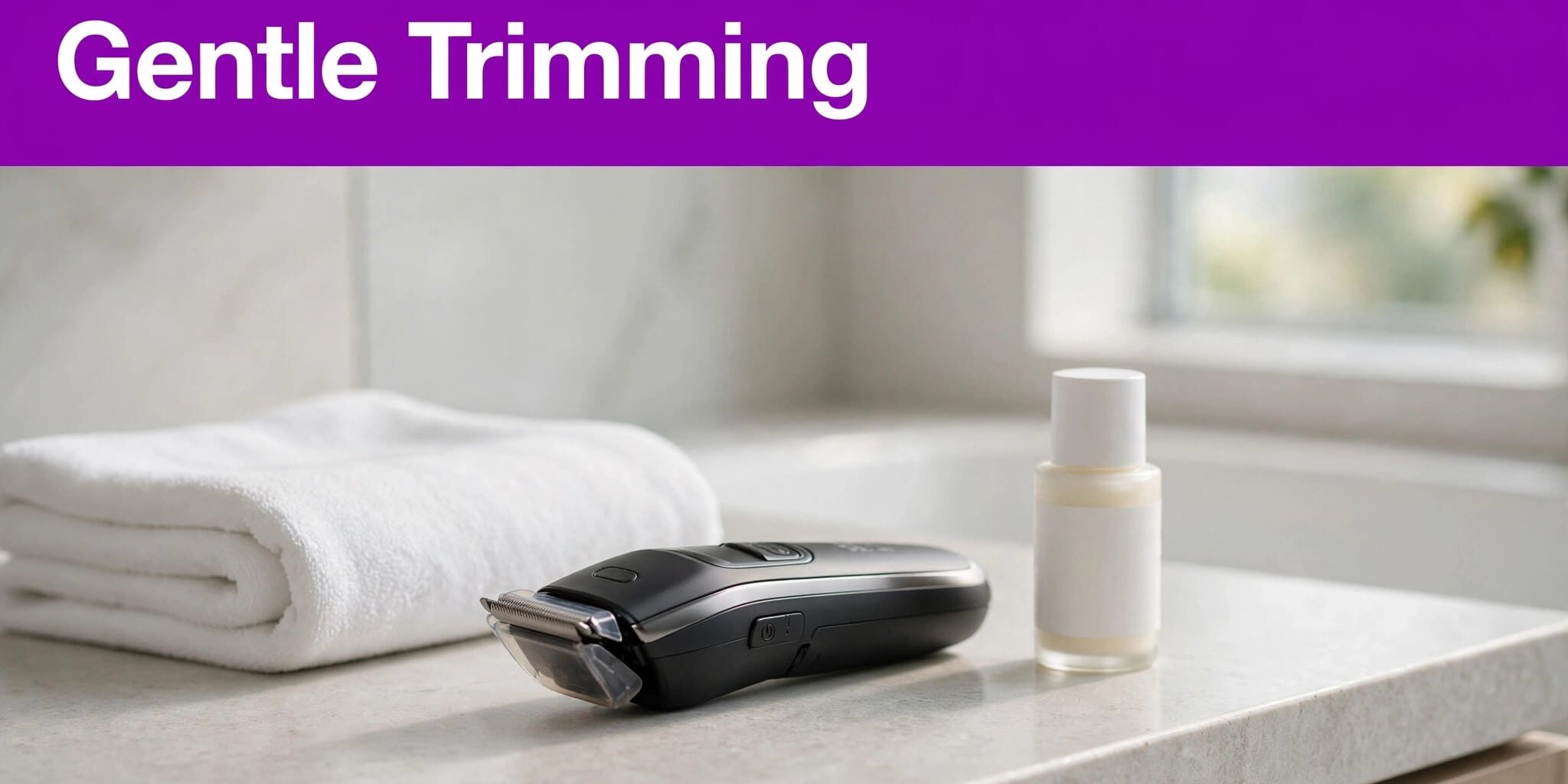
A neatly groomed chest, back, or bathing suit area shouldn’t leave you feeling uncomfortable afterward. Razor bumps can make body grooming frustrating, especially when you want a clean appearance without repeated irritation.
We recommend a gentle routine that puts skin comfort first, rather than aiming for the closest possible shave. Choose a body-rated beard trimmer, since not every grooming tool suits body hair. Prepare your skin carefully and give aftercare the same attention as hair removal.
Key Takeaways
- Choose a body-rated trimmer with a guard and leave some hair length to help reduce irritation; a close shave isn’t always necessary for a neat appearance.
- Prepare skin gently, keep grooming tools clean, and use light pressure and short strokes if you shave.
- After grooming, rinse and pat the skin dry, apply a moisturizer you tolerate, and avoid friction, picking, and extra irritation while skin settles.
- Pause close shaving over irritated spots and seek medical advice for bumps that recur, become increasingly painful, develop pus, or don’t improve.
Understand Razor Bumps Before Changing Your Routine
Razor bumps are raised, irritated spots that can develop when hairs grow back into the skin after shaving. Coarse hair or curly hair can make ingrown hairs more likely for some people, but texture alone doesn’t identify the cause. DermNet describes pseudofolliculitis barbae as an inflammatory reaction around hair follicles, most often discussed in connection with shaved facial hair.
Razor burn usually feels like widespread stinging or tenderness after shaving, rather than distinct bumps around individual hairs. Both call for a gentler grooming routine, but recurring bumps may need medical assessment. Persistent bumps at the nape can have other causes, including acne keloidalis nuchae, so get assessed rather than self-diagnosing.
Body bumps aren’t always ingrown hairs. Products, friction, and inflamed follicles can also cause irritation. We recommend paying attention to when the spots appear, which areas are affected, and whether they return after every grooming session.
Choose a Body Trimmer That Leaves Some Length
Start With a Guarded Electric Trimmer
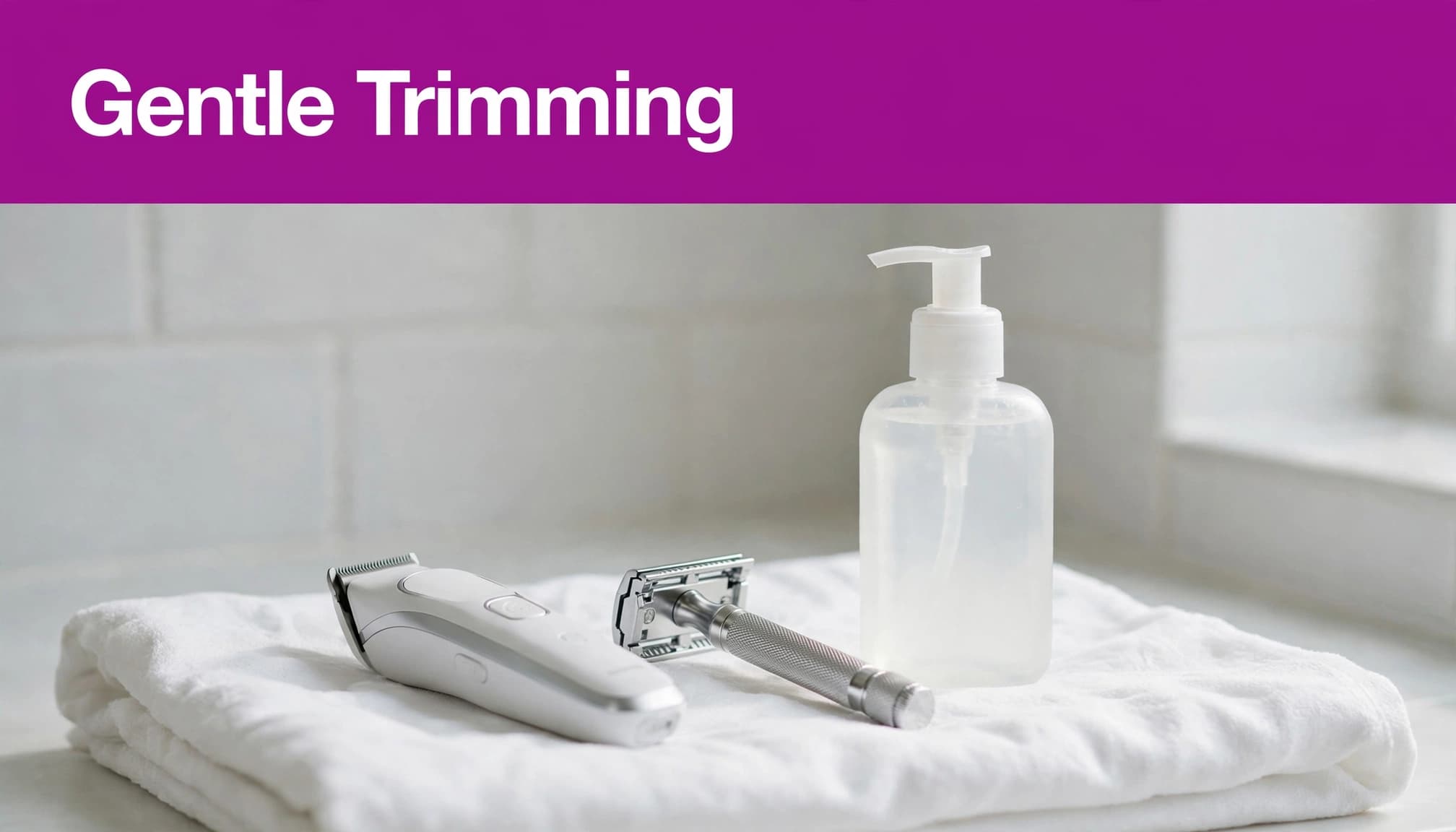
For a neatly maintained appearance, start with a body trimmer and an adjustable guard. A beard trimmer can also work, but only if it’s designed or approved for body use.
Body grooming tools are made for broader areas, while tools for facial hair may not be suitable for your body. You can shorten chest, abdominal, arm, and leg hair while keeping some visible length.
A 2019 review of pseudofolliculitis treatments reports that electric clippers are associated with fewer cases of PFB. That evidence concerns shaving-related PFB and doesn’t guarantee that every body area will remain bump-free.
Leaving some length may reduce irritation and the chance of ingrown hairs. Follow the manufacturer’s directions, and start with a longer guard before deciding whether you want a shorter finish.
Decide Whether a Close Shave Is Necessary
A trimmer and an electric shaver provide different finishes. Some electric shavers cut very close, which may irritate some people, while a guarded trimmer lets you control the remaining length.
Decide how much hair you want removed before starting. If a tidy, natural appearance meets your needs, you don’t have to follow trimming with a razor.
For areas you can’t see clearly, such as your lower back, professional assistance offers better visibility and control.
Prepare Your Skin and Keep Tools Clean
Cleanse Before Grooming
Wash the area with lukewarm water and a mild cleanser to remove sweat, oil, and product residue. If you’re using an electric shaver or a beard trimmer designed for body grooming, follow its instructions about whether the skin and hair should be wet or dry.
Before razor shaving, warm water or a warm washcloth can soften the hair. Apply a gentle shaving cream or gel rather than shaving bare skin.
Shorten long hair before using a razor so you aren’t repeatedly working through the same section. Check your skin first and leave irritated spots alone.
Maintain Clean Equipment and Gentle Technique
Remove trapped hair from your trimmer and clean the cutting head according to the manufacturer’s instructions. Don’t share razors or grooming tools, and replace blades when they become dull or damaged.
Our hygiene tips for manscaping cover the importance of clean skin, clean equipment, and consistent aftercare.
If you choose to shave, use a clean, sharp razor blade or a safety razor. Use light pressure and short strokes, and shave with the grain. A close shave can cause razor burn or skin irritation, especially if you have sensitive skin. The American Academy of Dermatology’s razor bump prevention guidance emphasizes proper shaving technique and soothing aftercare.
Give Post-Trimming Skin Gentle Aftercare

After grooming, rinse away loose hairs and any shaving product, then pat dry with a clean towel. For post shave care, apply a light, fragrance-free moisturizer your skin tolerates comfortably.
We recommend keeping the rest of your routine simple to limit skin irritation while the area feels sensitive. Strongly fragranced aftershaves, heavy scrubs, and repeated passes with grooming tools can add unnecessary irritation.
Choose loose, breathable clothing, particularly when underwear or waistbands would rub against freshly groomed skin. After sweating, gently cleanse the area and change into dry clothing.
A warm compress can provide temporary comfort for a mild bump. Don’t pick, squeeze, or dig at razor bumps, since inflammation or picking can sometimes leave dark spots.
Stop shaving over irritated spots instead of trying to shave them smooth.
Regular maintenance can help you keep your preferred appearance, but your schedule should allow your skin to settle between sessions. We don’t recommend continuing simply because a grooming day is on the calendar.
Get Personalized Help for Recurring Bumps
Salicylic acid and glycolic acid are ingredients found in some razor bump treatments. A chemical exfoliant may help loosen dead skin cells for some people, but facial products aren’t automatically suitable for every body area.
We recommend asking a dermatologist which treatment fits your skin, particularly for sensitive areas or bumps that repeatedly return. Avoid combining several exfoliating products to get faster results.
Arrange medical assessment if bumps become increasingly painful, develop pus, or don’t improve when you pause close shaving. A dermatologist can determine whether you’re dealing with an ingrown hair, acne keloidalis nuchae, or another skin condition.
For men’s grooming support, we offer personalized waxing and manscaping services at Theresa’s Face and Body in Cape Coral, Florida. We can discuss your preferred appearance and comfortable grooming options. Waxing removes hair at the root, but it can also cause ingrown hairs, so preparation and aftercare still matter.
Frequently Asked Questions
What causes razor bumps?
Razor bumps can form when hairs grow back into the skin after shaving, and coarse or curly hair can make ingrown hairs more likely for some people. Irritation, friction, products, or inflamed follicles can also cause body bumps, so they aren’t always ingrown hairs.
Is a trimmer better than a razor for preventing bumps?
A guarded body trimmer lets you leave some hair length, which may reduce irritation and the chance of ingrown hairs. It may be a gentler option than a close shave, though it can’t guarantee you won’t get bumps.
How should I care for my skin after grooming?
Rinse away loose hairs, pat the area dry, and apply a light, fragrance-free moisturizer your skin tolerates. Wear loose, breathable clothing and avoid picking bumps or repeatedly grooming skin that feels irritated.
When should I see a dermatologist about razor bumps?
Arrange medical assessment if bumps become increasingly painful, develop pus, keep returning, or don’t improve when you pause close shaving. A dermatologist can check whether the bumps are ingrown hairs or another skin condition.
Make Comfortable Grooming the Priority
Preventing razor bumps starts with a routine your skin can tolerate. We recommend controlled trimming, clean equipment, gentle products, and consistent aftercare instead of repeatedly pursuing a closer finish.
You can enjoy a well-groomed appearance without treating every area the same way. Your comfort and hair-removal preferences should guide the plan.
Call Theresa’s Face and Body for an appointment to discuss personalized body grooming and care suited to your needs.