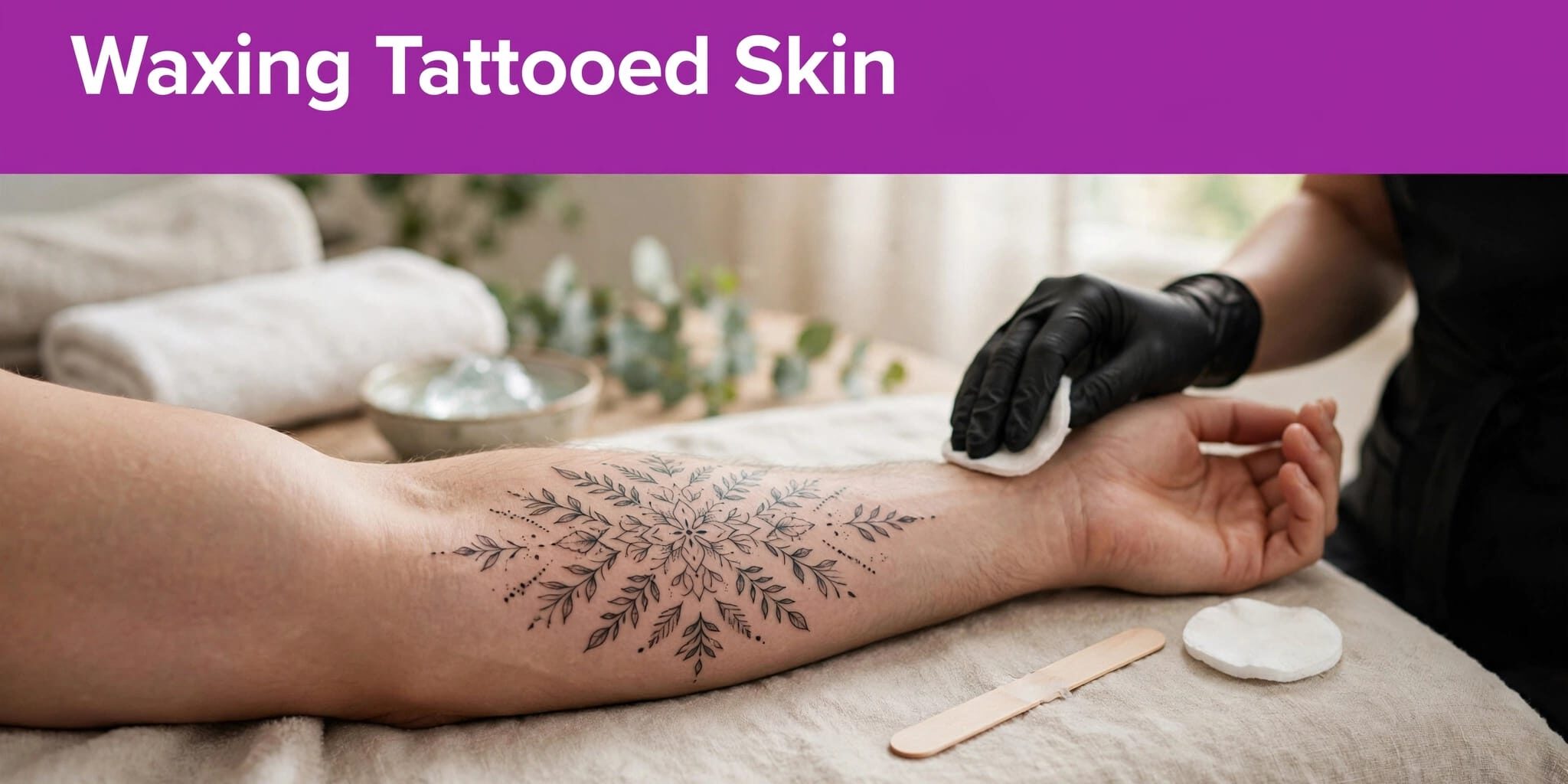
Yes, men can usually wax over fully healed tattoos, but healthy, intact skin comes first. If you’re considering waxing tattooed skin, the tattoo’s healing stage matters more than its size, color, or location.
At Theresa’s Face and Body, we want you to enjoy smooth results without rushing your skin’s recovery. Before booking, check your tattoo, review your medications, and discuss your grooming goals with us.
Key Takeaways
- Men can usually wax over a fully healed tattoo when the skin is healthy and intact; tattoo size, color, and location matter less than healing and skin condition.
- There is no single evidence-based waiting period for waxing a new tattoo. Wait until healing is complete, and postpone treatment if the skin is scabbing, peeling, tender, swollen, or irritated.
- Share information about recent tattoos, touch-ups, medications, and skin treatments before booking. Never stop a prescribed medication to keep an appointment.
- After waxing, keep care gentle, limit heat, sweat, and friction for 24 hours, and protect tattooed skin from sun exposure.
Is Waxing Over a Healed Tattoo Safe for Men?
A healed tattoo doesn’t automatically prevent you from having a professional wax. Tattoo pigment sits in the dermis, below the outer skin layer, while waxing removes hair and may remove cells from the skin surface.
The area still needs the same careful assessment as any other treatment area. Skin concerns such as sunburn, tenderness, active irritation, or open sores are reasons to postpone.
There’s no established evidence that repeated waxing reduces tattoo vibrancy. We focus on protecting your skin, choosing an appropriate technique, and avoiding treatment when the area is sensitive. Removing body hair may make the design easier to see, but waxing isn’t a treatment for restoring faded ink.
When Is a New Tattoo Ready for Waxing?
There isn’t a single evidence-based waiting period for waxing a new tattoo. A calendar date alone can’t confirm that your skin is ready.
Allow Healing to Finish
Cleveland Clinic explains that the top skin layer typically heals by about two months, while deeper healing can take longer. Larger tattoos may need additional time.
That timeline describes tattoo healing, not permission to wax. We recommend discussing a recent tattoo with your artist and seeking medical advice if healing is uncertain. Treat a fresh touch-up with the same care as new ink.
Check for Signs That Treatment Should Wait
Don’t wax skin that’s scabbing, peeling, swollen, tender, or unusually itchy. A smooth-looking surface doesn’t tell the whole healing story.
Persistent redness, worsening pain, drainage, or warmth needs medical attention rather than a waxing appointment. The American Academy of Dermatology’s guidance on tattoo-related skin reactions helps distinguish problems that need professional evaluation.
Prepare for a Wax Appointment
Good preparation supports your comfort and helps us plan the treatment around your skin’s needs. Our waxing appointment preparation tips cover general care, but exfoliation advice applies only to healed, comfortable skin.
Before your appointment:
- Tell us when the tattoo was completed, including any recent touch-ups, and describe previous reactions to waxing.
- Leave hair at least 1/4 inch long so the wax can grip it. Avoid shaving immediately before your visit.
- Arrive freshly showered, with clean, dry skin and no lotion or oil on the treatment area.
- Wear loose, breathable clothing, especially for chest, back, leg, bikini, or Brazilian waxing.
Medication screening is equally important. Don’t wax while taking isotretinoin, commonly associated with the name Accutane. Ask your prescriber when waxing can resume after treatment.
Tell us about topical tretinoin products such as Retin-A or Renova, steroid use, blood thinners, and any recent skin treatment, including a peel. These require individual review because skin sensitivity or bruising concerns can affect your appointment.
Never stop a prescribed medication simply to keep a waxing appointment.
We also encourage you to mention allergies and sensitivity to skincare products. An old tattoo doesn’t protect the surrounding skin from product reactions.
Men’s Grooming Options for Tattooed Areas
Your grooming plan can include waxing, trimming, or shaving, depending on your preferences and skin condition. Our men’s waxing and manscaping services include options for clients who prefer smooth skin or a neatly trimmed appearance.
For healed chest, back, arm, and leg tattoos, waxing offers hair removal at the root. Trimming leaves some hair while avoiding the pulling involved with waxing.
Once skin is fully healed, shaving is another option. Use a clean, sharp razor, light pressure, and strokes in the direction of hair growth.
If a tattoo is still healing, leave that area alone rather than switching immediately to another hair-removal method. We can discuss grooming other areas while the tattoo continues to recover.
Aftercare for Smooth Skin and Healthy Tattoos
Freshly waxed skin benefits from simple, gentle care. We recommend following the aftercare instructions provided for your treatment area rather than applying several new products at once.
Keep Heat, Sweat, and Friction Low
For the first 24 hours, avoid hot showers, saunas, steam rooms, and intense workouts. Wear loose clothing so seams and tight fabrics don’t rub the treated skin.
Cleanse gently with a mild, fragrance-free cleanser and pat dry. A suitable fragrance-free moisturizer can help with dryness. Avoid picking bumps, scratching, or using harsh scrubs.
Protect the Area From Sun Exposure
Avoid direct sun exposure immediately after waxing. For ongoing tattoo care, the American Academy of Dermatology recommends broad-spectrum SPF 30 or higher, with reapplication at least every two hours outdoors.
Wait until sensitivity settles before resuming gentle exfoliation, often after about 48 hours. If redness or discomfort continues, postpone exfoliation and ask for advice.
Frequently Asked Questions
Can you wax over a tattoo?
Usually, yes, if the tattoo is fully healed and the skin is healthy and intact. Avoid waxing skin that is tender, irritated, sunburned, or broken.
How long should you wait to wax a new tattoo?
There isn’t a single evidence-based waiting period, and a date alone can’t confirm that the skin is ready. Wait until healing is complete, and ask your tattoo artist or a medical professional if you’re unsure.
Does waxing make a tattoo fade?
There is no established evidence that repeated waxing reduces tattoo vibrancy. Waxing removes hair and may remove surface skin cells, but it isn’t a treatment for faded ink.
What should you tell your waxing professional before an appointment?
Share when the tattoo or any touch-up was done, any past reactions to waxing, and information about medications or recent skin treatments. Some medications and treatments can affect skin sensitivity or bruising, so they need individual review.
Book With Your Skin’s Readiness in Mind
A safe waxing plan begins with complete healing and careful preparation. We can help you choose a grooming approach that suits your preferences without treating an area that needs more recovery time.
Call Theresa’s Face and Body for an appointment to discuss your tattoo, skin sensitivity, and hair-removal goals. Our Cape Coral spa welcomes questions so you can feel informed and comfortable before treatment.