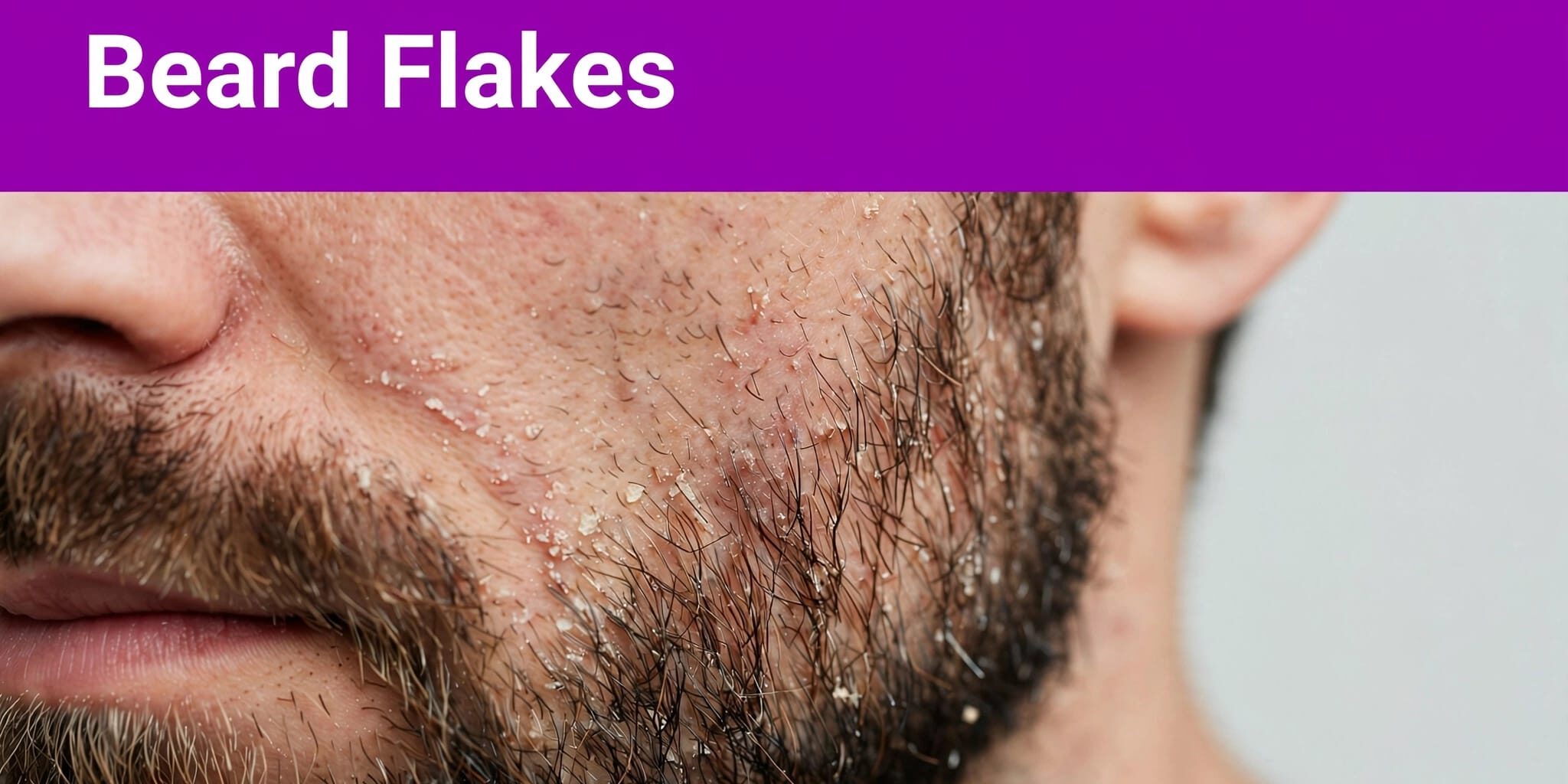
Beard dandruff usually causes recurring flakes with oily scales, itching, or irritated skin, while dryness more often causes fine white scaling and tightness. Both can affect your appearance and comfort, but their symptoms call for different care.
We recommend starting with the skin beneath your beard, rather than adding more oil or washing harder. A gentle routine helps protect sensitive skin while you work out which treatment fits your symptoms.
Key Takeaways
- Greasy scales and persistent itching suggest dandruff; fine scaling and tightness suggest dryness.
- Dandruff shampoos treat yeast-related flaking, while dry skin needs gentle cleansing and moisturizer.
- Pause close grooming over irritated skin and seek medical care when signs persist.
Beard Dandruff or Dry Skin: Recognizing the Difference
Signs of Seborrheic Dermatitis
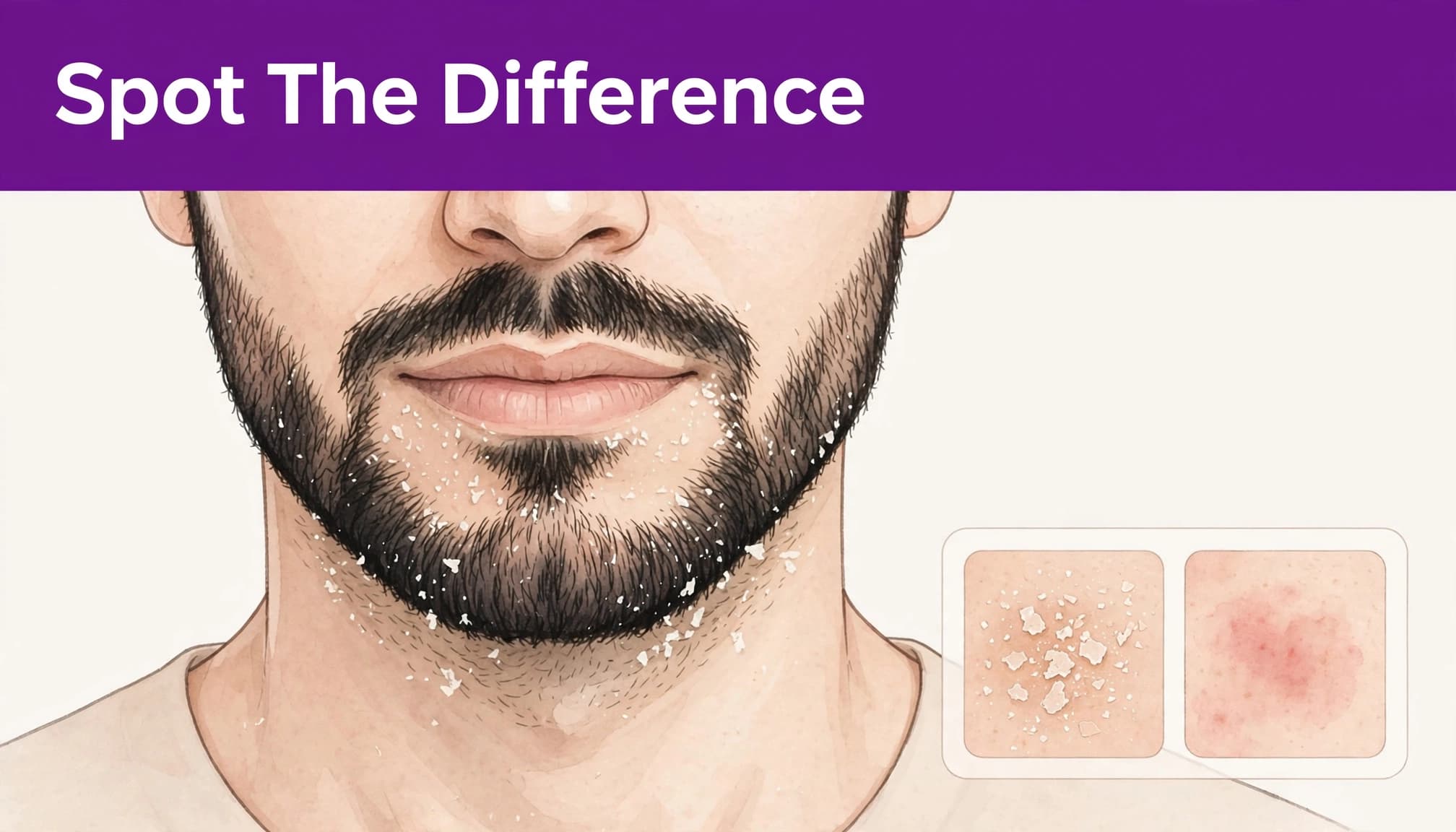
This condition is commonly associated with seborrheic dermatitis, which WebMD links to the skin microbe Malassezia. Look for greasy patches, white or yellow scales, crusting, persistent redness, and itching that keeps returning.
Head & Shoulders describes the microbe Malassezia globosa feeding on sebum and producing oleic acid. It says about half the world’s population is sensitive to oleic acid. Its beard-dandruff explanation promotes zinc pyrithione shampoo for treating facial hair much like scalp hair.
These signs suggest a cause, but they don’t establish a diagnosis.
Signs of Dry Skin or Product Irritation
Dry skin usually produces small, loose white flakes with a tight or rough feeling. Cold weather, dry air, hot water, and harsh soaps can reduce skin moisture.
In addition, fragranced beard products or strong cleansers may cause irritation. Notice whether burning or flaking followed a new product or closer shave. Raised bumps around individual hairs can involve grooming irritation rather than dandruff. Our advice on reducing irritation from shaving covers gentler maintenance when bumps are part of the problem.
How to Treat Beard Dandruff Step by Step
The goal is to reach the affected skin, reduce yeast-related flaking, and rinse away residue without creating more irritation.
Choose an Appropriate Active Ingredient
WebMD recommends shampoo containing 1% ketoconazole, with selenium sulfide or zinc pyrithione as alternatives. These ingredients help control dandruff-associated yeast and treat dandruff.
The American Academy of Dermatology’s beard-problem treatment guidance lists 1% ketoconazole, 1% selenium sulfide, and 2% zinc pyrithione. Choose one suitable dandruff shampoo instead of combining several medicated products, particularly when your face already feels sensitive.
Apply to the Skin and Rinse Thoroughly
Part the beard so the shampoo reaches the skin rather than coating only the hair. Massage shampoo into the skin gently, without scratching or using a rough brush.
WebMD describes applying shampoo while the skin is dry, about five minutes before showering, followed by thorough rinsing. However, the product’s directions take priority, since wetting requirements and contact times vary. Keep shampoo away from your eyes and mouth, and remove all residue before patting dry.
Reduce Frequency Once Symptoms Settle
A common flare-up schedule is two to three washes weekly, reducing to weekly maintenance once controlled, within the product’s directions. Dandruff often returns after treatment stops, so occasional ongoing use may be needed.
The AAD’s seborrheic dermatitis self-care advice also recommends 1% ketoconazole for affected skin beneath a beard or mustache. Regular maintenance can help prevent dandruff and manage recurring flaking without repeated aggressive washing.
How to Care for Dry Skin Beneath a Beard
For dry skin, we recommend lukewarm water, a gentle cleanser, and a light, fragrance-free moisturizer your skin already tolerates. Work moisturizer through the hair to reach the skin beneath it.
Infrequent washing allows dead skin and sebum to collect, but harsh cleansing can also disturb the skin barrier. Rinse away beard balm and styling residue gently. Heavy oils aren’t a substitute for treatment and may irritate some skin.
WebMD cautions that petroleum jelly may worsen beard dandruff. If you use petroleum jelly for dryness, stop if it aggravates irritation.
Scaling alone doesn’t tell you whether skin needs more moisture. Greasy scales and persistent itching call for a different approach.
Let washing loosen existing flakes rather than picking or scrubbing them away. Avoid strongly fragranced aftershave, exfoliating acids, and repeated razor passes while skin feels sensitive. The same comfort-first approach applies to manscaping: clean equipment, gentle aftercare, and time for irritated skin to settle.
A beard offers some UV shielding and winter insulation, but it doesn’t replace sunscreen on exposed skin.
Common Questions About Beard Flaking
Is Beard Dandruff Permanent?
The condition can improve with treatment, but flaking often returns when shampoo use stops. Maintenance may therefore remain part of your routine. We recommend keeping other products simple rather than adding several oils, balms, and treatments at once.
When Should a Doctor Assess It?
Seek medical care when itching interrupts sleep, symptoms cause embarrassment, or over-the-counter treatment doesn’t help. Increasing pain, warmth, spreading redness, or pus also need assessment.
A dermatologist can distinguish seborrheic dermatitis from other conditions and recommend appropriate medical treatment. Avoid shaving over sore or crusted areas while waiting for care.
Keep Beard Care Gentle and Consistent
A healthy beard and comfortable men’s grooming both start with treating the skin beneath the hair. Matching care to the cause helps you avoid unnecessary products and repeated irritation.
We recommend medicated care for dandruff-associated symptoms and gentle moisturizing care for dryness. Persistent symptoms call for a dermatologist, not a more aggressive grooming routine.
For personalized grooming support, Call Theresa’s Face and Body for an appointment to discuss comfortable options suited to your skin and preferred appearance.