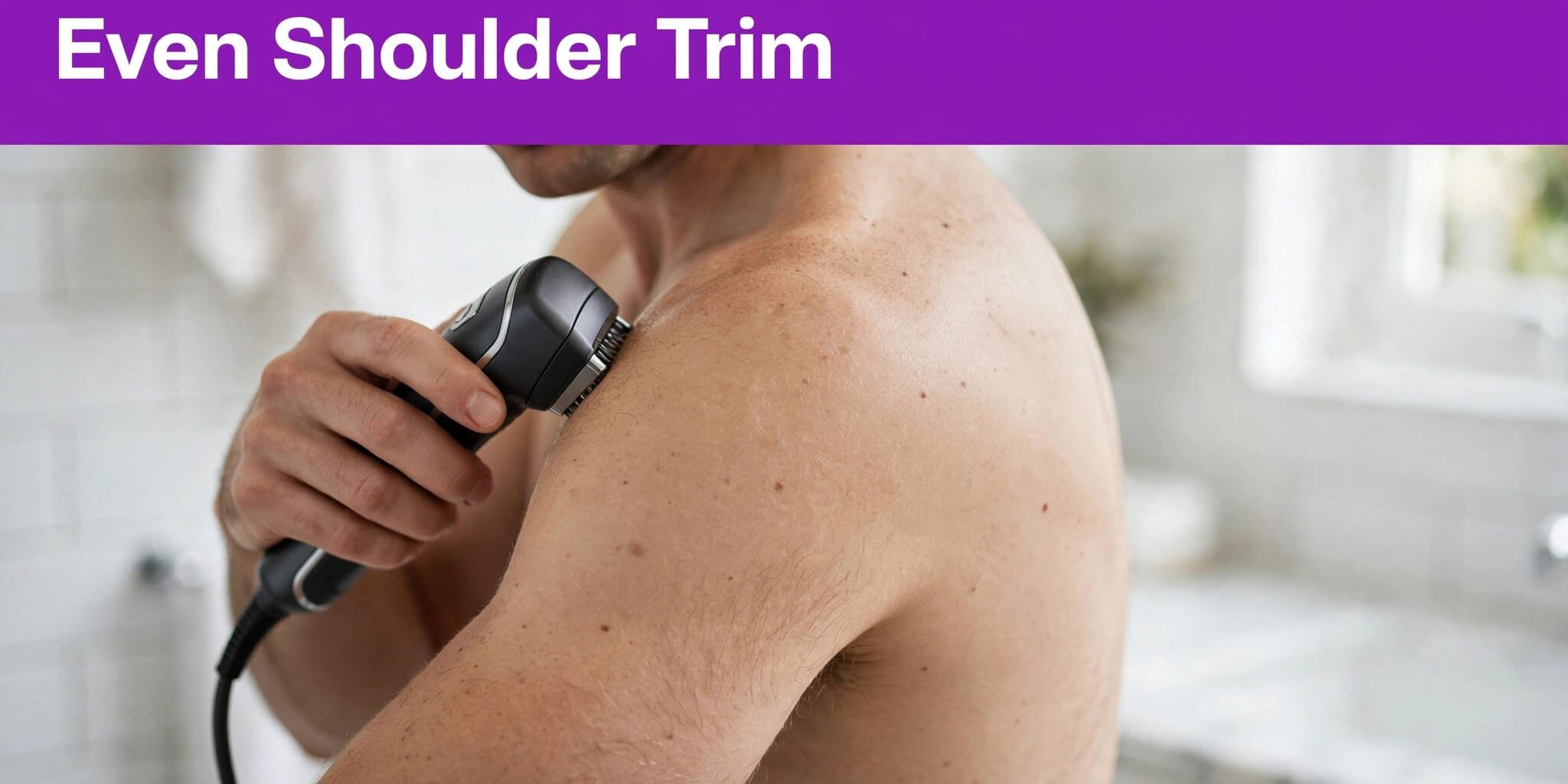
To trim shoulder body hair evenly, use a guarded body groomer, start around 6 mm, and work in small sections with light pressure. We recommend leaving some length first, since you can shorten the hair gradually without creating bare patches.
Shoulder curves and changes in hair direction can make grooming difficult, but a consistent guard and gentle pressure help maintain a natural finish. Begin with clean skin, good lighting, and a clear view of both shoulders.
Key Takeaways
- Start with a longer guard and shorten only after assessing the result.
- Blend shoulder hair into the upper arms instead of creating a sharp boundary.
- Choose tweezing for isolated strays, or wax a larger area when you prefer smooth skin.
How to Trim Shoulder Hair Evenly
Prepare the Skin and Choose a Guard
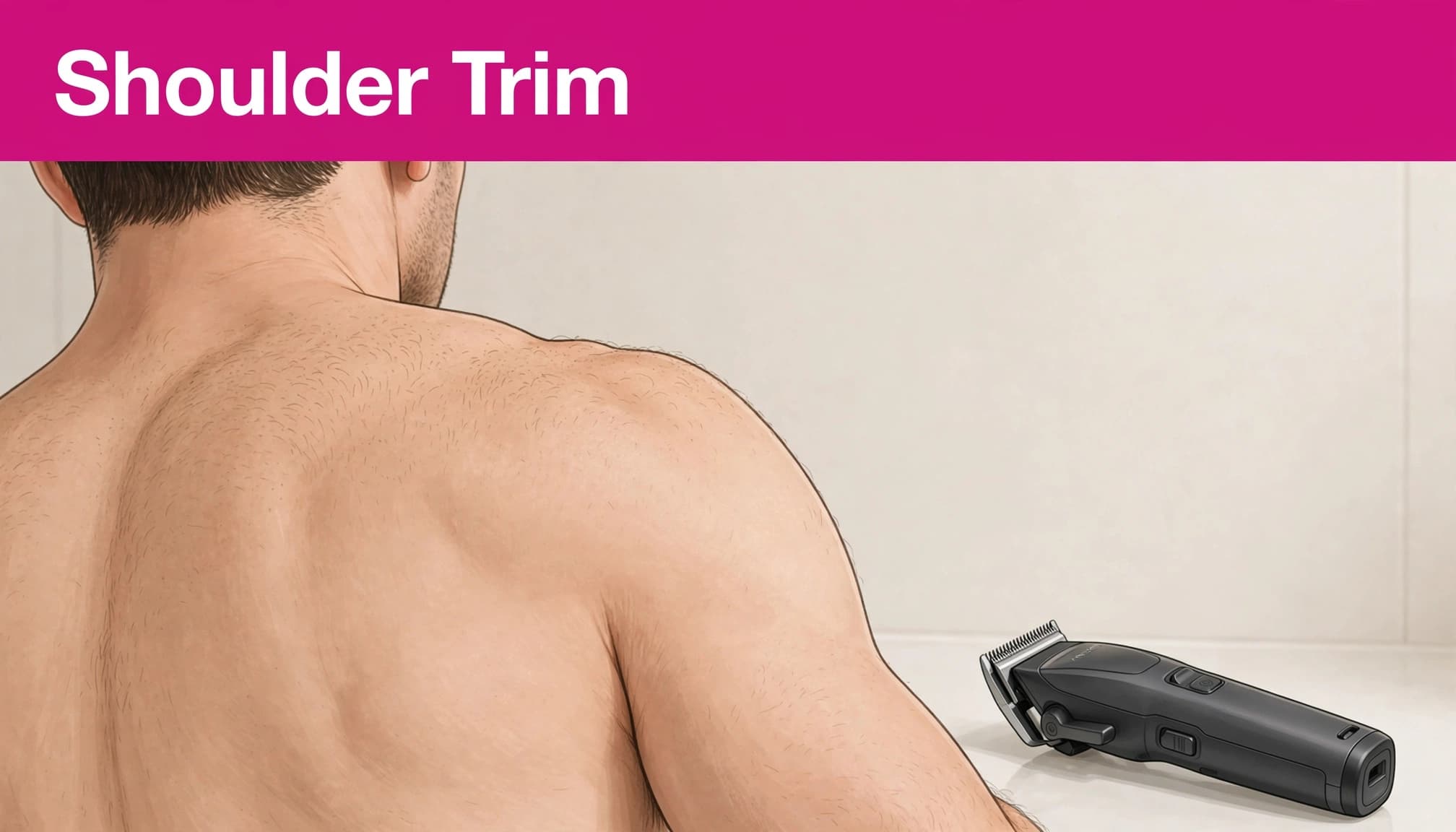
Wash with a gentle cleanser and dry thoroughly unless your groomer permits wet trimming. Dry hair is easier to assess because damp strands can gather together and hide uneven areas. Leave irritated or broken skin untouched.
Choose a body-rated trimmer with an intact cutting head and secure comb. Start around 6 mm, then consider a shorter setting if needed. Use the measurement printed on the attachment, since guard numbers aren’t consistent across brands.
Trim in Small Sections
Use good lighting and a mirror, or a second mirror, to check both sides from the front, side, and back. Keep your arm relaxed and follow the direction of hair growth with slow, lightly overlapping passes. Work in small, consistent sections across the shoulder cap and toward the upper back. Keep the comb against the surface without pushing it into the skin.
Use the same guard on both sides before changing lengths. Brush away loose clippings, lower your arms, and compare the result in the mirrors. If hair pulls, stop and switch off the groomer before clearing trapped strands.
Pressing harder over a curve can produce a shorter patch, even when the guard setting hasn’t changed.
If an uneven spot remains, make one light pass with the current guard and reassess from several angles. Shorten the setting only if needed, rather than repeatedly working one area and risking over-trimming. When visibility is poor, professional assistance offers better control than reaching behind your back.
Blend Shoulder Hair Into the Arms and Neck
Use Longer Guards Toward the Elbow
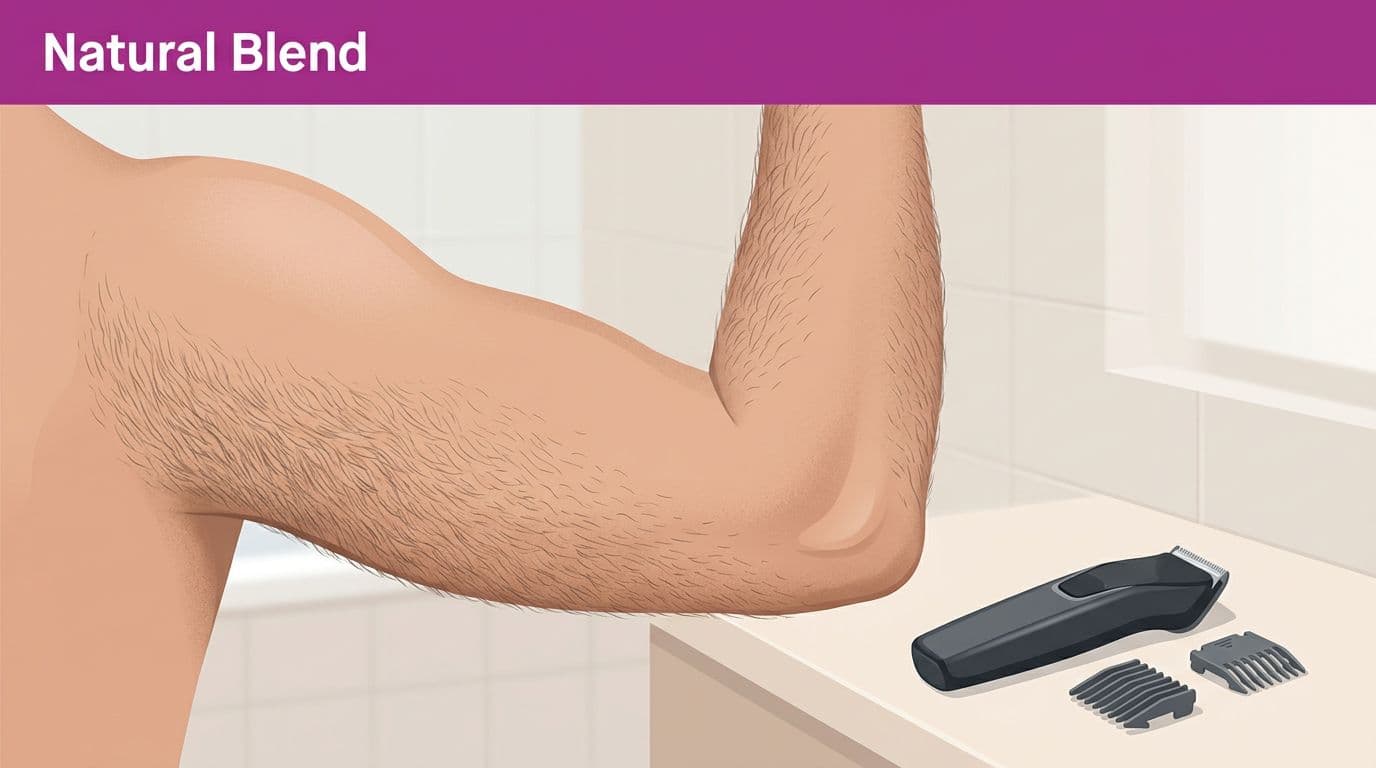
For a natural upper-arm gradient, increase the guard length as you move toward the elbow. For example, a 3 mm shoulder trim can transition through 6 mm and then a longer setting, depending on your available attachments.
Overlap the transitions lightly rather than stopping each guard at a straight boundary. Avoid shaving the upper arm completely bare, since a bare strip beside longer hair makes grooming more noticeable.
Keep the Neckline Separate
Leave the nape of the neck hairline to your barber and arrange neckline cleanups between haircuts if needed. Tweezers can remove isolated stragglers below that established line.
Keep the established hairline distinct from the shoulder blend, and shape your beard separately. Close shaving requires repeated angle changes around the clavicles, deltoids, and shoulder blades. A guarded clipper is more practical when your goal is shorter hair rather than completely smooth skin.
Choose the Right Method for Other Body Areas
Shoulders, Back, and Chest
Tweezing suits a few shoulder strays. Once growth becomes a larger patch, waxing is more practical if you want complete removal. The American Academy of Dermatology’s hair-removal overview explains the differences between temporary methods.
For the mid-back, you can wax to remove hair at the root and avoid immediate cut stubble, which can feel scratchy against clothing or a chair. Guarded trimming suits anyone who prefers some coverage.
Shave stray beard hairs below your chosen neckline near the Adam’s apple. Keep beard-line maintenance separate from body grooming, and choose a guard suited to each area. Trim or shave chest hair that shows above a crewneck collar. Start with a consistent guard for chest hair, then check the result before shortening further.
Intimate Areas, Waistband, and Feet
Intimate skin needs dedicated equipment. Use a protective head intended for that area rather than running an ordinary clipper or multi-blade razor over loose shaft or scrotal skin.
An epilator with 72 tweezers is one option for hair above the waistband, not a requirement. Waxing and trimming are also choices.
A guarded clipper can shorten foot and toe hair. For personalized options, see our men’s waxing and manscaping services.
Keep Skin Comfortable After Grooming
Rinse away clippings, pat dry, and apply a fragrance-free moisturizer your skin tolerates. Clean the cutting head as directed, wash only washable components, and let everything dry before storage.
If you shave another area afterward, use shaving cream and short strokes with hair growth. GoodRx’s guidance for reducing post-shave bumps supports this gentle approach. Avoid abrasive scrubbing immediately after grooming.
Comfortable men’s grooming depends on suitable tools and skin care, not removing every visible hair.
Frequently Asked Questions
How Often Should Shoulder Hair Be Trimmed?
We suggest assessing the length every one to two weeks, then trimming when the shape needs attention. Growth varies, so your preferred appearance and skin comfort matter more than a fixed schedule.
Are Tweezers Better Than a Razor for Stray Hairs?
For a few isolated neck or shoulder hairs, tweezers provide precise removal without shaving the surrounding area. For widespread growth, clipping is easier to maintain, while strip-based hair removal provides a smooth finish.
Keep the Finish Even and Natural
An even shoulder trim starts with controlled length, light pressure, and gradual blending into nearby hair. We recommend beginning longer so you have room to adjust without repeatedly working over the same skin.
At Theresa’s Face and Body in Cape Coral, we offer personalized men’s manscaping options suited to your preferred finish.
Call Theresa’s Face and Body for an appointment to discuss comfortable grooming and skin care.