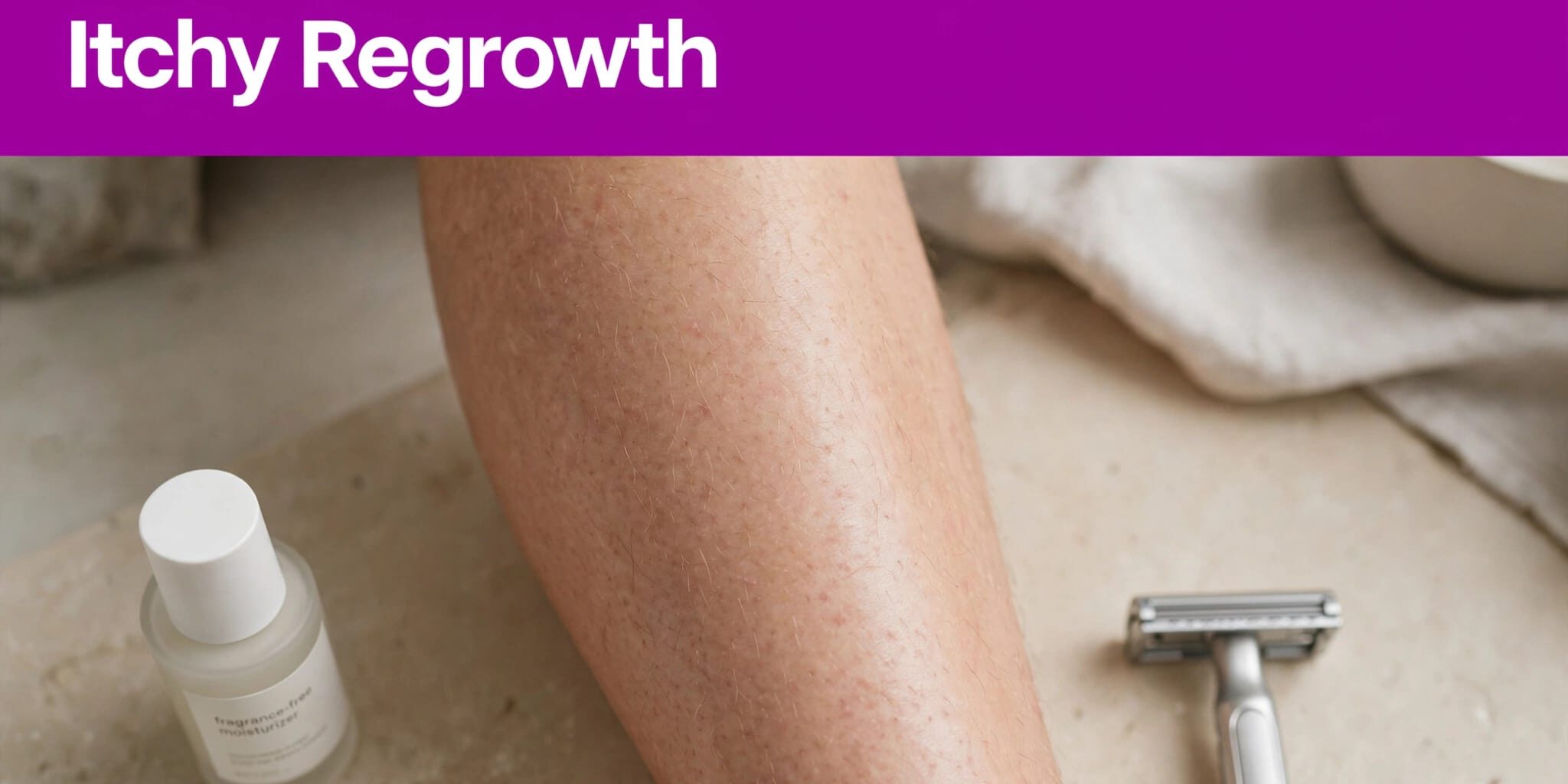
Body hair can feel itchy after trimming because cut ends rub against your skin, especially under tight clothing. Itchy hair regrowth can also involve dry skin, skin irritation from grooming tools, or ingrown hairs.
We recommend gentle aftercare rather than another close shave when your skin feels uncomfortable. Understanding what causes the itching helps you choose the right relief for your chest, legs, underarms, or pubic area.
Key Takeaways
- Itchy regrowth often comes from blunt hair ends rubbing against skin, dryness, grooming irritation, or ingrown hairs.
- Cool compresses, fragrance-free moisturizer, loose clothing, and a break from grooming can help calm irritated skin. Avoid picking or squeezing bumps.
- Reduce future irritation by using clean, sharp tools, leaving some hair length, and shaving with the grain using light strokes.
- Scalp itching doesn’t usually prove that new hair is growing. Seek medical care for severe or persistent itching, sudden hair loss, spreading redness, pus, fever, or worsening pain.
Why Hair Feels Itchy After Trimming
Blunt Tips and Friction
Trimmers and scissors cut across the hair shaft, leaving a blunt end that can feel prickly against your skin. Trimming doesn’t make hair grow thicker; friction and skin irritation make short stubble feel coarser than longer hair.
Pubic hair can feel especially uncomfortable because it’s often coarse or curly. Underwear and tight clothing can press blunt cut ends against sensitive skin, while sweat adds friction. This can cause itchy pubic hair even when you trim with scissors and don’t remove hair at the root or shave against the skin.
Ingrown Hairs, Razor Burn, and Folliculitis
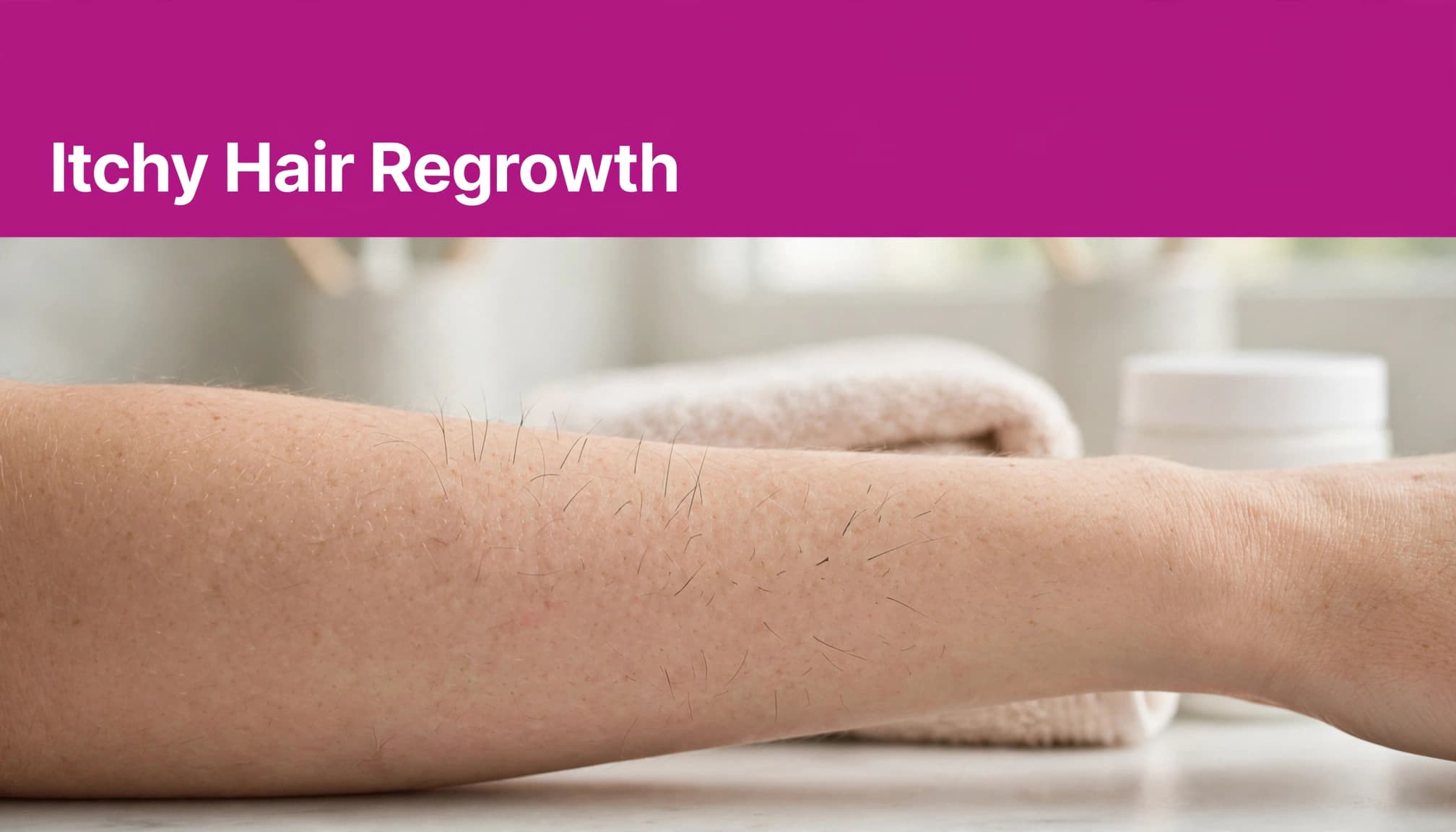
Curly or coarse hairs can bend back into the skin and cause itchy, red razor bumps. A trapped hair is sometimes visible beneath the surface. To help prevent them, shave with the grain and use a sharp razor. The American Academy of Dermatology’s razor bump prevention advice explains how gentler shaving helps.
Razor burn usually causes broader stinging or tenderness shortly after shaving. Folliculitis involves an inflamed hair follicle, sometimes caused by bacteria or fungi entering damaged skin. Dirty or dull razors can contribute. Pus-filled pimples or increasing tenderness deserve attention, although appearance alone can’t reliably identify the cause.
How to Soothe Itchy Hair Regrowth
We recommend keeping your routine simple while the skin settles. Adding several treatments at once can create more irritation.
- Rinse away loose clippings with lukewarm water, then pat dry. Apply a cool, damp cloth for temporary relief rather than scratching.
- Moisturize within about two minutes of leaving the shower, while skin remains slightly damp. A fragrance-free option such as CeraVe Daily Moisturizing Lotion can help relieve dry skin.
- If you use a treatment oil, choose a fragrance-free pubic hair oil such as jojoba oil. Apply a small amount daily only if tolerated. Oil is optional and doesn’t treat an infection.
- Wear loose, breathable clothing and pause grooming until skin irritation settles. Don’t pick, squeeze, or dig at trapped hairs.
- For brief relief, calamine lotion or over-the-counter 1% hydrocortisone may help intact, noninfected skin. Follow the label, and don’t use hydrocortisone on genital skin without medical advice.
Prickly stubble and infected follicles need different care. Increasing pain or pus is a reason to seek assessment, not apply more grooming products.
Prevent Itching During Your Next Grooming Session
Trimming and Shaving Preparation
For manscaping and everyday men’s grooming, we recommend a guarded body trimmer that leaves some length. Our advice on gentle body trimming covers reducing repeated irritation.
Clean equipment according to its instructions, remove trapped hair, and don’t share tools. Replace damaged cutters or blades that pull.
Before shaving, soften hair in warm water for 5 to 10 minutes, stopping before skin wrinkles. A sharp razor cuts cleanly, while shaving cream helps reduce friction. Apply fragrance-free shaving cream, then shave with the grain using short, light strokes and a sharp razor. Replace the blades before ten shaves, sooner if dull. These steps follow the AAD’s guidance on shaving technique.
Waxing and Product Choices
If you wax, gently exfoliate a day or two beforehand, never on the appointment day. Wait until sensitivity settles before you exfoliate again, usually several days afterward. Avoid intercourse and the gym for at least 24 hours after waxing, preferably 48, to limit friction and sweat.
Avoid hot showers, excessive washing, and drying alcohol-based aftershaves, which can worsen dry skin. SLS can dry sensitive skin; propylene glycol and cocamidopropyl betaine can cause reactions in some people, but aren’t automatically unsuitable. Choose products your skin tolerates. Once sensitivity settles, patch-test a small amount of pubic hair oil or treatment oil before applying it more broadly.
Our waxing aftercare tips provide additional guidance for keeping freshly treated skin comfortable.
When Scalp Itching Needs Different Care
Scalp itching rarely proves that new hair is growing. Dryness, dandruff, eczema, and reactions to minoxidil are more common explanations.
Shampoos, conditioners, gels, mousses, and hair dyes can also irritate the scalp. Paraphenylenediamine, often found in dark permanent dyes, is a common contact allergen.
Repeated scratching can injure the skin and a hair follicle, contributing to temporary hair loss. Hair often returns once the irritation and scratching are controlled.
Seek medical care for sudden hair loss, bald patches, hair falling out in clumps, or severe scalp itching and burning. Body bumps also need assessment if there’s spreading redness, warmth, pus, fever, or worsening pain.
Common Questions About Regrowth Itching
How Long Should Itching Last?
Mild irritation should start improving within a few days once you stop close grooming and reduce friction. There isn’t one fixed regrowth timeline. Arrange medical assessment if itching persists beyond a week, keeps returning, or worsens.
What Can Be Mistaken for Ingrown Pubic Hair?
Folliculitis, contact dermatitis, cysts, and some sexually transmitted infections can resemble ingrown hairs. Blisters, ulcers, discharge, or itching inside the vagina need medical attention rather than treatment as ordinary regrowth.
Comfortable Grooming Starts With Gentle Care
Itchy regrowth often improves when you leave more hair length, moisturize, and reduce rubbing. We recommend giving irritated skin time to settle instead of repeatedly trimming or shaving the same area.
For personalized hair-removal advice in Cape Coral, Call Theresa’s Face and Body for an appointment. Your grooming routine should support comfortable skin as well as your preferred appearance.