
To trim chest hair evenly, start with a body trimmer with an attachment, leave some length, and blend the edges. We recommend a gentle approach that keeps your natural growth pattern visible without sharp lines or bare patches.
A comfortable body grooming routine doesn’t require removing every hair. Start with the right tools and shorten gradually for better control.
Key Takeaways
- Begin around 6 mm, then shorten only where needed.
- Protect the nipples, use light pressure, and avoid repeated passes.
- Blend surrounding areas and finish with fragrance-free moisturizer.
Choose a Body Trimmer and Suitable Length
Why Trimming Works Well
An electric body trimmer with a guard shortens hair without cutting directly at skin level. Leaving some length can reduce irritation compared with close shaving, although ingrown hairs are still possible.
A razor may require daily shaving to maintain smoothness, while waxing removes hair at the root and can cause discomfort. This guide focuses on trimming for a natural finish.
Trimming doesn’t change hair thickness, texture, or growth rate. Mayo Clinic’s explanation of shaving and hair regrowth clarifies that cut tips can feel coarser and appear thicker.
Which Guard Length Looks Natural?
These lengths provide a practical starting point.
| Length | Suggested Finish |
|---|---|
| 6 mm or longer | Reduced bulk with fuller coverage |
| 3 to 4 mm | Shorter, visibly groomed chest hair |
| 2 mm | Close trim with more skin showing |
Start longer before choosing a closer finish. Carlos Costa uses a #2 attachment, but numbers such as #2, #3, and #4 aren’t standardized across trimmer models. Check the attachment’s millimeter measurement when comparing models, including Braun models.
Steps for an Even, Natural Chest Trim
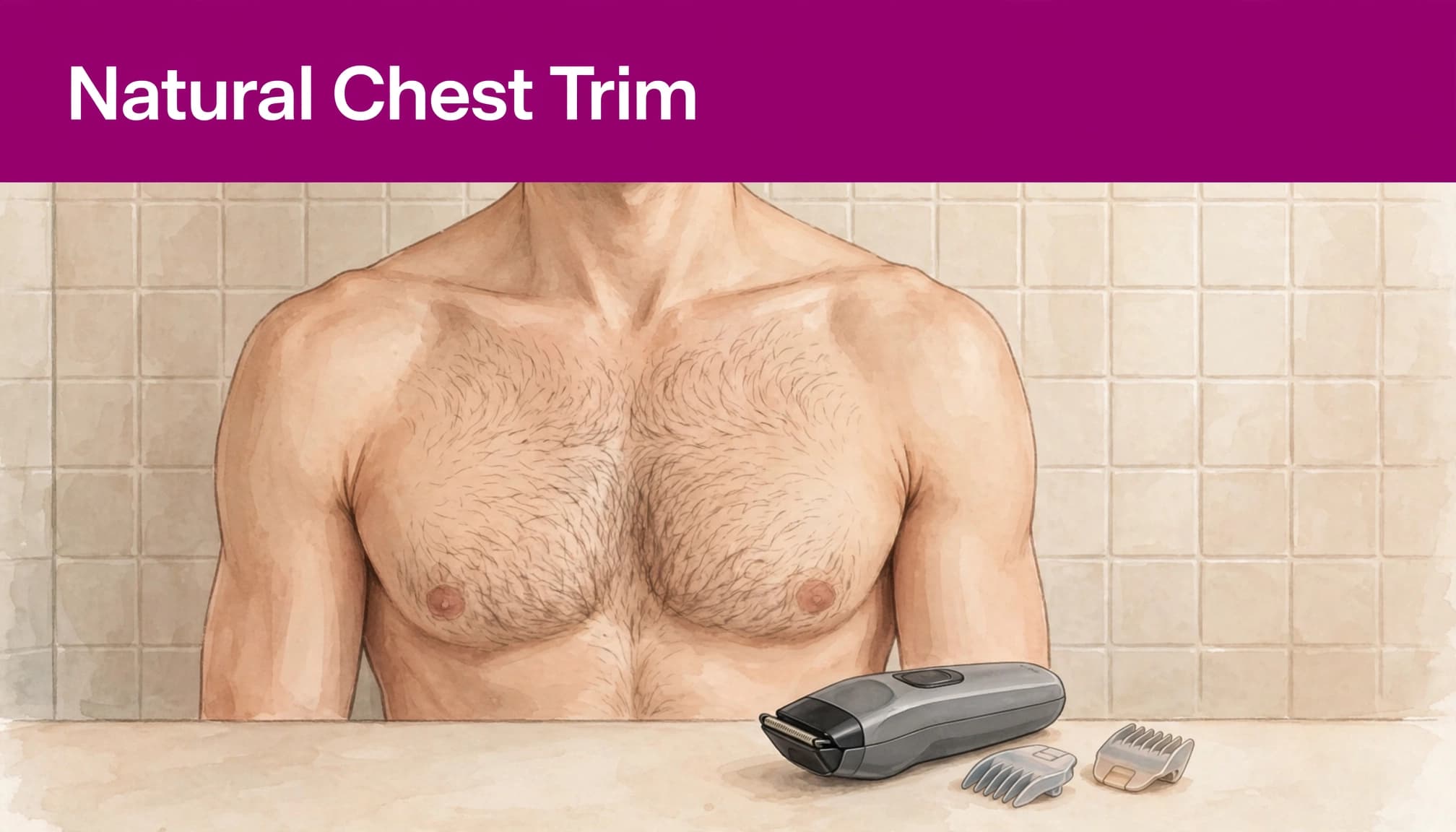
Prepare the Chest and Equipment
Shower with warm water and a mild cleanser to remove sweat and product residue. Warm water softens hair, but it doesn’t open follicles. Dry your chest completely so hair separates and the guide comb moves evenly.
A shower-rated wet/dry trimmer can also be used on wet skin according to its instructions. Dry hair makes your progress easier to see during an even first trim.
Remove trapped hair from the cutting head before starting. Don’t share grooming tools, and replace cutters that pull, show damage, or feel dull. Leave rashes, cuts, and inflamed spots alone.
Trim Gently and Protect Sensitive Areas
Use the trimmer with your longest suitable guard and follow the direction of growth using short, gentle strokes. Chest hair grows in different directions, so adjust your approach around the sternum.
Use your free hand to hold loose skin gently taut. Keep the trimmer head away from the nipples and areolas rather than passing directly over them.
For isolated long hairs, use rounded-tip grooming scissors with the blades kept away from skin. Don’t chase every short hair around sensitive areas.
Blend the Edges and Review the Finish
Use a longer setting near the collarbones, shoulders, and lower neck. Overlap the transitions lightly instead of creating a straight border. Blend into stomach hair as well.
Brush away loose clippings and inspect both sides in good light. If needed, use a shorter setting for a light second pass. A gentle against-grain pass can catch stragglers, but stop if it pulls or irritates.
Popular Chest Hair Styles
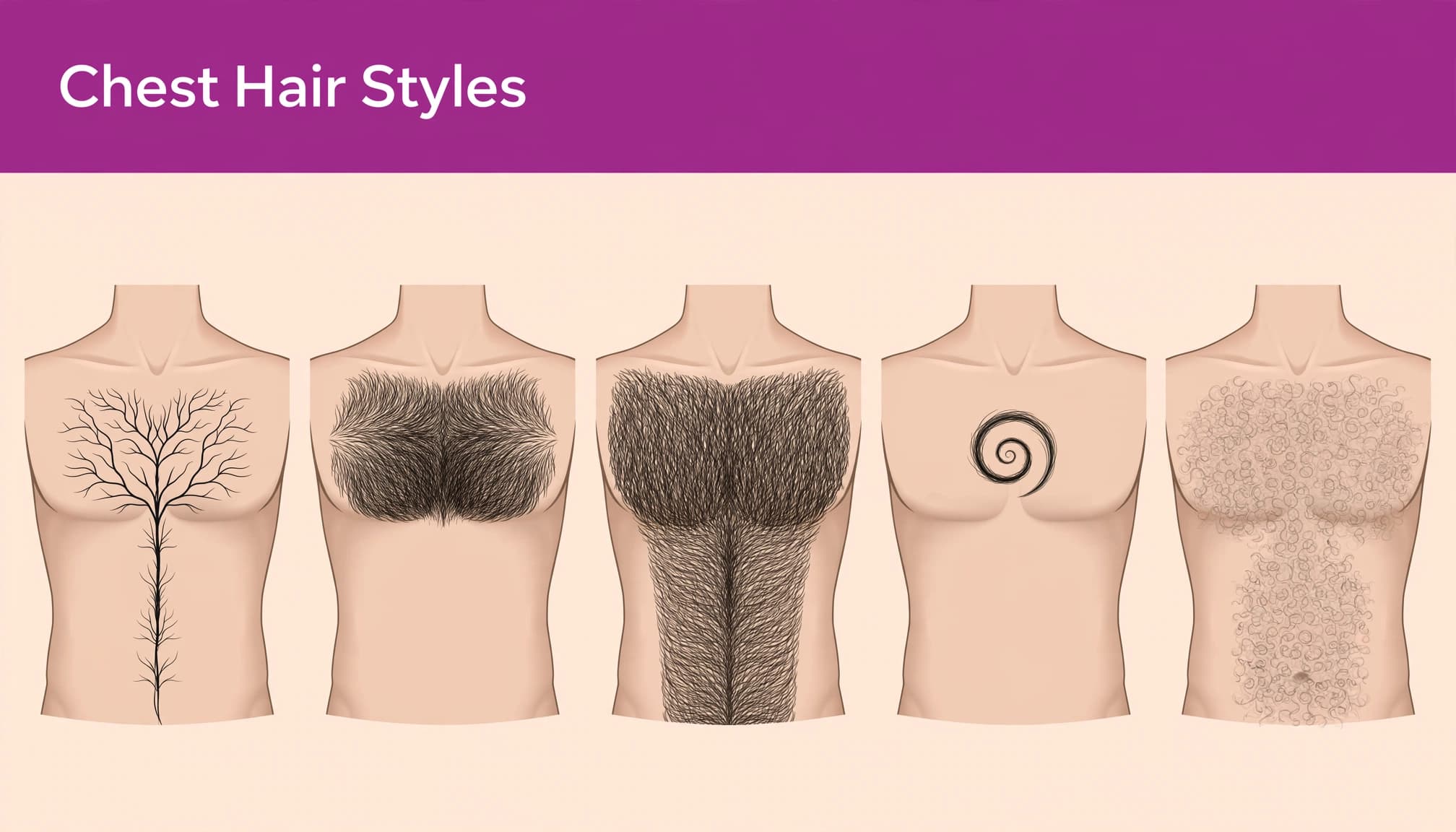
The tree keeps fuller upper-chest coverage with a narrower trail toward the stomach. Top heavy concentrates hair across the upper chest. The rug retains dense chest coverage, while the snail emphasizes a narrow stomach trail. The woolly jumper keeps fuller coverage across the torso.
Choose a shape that suits your existing growth, not your age. Manscaping can be simple maintenance. Use the same gradual approach to trim body hair elsewhere.
Coach reported a Braun survey in which over 70% of men trimmed body hair. Nearly a third spent over 20 minutes grooming, and 41% said a good trim improved confidence. These figures describe preferences, not a grooming requirement.
Calm the Skin After Trimming
Rinse away clippings with lukewarm water, then pat dry with a clean towel. Apply a light, fragrance-free moisturizer or alcohol-free aloe vera gel your skin already tolerates. Stop using anything that stings.
For mild redness, try a cool, damp compress. Avoid fragranced aftershave, exfoliating acids, and scrubs while skin feels sensitive. Wear a loose shirt to reduce friction.
For bumps after using a razor, see our razor bump prevention guidance. Don’t pick bumps or keep trimming over soreness. Increasing pain, swelling, pus, or persistent bumps need medical assessment.
Switch off the device before cleaning, wash only suitable parts, and let everything dry before storage.
Frequently Asked Questions
Does Chest Hair Mean High Testosterone?
Testosterone influences body hair growth, but chest hair alone doesn’t establish whether your level is high. Genetics and the way follicles respond to hormones also affect coverage.
How Often Should Chest Hair Be Trimmed?
Trim when the length becomes uneven or no longer suits your preference. There’s no fixed schedule. We recommend allowing irritated skin to settle completely rather than grooming because a certain number of days has passed.
Keep the Finish Natural and Comfortable
An even finish depends on controlled length and gentle blending. Start longer, protect sensitive areas, and give aftercare the same attention as trimming.
For personalized grooming advice or a consultation, Call Theresa’s Face and Body for an appointment. We can discuss your preferred even trim and how to maintain it.