Safe nose hair grooming means trimming only visible hair at the nostril opening with clean tools and gentle movements. Leave deeper hairs alone because they help protect your airways.
For men’s grooming, a neat appearance doesn’t require removing every hair. Sensitive skin benefits from light pressure, good lighting and simple aftercare, so start with the right tool and a clear view.
Key Takeaways
- Trim visible hair at the entrance, without reaching deep into your nose.
- Choose a guarded nose hair trimmer or small, rounded-tip scissors, and keep equipment clean.
- Do not pluck or use waxing inside the nostrils, and pause grooming when the area feels irritated.
Why Nose Hair Should Stay in Place
Nasal hair works with mucus to trap dust, pollen, bacteria, and other airborne particles. This filtering is part of your body’s natural defenses, so removing all nasal hair isn’t a healthy grooming goal.
Avoid trying to pluck hairs or remove them with waxing, since both pull hair out at the root. This can injure the follicle opening and give bacteria an entry point, increasing the risk of infection or folliculitis. Medical professionals quoted in guidance on nose hair removal explain why trimming is preferable.
Trim only hairs that extend beyond the nostril, and leave the rest undisturbed.
Choosing Comfortable Nose Hair Grooming Tools
Electric Trimmers or Rounded-Tip Scissors?
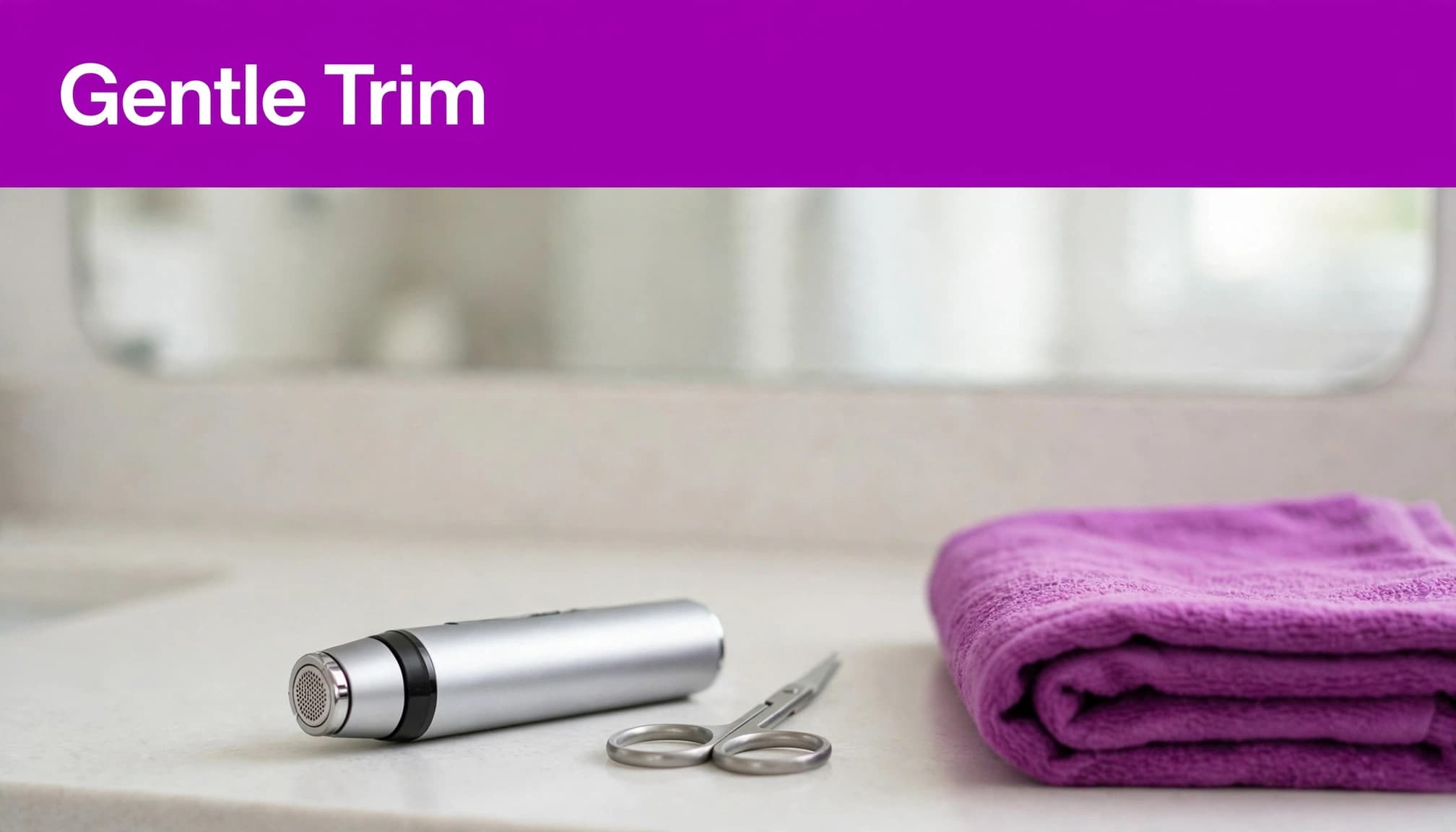
For beginners, we recommend a guarded electric nose hair trimmer because its guard separates the moving cutter from your skin. Rounded-tip scissors suit individual hairs you can see clearly, but they require steady control.
Rotary heads are convenient for quick nose touch-ups. Linear heads offer more precision around the nasal opening, and some include eyebrow guards. A linear head can also help with careful edge work. Neither style needs to reach deep inside a nostril.
Affordable Options for Different Needs
These nose hair grooming tools offer different features and price points.
| Tool | Power and Head | Cleaning | Approximate Price |
|---|---|---|---|
| Philips Norelco 3000 NT3600/62 | One AA battery; linear and rotary heads | Fully washable | $14.99 |
| Wahl Micro Groomsman 5640-600 | Battery-powered; interchangeable heads, including a linear detail head | Rinseable heads | $8.20 |
| AsonTao or Motanar grooming scissors | Manual; rounded tips | Wash and dry | $6 |
A higher price doesn’t replace gentle technique. Choose nose-specific equipment rather than using a full-size beard or body trimmer inside your nose.
How to Trim Nose Hair Safely
Set aside enough time to work carefully. Stop if you can’t see the hair clearly.
- Prepare gently. Wash your hands and blow your nose. If mucus remains at the entrance, remove it with a lightly dampened cotton swab. Don’t push the swab farther inside.
- Improve your view. Face a mirror with lighting slightly below nose level. Tilt your head slightly upward so the nostril opening stays visible without stretching it.
- Position the tool. Keep scissors or the guarded trimming head at the entrance. With scissors, keep both rounded tips in view and cut only a clearly visible hair.
- Trim with control. Use short movements and light pressure. Move a rotary head in small circles around the opening. Stop if the tool pulls, catches or feels uncomfortable.
- Finish without repeated passes. Return your head to its normal position and check the opening in the mirror. Once protruding hairs are shortened, put the tool away instead of pursuing a closer result.
Don’t use a razor, exfoliating scrub or hair-removal cream inside your nose. Body grooming techniques aren’t automatically suitable for delicate nasal tissue.
Aftercare and Cleaning for Sensitive Skin
Keep Products Gentle and Equipment Clean
Gently blow out loose clippings. A packaged saline nasal spray can help clear remaining hairs; use it according to its directions. If the outside nostril edge feels dry, apply a small amount of familiar, fragrance-free moisturizer to external skin only.
If dryness persists, reapply the same moisturizer to external skin. Stop using it if it stings.
Avoid alcohol-based aftershave, fragranced products and exfoliating acids around freshly irritated skin.
Switch off the trimmer before cleaning. Rinse only the parts designed for washing and let them dry before storage. Wash rounded-tip scissors with soap and water, or disinfect with alcohol when suitable, then dry completely.
Our hygiene tips for manscaping reinforce clean equipment and consistent care. Don’t share grooming tools. Replace a damaged or pulling cutter; washing won’t restore a worn edge.
Know When to Pause Grooming
Skip trimming during a cold or when your nose is sore, crusted or bleeding. Inflamed tissue is easier to irritate and may bleed after a nick.
After a nasal procedure, wait until your treating clinician says trimming is appropriate. Increasing pain, swelling, pus or persistent bumps need medical assessment. They may indicate folliculitis or another follicle condition, rather than ordinary post-trimming sensitivity.
Frequently Asked Questions
How Often Should Nose Hair Be Trimmed?
Look for visible hairs weekly. Some people need a touch-up every one to two weeks, while others can wait two to four weeks. Let visible growth and skin comfort guide your schedule, rather than trimming automatically.
Does Trimming Make Nose Hair Grow Back Thicker?
Trimming doesn’t change the follicle or make hair grow thicker. The cut end can feel blunt as it grows. You don’t need to remove the root to maintain a neat appearance.
Make Comfortable Grooming the Priority
A tidy result only requires shortening the hairs that show. We recommend keeping protective hair in place and allowing sensitive skin to settle between touch-ups.
Clean equipment, gentle technique and simple aftercare support comfortable maintenance without unnecessary irritation.
Call Theresa’s Face and Body for an appointment to discuss your grooming preferences and personalized skin care.