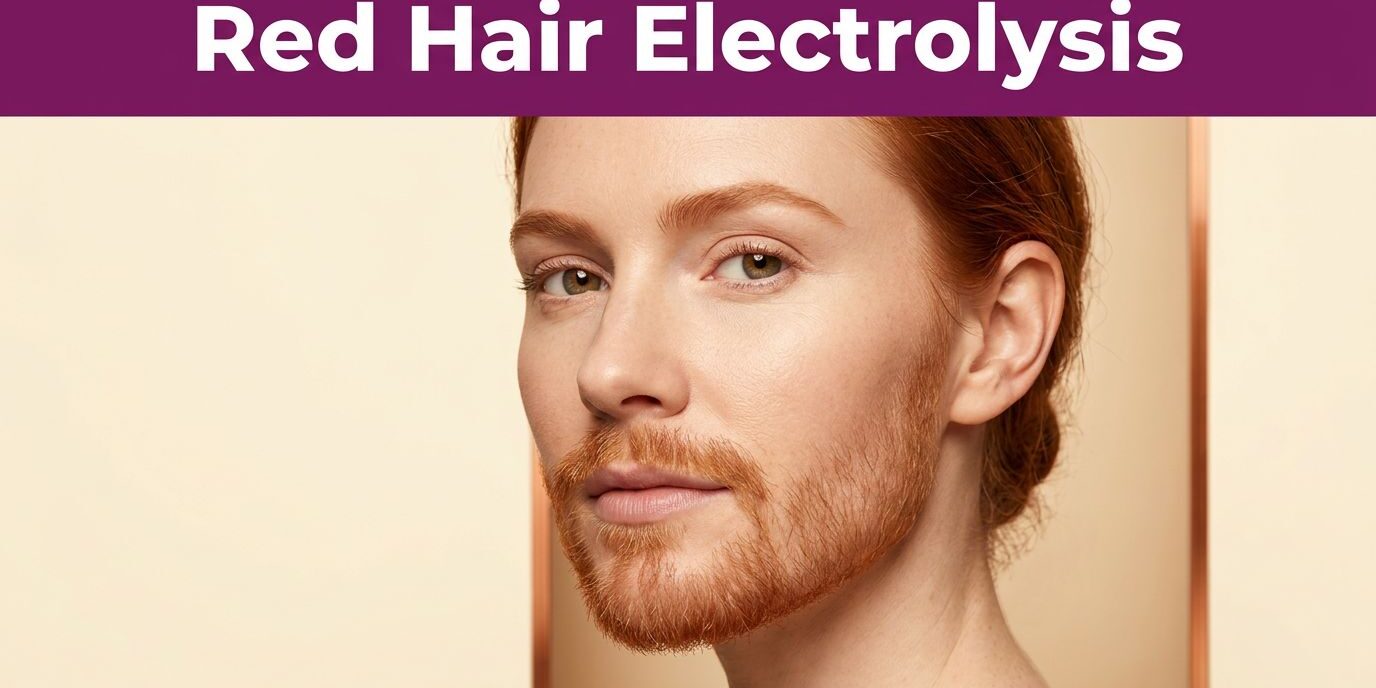
Unwanted red growth around the chin, upper lip, cheeks, jawline, and sideburns can become tiring to manage. Shaving, trimming, and tweezing only deal with what you see today.
If you searched for electrolysis red facial hair, you probably want to know whether treatment works on copper, auburn, strawberry blonde, or red hair. It does, because electrolysis treats each follicle instead of depending on hair color. Electrolysis does not depend on hair color in the same way pigment-based methods do.
I recommend planning for consistent appointments, realistic timing, and good skin care between visits. Results build gradually, so here is what the process looks like.
Why Red Growth Needs Precise Follicle Work
Red hair often contains a combination of warm red, copper, gold, and lighter tones. Some strands may be coarse and visible, while others can be fine, soft, or nearly blonde. This mixed pattern is one reason each person needs a customized treatment plan.
Understanding Eumelanin And Pheomelanin
Hair color comes from natural pigments called melanin. Eumelanin creates brown and black tones, while pheomelanin creates red and yellow tones. Natural redheads usually have more pheomelanin, giving their hair a copper, strawberry, or auburn appearance.
Electrolysis doesn’t need a specific amount of pigment to work. A sterile probe enters hair follicles one at a time, and a small electrical current reaches the growth cells. This makes electrolysis suitable for red, blonde, white, gray, and darker hair.
Laser hair removal is generally more predictable when there’s contrast between dark hair and light skin. Results can vary across skin types, devices, and laser settings.
Light, Coarse, And Mixed Hair Can Be Treated
Unwanted growth rarely has one uniform texture. You may have coarse hair on the chin, fine hairs on the cheeks, and a few darker strands near the jawline. I look at the density, direction, texture, and shape of the growth before recommending treatment timing.
This precision is helpful for women and men who want a clean chin, a softer upper-lip area, a defined beard line, or permanent removal of individual hairs.
How Electrolysis Treats Red Growth
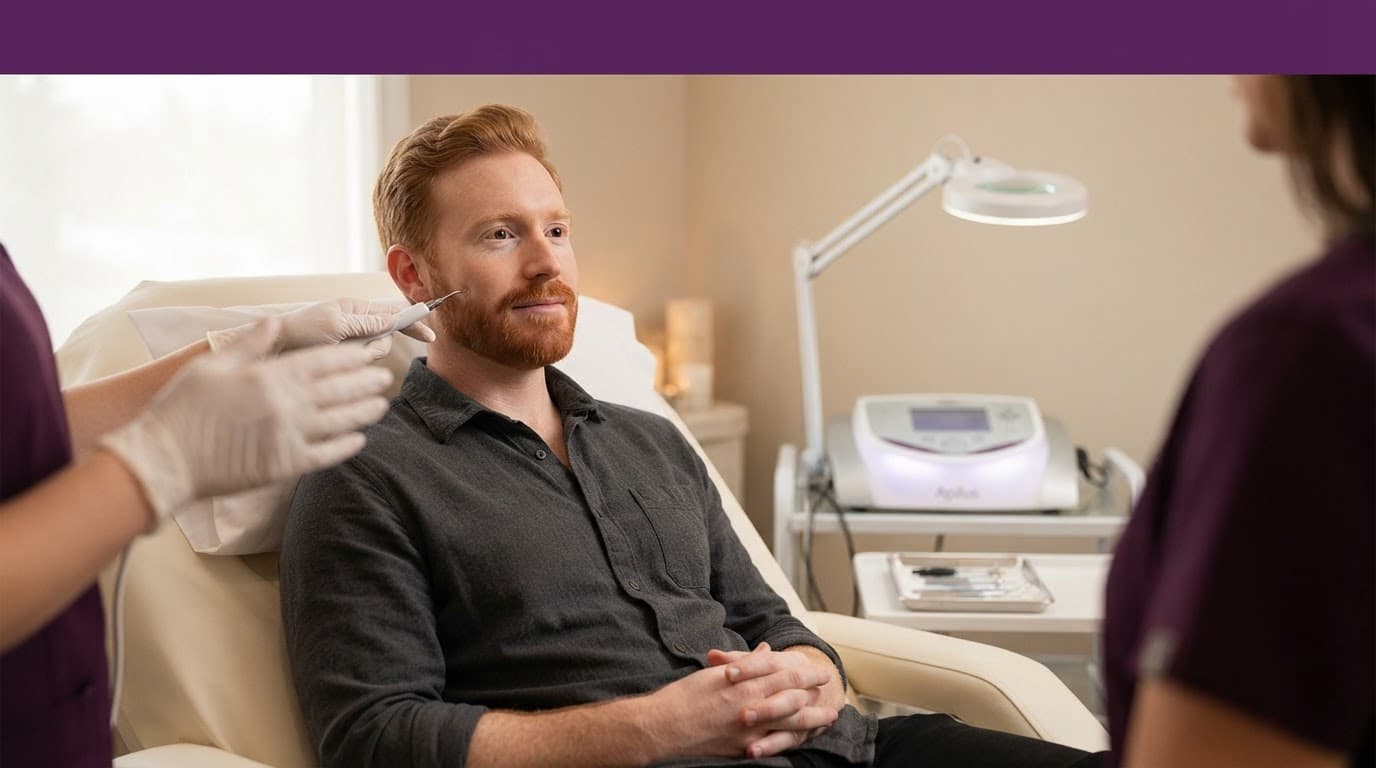
Electrolysis hair removal treats one follicle at a time. That may sound slower than treating a broad surface, but it gives the electrologist control over which hairs are removed and which natural edges remain.
During the appointment, I cleanse the area and use a new sterile probe. When treating red hair, the probe follows the natural opening of the hair follicles, giving natural redheads a precise treatment approach. I apply a controlled electrical current, then remove the treated hair with sterile tweezers. When the follicle receives the right treatment, the hair usually slides out without a pulling sensation.
Why Electrolysis Is FDA Approved for Permanent Hair Removal
The Cleveland Clinic’s electrolysis guide describes electrolysis as the only method recognized by the FDA for permanently disabling targeted follicles. When performed correctly, the treatment permanently disables the growth cells in the treated follicle.
Permanent doesn’t mean every visible hair disappears after one visit. It means a successfully treated follicle should stop producing that hair, while other follicles may become visible later as they enter a different growth stage.
The FDA consumer hair-removal information also explains that electrolysis requires a series of appointments. Newly visible hairs can require multiple sessions because follicles grow at different times.
What To Expect During An Electrolysis Appointment
Your first visit should feel informative, private, and comfortable. I want you to understand the process before treatment begins, especially if this is your first appointment.
The Consultation And First Session
The appointment usually begins with questions about your goals, past hair-removal habits, medications, hormonal concerns, and how different skin types may respond.
I also ask about sensitive skin, previous reactions, and your comfort preferences. We discuss whether you want complete removal or a shaped, natural-looking result.
I then examine the treatment area and estimate a practical session length. A small chin area may be suitable for a short appointment, while a dense beard or larger jawline may need more time.
The treatment itself involves a series of tiny insertions and brief current applications. You may feel warmth, a quick pinch, or a small snapping sensation. The upper lip is often more sensitive than the chin, although each person experiences the treatment differently.
Temporary skin irritation can occur afterward, but it usually settles as the skin recovers.
Comfort Options And Pain Management
Comfort improves when the session length matches your tolerance. Many clients prefer starting with shorter treatment sessions and increasing the time after they know how their skin responds.
Depending on your needs, comfort measures may include:
- Drinking water before your appointment.
- Avoiding stimulants before treatment if they make you feel more sensitive.
- Discussing approved topical anesthetics with your electrologist.
- Using cooling before or after treatment.
- Taking short breaks during a longer appointment.
I adjust the pace and settings based on your skin, hair texture, treatment area, and comfort level. You never need to push through a session that feels too intense.
How Long Does Electrolysis Take For A Red Beard?
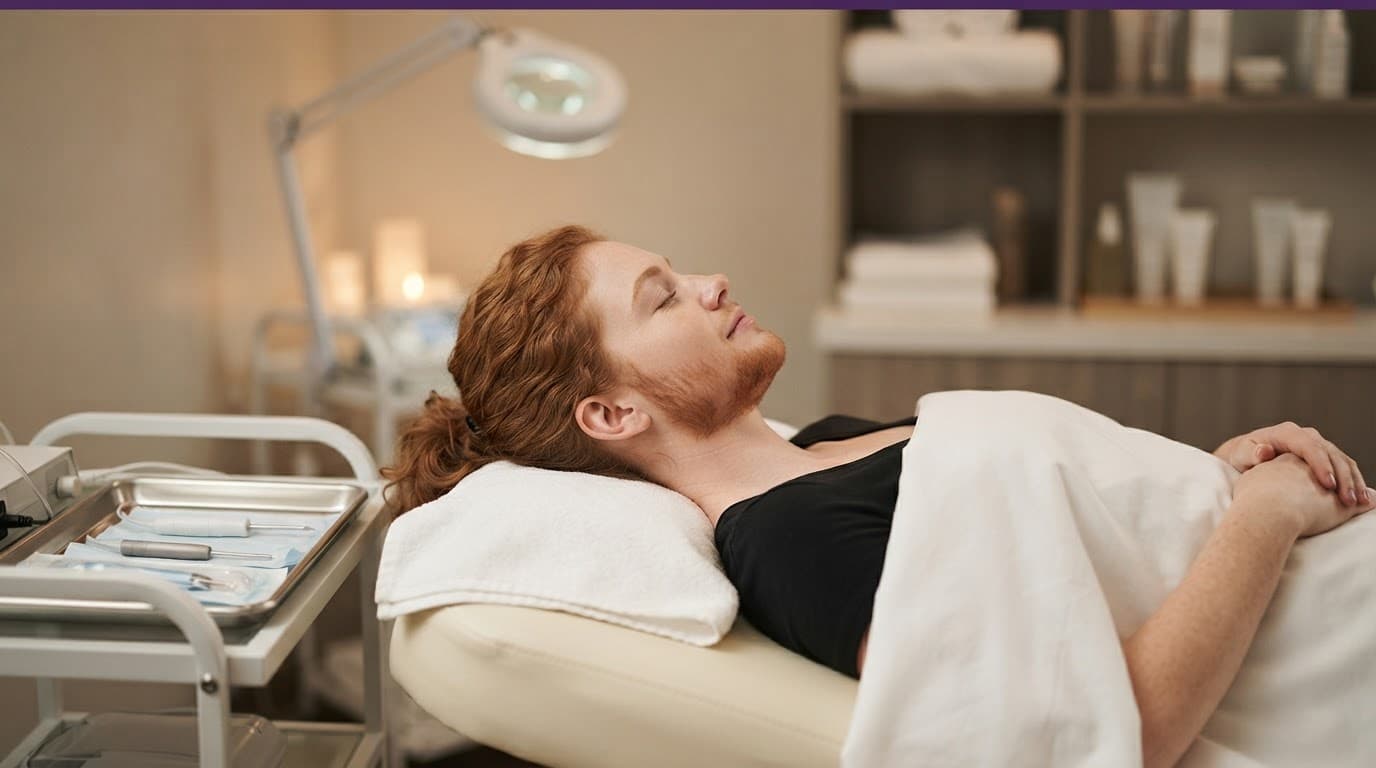
This is one of the first questions most clients ask, and the honest answer depends on density. A few unwanted chin hairs are very different from a full beard with coarse hair across the cheeks, jaw, neck, and upper lip.
Many smaller facial treatment plans involve 8 to 18 appointments over 9 to 18 months, but that is a planning range, not a promise. Dense growth, past tweezing, hair direction, hormones, and appointment consistency all affect the total time.
The Hair Growth Cycle
Hair follows a hair growth cycle, so not all hair follicles produce visible strands at once. Some are in active growth, some are resting, and others become visible weeks later.
This is why a new hair after an appointment doesn’t automatically mean treatment failed. It may be a different follicle becoming visible for the first time.
Appointments are often scheduled about three to five weeks apart. That timing gives additional hairs an opportunity to appear while keeping the treatment plan moving forward.
A new hair appearing after treatment is not the same as a treated follicle producing the same hair again.
Full Beard Clearance Requires Patience
A full red beard can require multiple sessions and many treatment hours across a longer removal project. Some published treatment examples reach as much as 150 hours over 18 to 30 months, especially with dense growth across the entire beard area.
I don’t use that figure as a prediction for every client. It’s planning context, not a guarantee. Measuring the area and observing return speed provide a better estimate.
The most helpful sign is gradual thinning. You may notice fewer visible hairs, longer gaps between appointments, and shorter clearing times as treatment sessions continue and treated follicles stop producing hair.
Thermolysis, Galvanic, And Blend Electrolysis
There are three main electrolysis modalities: thermolysis, galvanic, and blend. Each uses electrical current differently to disable growth cells. Selection depends on follicle shape, hair direction, hair texture, skin types, skin response, and treatment goals.
Thermolysis Uses Focused Heat
Thermolysis uses high-frequency alternating current to create localized heat inside the follicle. It’s often chosen when speed and efficient treatment matter, particularly on smaller facial areas with many visible hairs.
The timing and intensity must match the follicle. Good probe placement matters because the goal is to treat the growth center while keeping surrounding skin comfortable.
Galvanic Creates A Chemical Reaction
Galvanic electrolysis uses direct current to create a chemical reaction inside the follicle. This reaction damages the growth tissue and can suit a slower, more deliberate treatment approach.
Galvanic may take longer per hair than thermolysis, but treatment choice isn’t based on speed alone. Follicle shape, hair direction, and individual skin response all matter.
Blend Combines Both Methods
Blend electrolysis combines galvanic current and thermolysis in one treatment. The heat and chemical reaction work together, which can make blend useful for coarse hair and curved or previously tweezed follicles.
There’s no single modality that’s right for every redhead. An experienced electrologist may use one method for the chin and another for the upper lip or jawline.
Preparing For Electrolysis Sessions
Preparation is simple, and discussing pain management can make appointments easier while helping your electrologist see the growth pattern clearly.
Keep The Follicle Available For Treatment
Avoid tweezing, waxing, threading, or other root-removal methods between appointments. Multiple sessions work best when the follicle remains available for treatment.
These methods pull the hair out before the follicle can be treated.
If you need to manage the appearance between sessions, shaving or trimming is usually more helpful. These methods leave the follicle in place and may be easier to manage if you’re prone to ingrown hairs.
Arrive with clean skin when possible. Heavy oils, makeup, and strong skincare products can make the treatment area harder to prepare.
Follow Gentle Aftercare
After your appointment, keep the area clean and use only gentle products recommended for your skin. If you have sensitive skin, your electrologist may recommend extra care.
Avoid rubbing, scratching, heavy makeup, intense heat, and strong active ingredients. These steps can help limit temporary skin irritation while the treated skin settles.
A cool compress can feel soothing after treatment. Sun protection is also important for facial skin, especially when the area feels warm or sensitive.
Your electrologist will give you aftercare instructions based on the treated skin and your skin response. Following them consistently helps you return comfortably for the next appointment.
Cost, Hormones, And Planning Your Results
Electrolysis is usually priced by treatment time rather than by the number of hairs. A short appointment and a full-hour appointment aren’t equal, so ask how session lengths are priced before you begin.
I recommend creating a monthly treatment budget instead of focusing only on the final total. Planning for multiple sessions keeps a longer facial hair project easier to manage and lets you review progress as the months pass.
Hormonal Growth Can Change The Timeline
Facial hair can become more noticeable during puberty, pregnancy, menopause, PCOS, or other hormonal changes. Some medications and gender-affirming hormone changes can also affect the pattern and amount of facial growth.
Hormonal changes can alter the hair growth cycle. New follicles may become active after earlier hairs have been treated. This doesn’t mean the completed treatment failed. Your plan may need additional appointments for newly visible growth.
If you have PCOS or another condition affecting facial growth, share that information during your consultation. It helps me create a more realistic schedule and explain what progress may look like.
For clients in Cape Coral, Florida, Call Theresa’s Face and Body for an appointment so we can discuss your hair growth, skin, goals, and the treatment area you want to address.
Frequently Asked Questions
Does electrolysis work on red facial hair?
Yes. Electrolysis treats individual follicles directly, so it can be used on red, copper, auburn, strawberry blonde, gray, white, and darker hair.
How many electrolysis sessions will red facial hair need?
The number of sessions depends on hair density, texture, hormones, past tweezing, and appointment consistency. Smaller facial areas may involve 8 to 18 appointments over 9 to 18 months, while a dense beard can require more treatment time.
Can I shave between electrolysis appointments?
Yes, shaving or trimming can help manage visible growth while leaving the follicle available for treatment. Avoid tweezing, waxing, threading, and other methods that remove the hair from the root.
Is electrolysis painful on the upper lip and chin?
You may feel warmth, a quick pinch, or a small snapping sensation during treatment. The upper lip is often more sensitive than the chin, but shorter sessions, cooling, breaks, and approved comfort options can make the appointment easier.
What should I expect after treating red facial hair?
Temporary redness or irritation can occur, but it usually settles as the skin recovers. New hairs may appear as different follicles enter the visible growth stage, so gradual thinning and longer gaps between appointments are more useful signs of progress.
Conclusion
Electrolysis hair removal works well for red facial hair because it treats the follicle directly and doesn’t depend on hair color.
It supports permanent hair removal, but progress requires consistency because follicles grow on different schedules. Consistency, sensible timing, comfort planning, and gentle aftercare support lasting smoothness one follicle at a time. Reducing repeated root-removal practices may also help lessen recurring ingrown hairs.