If you are dealing with hirsutism, you know that the daily battle against unwanted facial hair can be exhausting. Excess hair growth is a common hallmark symptom of PCOS, and while many look for solutions, you want plain answers. PCOS facial hair electrolysis is a viable path forward because it can permanently destroy treated follicles, though the nature of the condition changes the typical timeline.
So yes, this treatment can help significantly. However, it usually requires repeated visits, some patience, and a clear understanding of what permanent results actually mean when hormonal fluctuations remain part of the picture.
Key Takeaways
- Electrolysis is the only FDA-recognized method for permanent hair removal, making it a reliable solution for stubborn PCOS-related facial hair regardless of hair color or skin tone.
- Because PCOS involves hormonal fluctuations, the body may continue to recruit new hair follicles; electrolysis permanently destroys the treated follicle, but occasional maintenance may be needed to address new growth.
- Unlike laser hair removal, which can occasionally trigger paradoxical hypertrichosis in hormonal patients, electrolysis treats individual follicles to safely and effectively manage growth.
- Consistency is essential for success, as the treatment follows the natural hair growth cycle and typically requires a series of sessions over 12 to 18 months.
- Pairing electrolysis with medical management of PCOS—such as consulting an endocrinologist—can help slow down the development of new hair and simplify the long-term maintenance process.
Why facial hair from PCOS takes a different path
PCOS-related facial hair is often more stubborn than the stray chin hair that appears with age. In those with PCOS, excess hair growth is primarily driven by elevated androgens, such as testosterone. These hormones can stimulate new follicles over time, especially on the chin, upper lip, jawline, and neck.
Electrolysis works by targeting each individual hair follicle. A fine probe enters the natural opening of the hair follicle, where a small amount of current destroys the growth center so that the treated hair cannot return. It is the only FDA-recognized method for permanent hair removal.
This process differs significantly from laser hair removal. While laser hair removal works for many, it can sometimes trigger paradoxical hypertrichosis in patients with a hormone imbalance, which may cause hair to grow back thicker or faster. Electrolysis avoids this risk by treating every hair individually.
That does not mean every hair on your face disappears after one round. Hair grows in stages known as the hair growth cycle, and not every follicle is active on the day of treatment. With PCOS, you also face another challenge because your hormones may still encourage brand new hairs to appear in follicles that were previously dormant.
Electrolysis can permanently remove the follicles it treats. PCOS can still trigger new facial hairs in other follicles.
That is why electrolysis for PCOS often works best when you go in with realistic expectations. Think of it like clearing a garden bed one weed at a time while new seeds may still sprout. The cleared spots stay cleared, but you may need time and occasional upkeep.
There is good news here too. Electrolysis works on all hair colors and skin tones. If your facial hair is blonde, red, gray, or mixed, or if laser hair removal was not a fit, electrolysis remains a reliable and effective option.

What your first electrolysis appointment is usually like
A first visit often starts with questions before any hair gets treated. Your electrologist may ask about your PCOS diagnosis, medications, skin sensitivity, acne treatments, and how you currently remove hair. If you tweeze every day, be sure to mention it, as it directly impacts your electrolysis treatment plan.
The next step is an assessment of the hair growth itself. Your technician will distinguish between terminal hair, which is typically thick and dark, and vellus hair, commonly known as peach fuzz. Addressing coarse hair on the chin, stubborn chin hair, or thinner strands on the upper lip requires different settings and timing. Because your unique skin tone influences the energy settings used, your provider will evaluate your skin tone to ensure effective results with minimal irritation.
You will also receive specific prep instructions. In most cases, you need visible hair for treatment because the follicle must be accessed properly. That usually means stopping tweezing and waxing well before your appointment. Some providers also want you to pause shaving for a short window. Always follow the timing your electrologist suggests.
Come in with clean skin. Skip heavy makeup, oils, and fragranced products on the treatment area unless told otherwise.
A consultation may include a short test area. That is helpful for everyone involved. You get a feel for the sensation, your electrologist sees how your skin reacts, and both of you leave with a better sense of pacing. If you are prone to post-inflammatory marks, ingrown hairs, or strong redness, share this information up front so the procedure can be tailored to your skin needs.
During treatment, pain level, timing, and normal side effects
The electrolysis process is precise and repetitive. A sterile filament is inserted into the hair follicle, where a current is delivered to destroy the dermal papilla. This is the key to permanent hair removal. Depending on your needs, your practitioner may use thermolysis (heat), galvanic (chemical), or the blend method (combining both). Once treated, the hair is lifted out with tweezers. The hair should release easily, as any resistance suggests the hair follicle was not fully treated.
So, how much does it hurt? Most people say it is tolerable but not pleasant. You may feel heat, a pinch, or a quick sting. The upper lip is often the most sensitive area. The chin and jawline can still be uncomfortable, but many people handle them better.
Session length depends on how much hair you have, how reactive your skin is, and how well you tolerate the sensation. Some people start with 15-minute appointments, while others do 30 or 45 minutes. If you have dense growth from PCOS, shorter and more frequent appointments are better than trying to power through a long one. Because reaching your goals requires multiple sessions, consistency is important.
A few things can make treatment feel smoother. Show up hydrated. Skip extra caffeine if it makes you jumpy. Do not tweeze between visits, because it slows progress and makes the next session harder to map out.
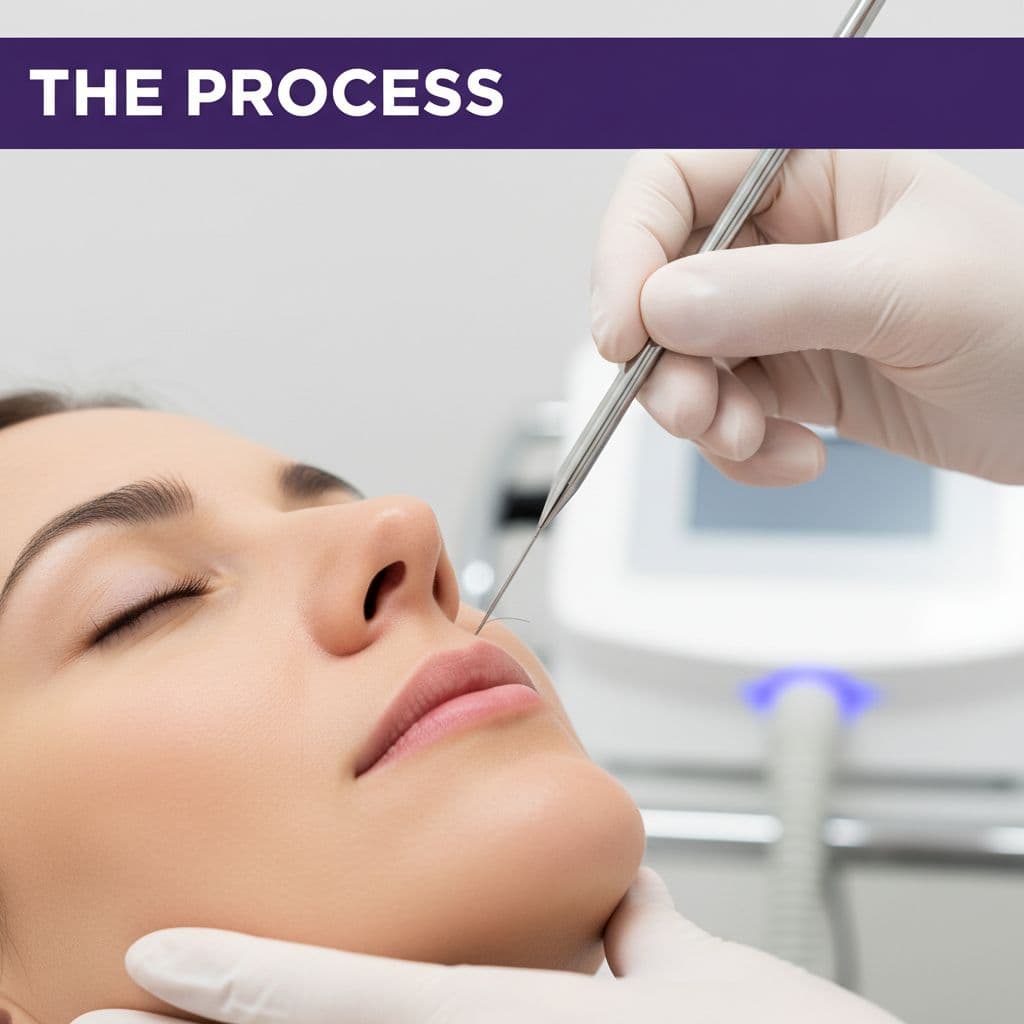
Right after treatment, mild redness and swelling are common. Tiny white bumps can happen too, especially on sensitive skin. For many people, it looks like a light rash or a mild windburn and settles within hours to a couple of days. If aggressive settings are used or aftercare is ignored, you can end up with scabbing, marks, or longer-lasting irritation. That is one reason choosing an experienced electrologist matters.
How many sessions you may need, what it can cost, and when results show
This is the question almost everyone asks first. Fair enough. Electrolysis for PCOS is not quick because it treats one follicle at a time, and it requires multiple sessions to successfully address hairs throughout the natural hair growth cycle.
Early on, appointments are often weekly or every other week. Once the area starts clearing, visits usually spread farther apart. Many people notice a significant permanent reduction in hair within a few months, especially if they were shaving or tweezing daily before. Full clearing often takes 12 to 18 months, and sometimes longer if growth is heavy or hormone levels are still active.
A few variables shape both the schedule and the total price:
| Factor | What it usually changes |
|---|---|
| Hair density | High levels of excess hair growth require more treatment time |
| Hair texture | Coarse hair may take longer to treat effectively |
| Hormonal activity | PCOS can cause new hairs to appear during the process |
| Pricing model | Many practitioners charge by time, often in 15, 30, or 60-minute blocks |
That is why two people with chin hair can have completely different timelines and costs.
Most offices charge by appointment length, not by one flat facial area fee. So, the total cost is tied to the number of hours needed over time. A small upper lip with light growth may move fast. A chin and neck area with years of tweezing and hormone-driven regrowth may take much more work.
Consistency matters more than marathon sessions. If you go regularly, your electrologist can keep clearing active hairs before the area gets overrun again. If you stop and restart for months at a time, progress usually drags.
Ask direct questions before you book a series. What is the minimum appointment length? How often do most facial hair clients with PCOS come in at the beginning? Is there a consultation fee? Are package discounts available? Straight answers make planning your electrolysis journey much easier.
Aftercare and long-term results with PCOS
Good aftercare is simple, but it matters. Your skin has been treated follicle by follicle, and it needs a little calm, not a lot of fuss.
For the first day or two, it usually helps to:
- keep the area clean and hands off
- skip picking, scratching, and close mirror inspection
- avoid heavy heat, sweating, and harsh active products if your skin feels irritated
- use only the soothing products your electrologist recommends
Makeup may be fine later the same day for some people, but if your skin is hot, bumpy, or tender, waiting is smarter. This is not the time for acids, scrubs, or unnecessary irritation.
Long-term, the biggest point to remember is this: treated follicles do not come back, but new hairs can still develop if hormones keep recruiting new follicles. That does not mean electrolysis failed; it simply means PCOS is still active. Because this condition involves a complex hormone imbalance that may originate from the ovaries or the adrenal glands, successful outcomes often require a multifaceted approach.
Many clients find that the medical management of PCOS, ideally under the guidance of an endocrinologist, helps slow down the recruitment of new hair growth. Furthermore, taking prescribed medications like spironolactone can complement your electrolysis sessions by thinning existing hair and slowing the development of new growth, which makes long-term maintenance much easier to manage.
Some people finish a main clearing phase and only need occasional maintenance. Others notice that keeping their health markers in check makes the transition to maintenance much faster.
If you want to talk through timing, skin prep, or whether electrolysis fits your specific pattern of growth, Call Theresa’s Face and Body for an appointment. A short consultation can answer a lot of the “what ifs” before you commit.
Frequently Asked Questions
Is electrolysis painful?
Most clients describe the sensation as tolerable but not entirely pleasant, often noting a sting, pinch, or heat during the probe insertion. Sensitivity varies by area, with the upper lip typically being the most sensitive, and practitioners can adjust settings to ensure the experience remains manageable.
Can I still tweeze or wax between electrolysis sessions?
It is highly recommended that you stop tweezing and waxing entirely once you begin your treatment plan. These methods disrupt the hair growth cycle and make it difficult for your electrologist to target follicles accurately, which ultimately slows your progress.
How many sessions will I need to see results?
Because electrolysis works on a follicle-by-follicle basis and must account for different stages of hair growth, full clearing usually takes between 12 and 18 months. The total number of sessions depends on your specific hair density and how your hormonal activity influences the recruitment of new hair over time.
Will my hair grow back after treatment?
Any hair follicle that has been successfully treated and destroyed will not grow back. However, because PCOS is a hormonal condition, your body may activate previously dormant follicles to produce new hairs, which is why occasional maintenance visits may be necessary to keep the area clear.
Conclusion
Living with PCOS facial hair can feel relentless, especially when every mirror check turns into a source of stress. While managing hirsutism is certainly challenging, electrolysis remains the gold standard for permanent hair removal regarding stubborn excess hair growth.
The trade-off is time. Expect gradual progress, some short-term redness, and the chance of future maintenance if your body continues to produce new follicles. When you know that going in, the process becomes much more manageable and significantly less daunting. By staying consistent with your treatment plan, you can finally take control and look forward to lasting results.