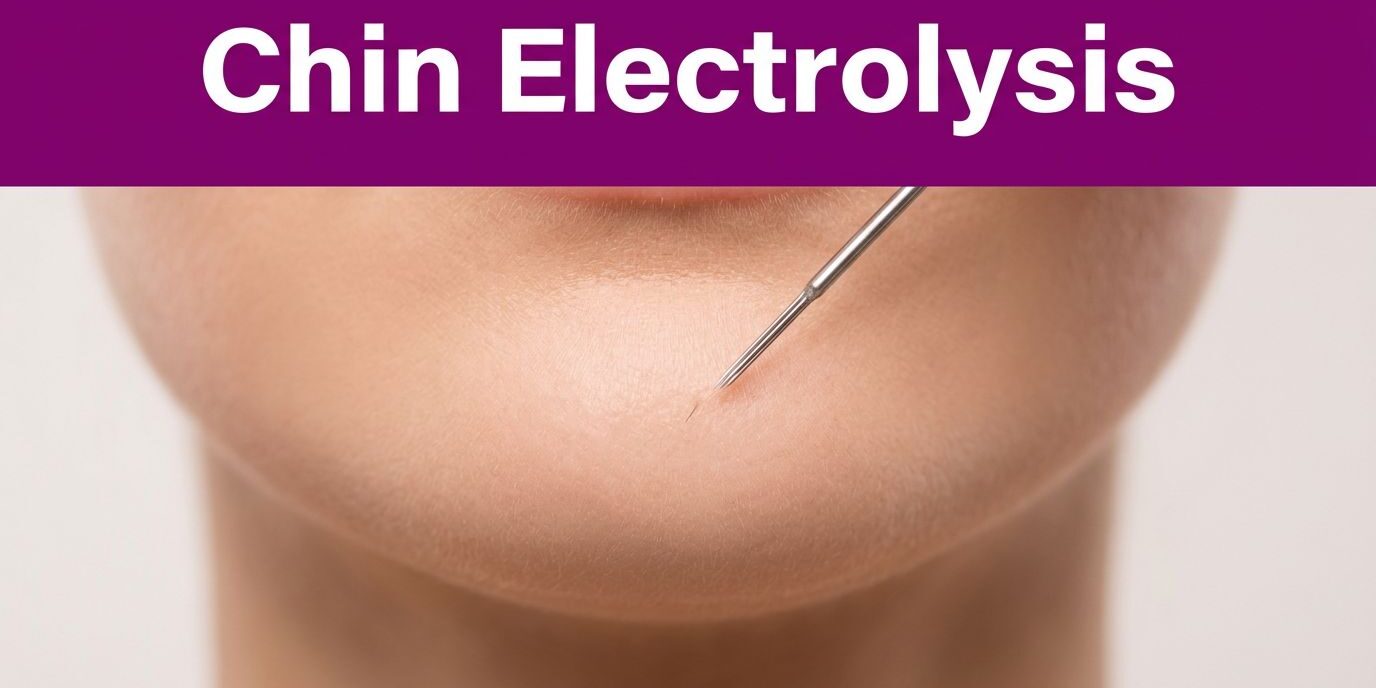
That one stubborn chin hair often turns into a tedious daily chore. Whether it is keeping tweezers in the car or performing constant mirror checks in poor lighting, you eventually start to wonder how long it would take to achieve lasting facial hair removal.
Here is the short answer. Chin hair electrolysis usually requires a series of sessions rather than one magic appointment. Because it is an FDA-approved method for permanent hair removal, it remains the gold standard for those seeking long-term results. For many people, this means committing to a series of treatments over several months, with the exact number of sessions shaped by your specific hair growth patterns, hormonal factors, and your consistency in attending appointments.
Key Takeaways
- Electrolysis is the gold standard for permanent hair removal, working by targeting individual hair follicles to achieve long-term, lasting results.
- Most individuals should expect 8 to 18 sessions over a 9 to 18-month period, though dense or hormone-related growth may require more extensive treatment.
- Hair growth cycles are responsible for why hair appears to “return”; successful treatment requires consistent sessions to catch follicles during their active anagen growth phase.
- Factors like hair density, past tweezing history, and hormonal conditions such as PCOS significantly influence your personalized treatment plan and overall timeline.
- For best results, avoid tweezing between appointments as it hides the follicle and slows progress; opt for shaving or trimming instead to keep the hair root intact for the technician.
What You Should Expect From Chin Hair Electrolysis
If you are looking for the number everyone wants, a realistic ballpark for chin hair electrolysis is 8 to 18 sessions. If the hair is dense, coarse, or strongly hormone-driven, it can take 15 to 24 sessions or more. The full timeline often runs 9 to 18 months, sometimes longer.
That range sounds wide because it is. A chin with three stubborn hairs is one story, while a chin you shave every morning is another.
Electrolysis is the gold standard for permanent hair removal, and it works by treating each individual hair follicle one at a time. This is a significant distinction. Unlike waxing, where a strip removes everything you can see, this process targets the root of the hair. Furthermore, unlike laser hair removal, which often requires specific pigment or skin contrasts to work effectively, electrolysis is safe and efficient for all skin types.
A quick comparison helps set expectations:
| Chin hair pattern | Common session range | Typical timeline |
|---|---|---|
| A few scattered coarse hairs | 6 to 10 sessions | 6 to 12 months |
| Moderate recurring chin growth | 10 to 18 sessions | 9 to 18 months |
| Dense or hormone-related growth | 15 to 24+ sessions | 12 to 24 months |
These numbers serve as a starting point rather than a guarantee. Your specific treatment plan depends on your hair growth patterns and goals. It is also important to remember that session length is just as critical as the number of appointments. Ten 10-minute visits and ten 30-minute visits are not the same experience, and your electrologist will adjust the timing to ensure you achieve your desired outcome.
Electrolysis provides permanent results, but it is not an instant process.
That is the trade-off. You get a long-term answer rather than a temporary disguise. For most people, the area gradually thins out, the gaps between regrowth get longer, and the mirror stops calling the shots.
Why Your Hair Cycle Matters
If new chin hairs pop up after a treatment, that does not mean electrolysis failed. It usually means your hair growth cycles are simply doing what they are meant to do.
Each hair follicle moves through distinct stages of growth, rest, and shedding. Chin hairs are not synchronized, which is why the area can feel so unpredictable. You clear what is visible, then a different group shows up later. It can feel like a bad joke, but it is purely biology. For successful permanent hair removal, the technician must target the hair during the anagen phase, which is the active growth stage. By delivering energy directly to the hair follicle, the treatment aims to destroy the dermal papilla, preventing the hair from regenerating.
Think of it like weeding after rain. You pull the weeds you can see today. A week later, more appear, not because the first ones survived, but because the next batch finally surfaced.

That cycle is one reason chin hair takes patience. Hormone-sensitive areas, especially the chin and upper lip, can be stubborn. Even when treated hairs are permanently removed, other follicles may enter active growth later and need their turn.
Tweezing can also muddy the picture. If you have been plucking for years, you may not know your true growth pattern because you are constantly interrupting the natural process. Once you stop tweezing and start electrolysis, the full pattern often becomes more obvious for a while. That can feel discouraging, but it is often the first honest look at what you are treating.
This is why your session count is never just about what you see today. It is about understanding what your follicles are doing over time and working with your body to achieve smooth, lasting results.
What Changes the Number of Sessions
A few factors have the biggest impact on how many appointments you will need for your personalized treatment plan.
The first is hair density. Areas with a higher concentration of follicles require more treatment time. Simple enough.
The second is hair type. Coarse chin hairs often sit deeper and can be more time-consuming than fine stray hairs. However, one of the primary benefits of electrolysis is that it works for all skin types. This FDA-approved method is particularly effective because it does not rely on pigment like laser hair removal. This makes it an ideal solution for people struggling with gray hair, white hair, or light-colored growth that other methods simply cannot address.
Hormones also matter, sometimes a lot. Unwanted hair on the chin often ramps up around puberty, pregnancy, perimenopause, menopause, or with conditions such as PCOS. When a hormonal imbalance keeps waking up new follicles, treatment may take longer. That does not cancel the value of electrolysis; it only changes the pace. If you are dealing with PCOS, consistent sessions are the most effective way to stay ahead of new growth.
Your removal history matters too. Years of tweezing and waxing can make chin hairs feel wiry and unpredictable. Some follicles become distorted, some hairs get trapped, and some come in at odd angles. None of that makes treatment impossible, but it can make the process more complex.
Then there is consistency. This part is easy to overlook. If visits are spaced too far apart early on, you lose momentum. Untreated hairs keep cycling in, and the area never stays clear for long. Regular appointments at the start usually mean faster overall progress.
One more thing deserves a plain answer. If chin hair appears suddenly, gets heavy fast, or comes with acne, irregular periods, or scalp thinning, it is smart to check in with a medical provider. Electrolysis can still help, but you want to ensure you have the full medical picture to support your journey.
Planning Your Treatment Schedule
Developing a consistent treatment plan is the most effective way to reach your goals. The process usually begins with frequent visits, which become less necessary as the area clears.
Early on, many people schedule appointments every 1 to 2 weeks. Chin hair electrolysis session length is often brief, typically lasting 10 to 15 minutes, or up to 30 minutes if the hair growth is particularly heavy. As your unwanted hair begins to diminish, your appointments will naturally spread out to every 3 to 6 weeks. Eventually, you may only need occasional cleanup visits to maintain your results.

This is where a personalized consultation offers more value than any generic advice found online. A trained electrologist can evaluate your hair growth pattern, discuss potential hormonal factors, and review your history with tweezing to provide a much more accurate estimate than a random forum post. If you are ready to start your journey toward permanent hair removal, call Theresa for an appointment to discuss your specific needs.
Between sessions, skip the tweezers unless you are instructed otherwise. Clipping or shaving is usually a better alternative because it leaves the hair follicle intact for your technician to treat. If you continue tweezing, you are essentially hiding the target and slowing down your progress.
It also helps to arrive for your appointment with calm skin. Sunburn, irritation, or aggressive exfoliation can make the process less comfortable. A little bit of planning goes a long way toward a successful outcome. The people who see the best results are not those who try to rush the process; they are the individuals who remain steady and committed to the plan.
Pain, Cost, and Results
Most people have three main questions after discussing the session count for chin hair electrolysis: Does it hurt, how much does it cost, and when will I see permanent results?
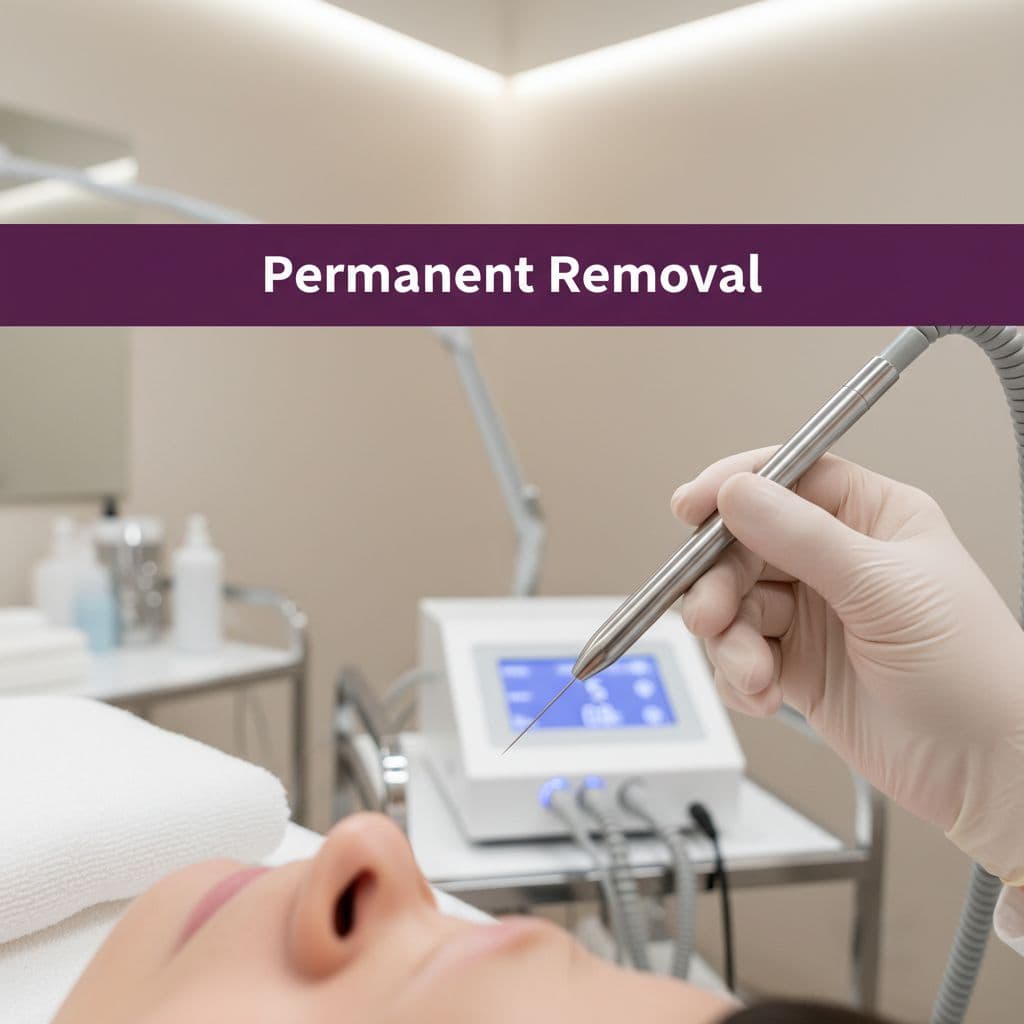
During a session, a practitioner uses a fine probe to slide into the hair follicle, delivering a small electrical current to destroy the growth center. Depending on your specific needs, they may use thermolysis, galvanic electrolysis, or the blend method to achieve permanent hair removal. While sensations vary, many people describe the feeling as a quick heat or pinch. Because the chin is a sensitive area, applying a numbing cream beforehand can significantly improve your comfort. If you find the treatment intensity high, remember that this precision offers a level of permanence that laser hair removal often cannot match for fine or light-colored hairs.
After your appointment, it is common to experience temporary skin redness or slight swelling. Proper aftercare is essential to ensure the skin heals quickly and to prevent potential issues like scarring or hyperpigmentation. Using a fine probe with a steady hand helps minimize these risks, ensuring the skin remains healthy between visits.
Cost is typically calculated by the time spent in the chair. Because providers often bill in 10, 15, or 30 minute increments, total treatment time is a better metric than a flat fee for chin hair. A skilled practitioner who works efficiently may have a higher hourly rate, but they often require fewer total hours to complete your treatment.
As for results, expect a gradual shift rather than an overnight change. Your hair will become sparser, and the coarse texture you are used to will slowly fade. If you notice the area thinning out over time, you are moving in the right direction. While hormones can occasionally trigger new hair growth, this is distinct from failed treatment. The goal is to ensure the same follicles stop producing hair, providing you with long-term, consistent satisfaction.
Frequently Asked Questions
Can I still use tweezers between my electrolysis appointments?
It is generally recommended to avoid tweezing because it disrupts the natural hair growth cycle and makes it harder for your technician to effectively treat the follicle. If you need to manage hair between sessions, shaving or trimming is a better alternative because it keeps the root intact for the electrolysis process.
Is electrolysis painful, and can I do anything about it?
Most people describe the sensation as a quick pinch or a feeling of heat as the energy is delivered to the follicle. Because the chin is a sensitive area, applying a topical numbing cream before your appointment can significantly improve your comfort level during the procedure.
How do I know if my results are permanent?
Electrolysis is an FDA-approved method for permanent hair removal, meaning it destroys the growth center of the hair follicle. While you may see hair appear in the same area later, this is typically due to new follicles entering their growth cycle rather than a failure of the previous treatment.
Does hormonal status affect how many sessions I need?
Hormonal fluctuations caused by conditions like PCOS, pregnancy, or menopause can stimulate new hair growth and may increase the number of sessions required. While these factors may change the pace of your journey, consistent treatment remains the most effective way to stay ahead of new growth and achieve your goals.
Final Thoughts
The bathroom mirror feels a lot less dramatic when you know exactly what you are looking at. Chin hair electrolysis usually takes multiple sessions over time, and that does not mean something is wrong. It simply means hair grows in cycles, and the chin can be an area that tests your patience.
The best expectation is not asking how fast the process can be done, but rather determining a realistic plan you can stick with. When your approach to facial hair removal is consistent and professional, managing unwanted hair no longer has to be a source of daily stress. With a solid plan and steady treatment, permanent hair removal stops sounding like a vague promise and starts feeling like an achievable goal. Ultimately, chin hair electrolysis serves as the gold standard for anyone seeking a lasting solution for smoother skin.