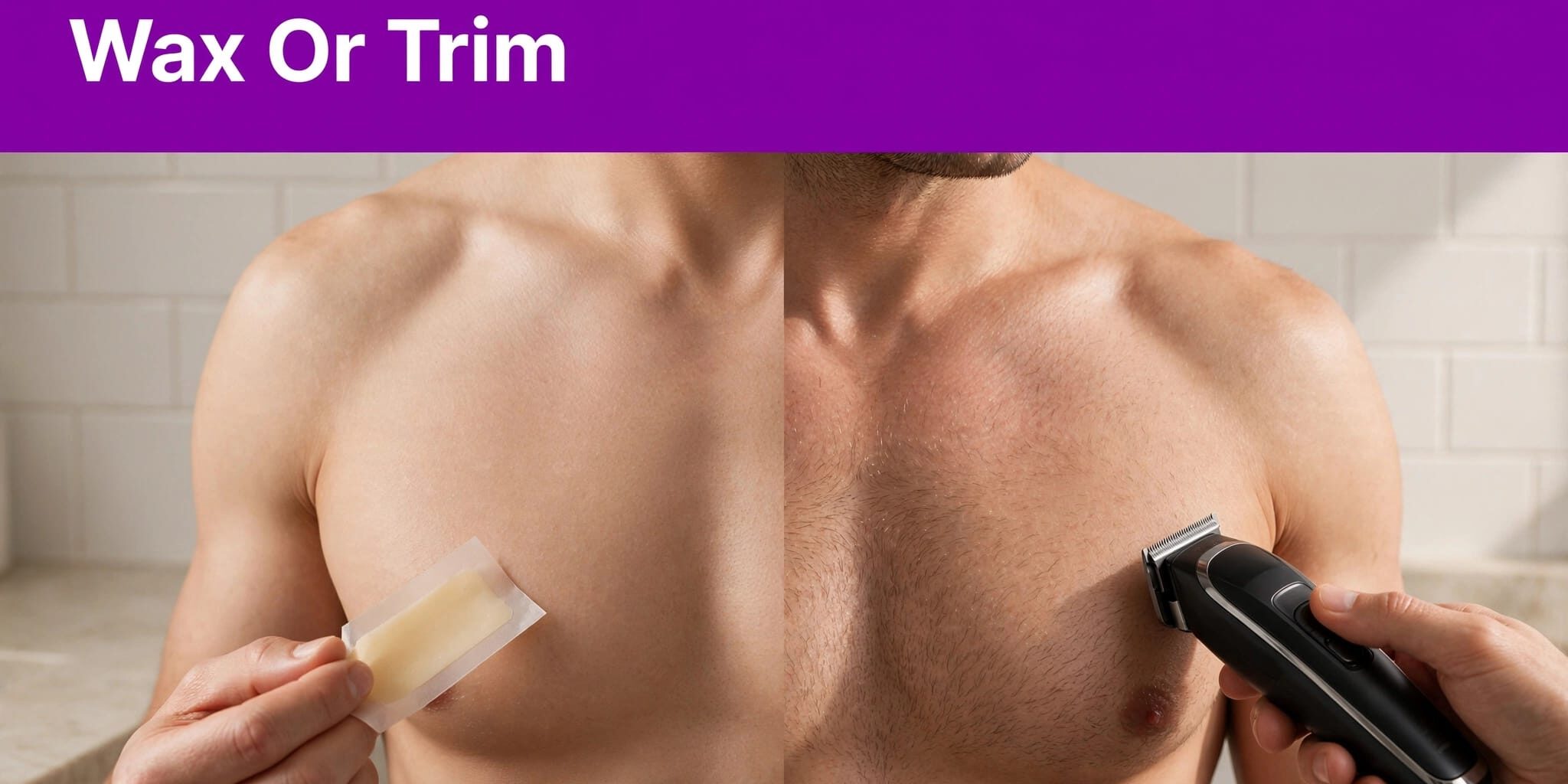
Chest waxing for men removes hair from the root for a smooth finish, while trimming leaves a short, natural, groomed look. Choose based on skin comfort, preferred appearance, and upkeep.
Both are practical grooming options, but they require different preparation and aftercare. Start with the result you want, then consider the maintenance each method involves.
Key Takeaways: Waxing vs. Trimming
For men’s chest grooming, the main difference is whether you want hair removed or neatly controlled.
| Consideration | Chest Waxing | Chest Trimming |
|---|---|---|
| Appearance | Bare skin after root removal | Short, visible hair |
| Upkeep | Usually every four to six weeks | Touch-ups as hair becomes untidy |
| Comfort | Brief pulling discomfort and possible redness | Usually comfortable with a suitable guard |
| Cost | Recurring service appointments | Reusable equipment and cleaning supplies |
| At-home effort | Follow a careful home-waxing process or arrange a service | Set up clean tools and use a suitable guard |
Waxing provides longer-lasting smoothness, although regrowth appears before your next appointment. Trimming offers control over length without waiting for enough hair to wax.
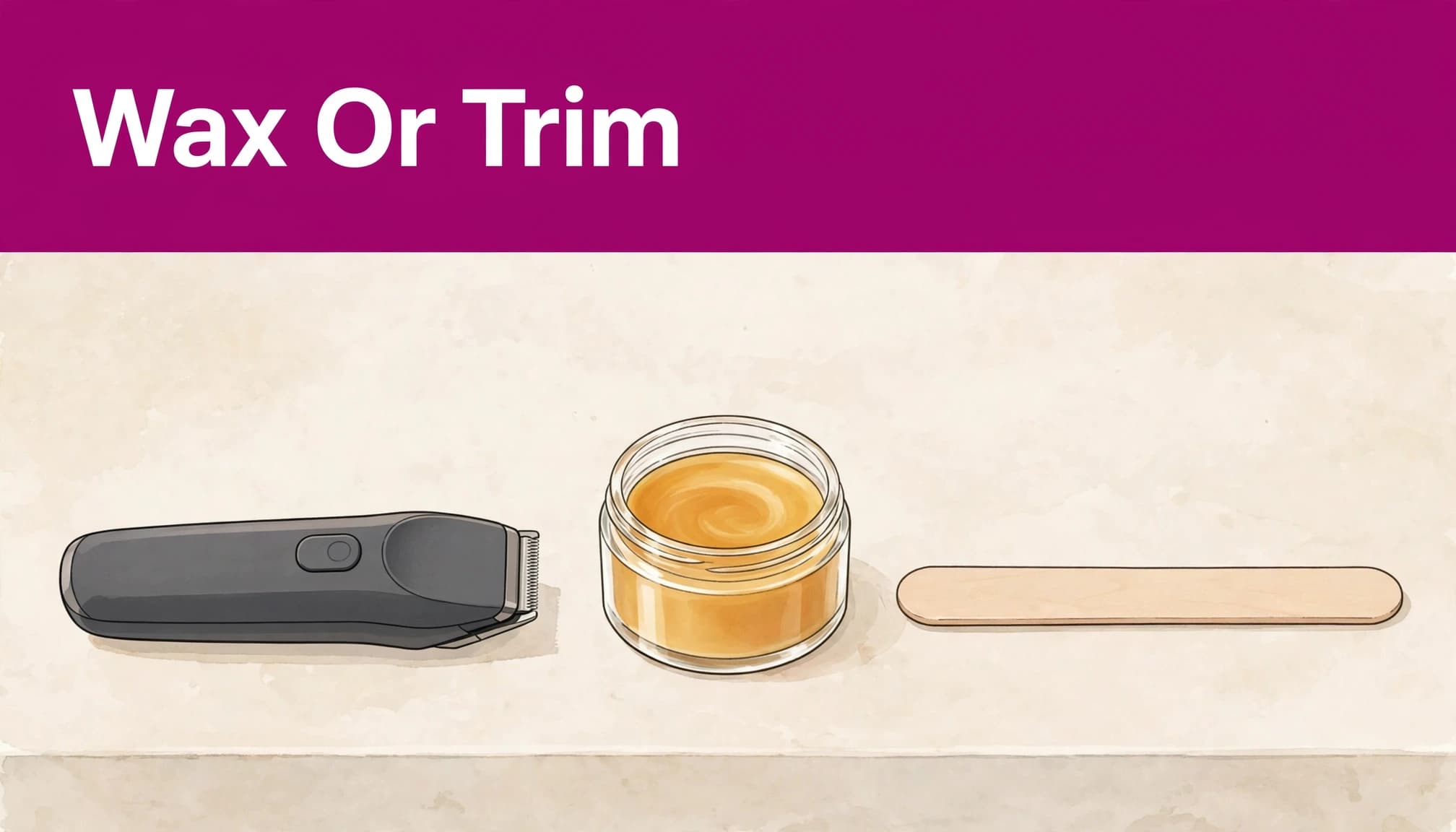
For home maintenance, use clean tools and begin with a longer guard. Our body hair trimming tips explain why clean, dry hair helps with control.
Waxing can also cause bumps. The American Academy of Dermatology explains that acne-like breakouts can be folliculitis, or inflammation of hair follicles, rather than ordinary acne.
What Does Chest Waxing for Men Include?
Chest coverage isn’t identical everywhere. European Wax Center defines its chest service as the pectoral area starting at the collarbone, including the nipple area, but excluding shoulders and stomach. Nipple tissue itself should be protected during treatment.
The company lists starting-price ranges of $16 to $42 for men’s body waxing and $12 to $21 for facial waxing. Those are category ranges, not chest-only prices, and actual pricing varies by location.
We recommend choosing coverage according to your preferred appearance. Chest, stomach, shoulders, and back can require separate attention, especially when you want a balanced transition between bare and hairy areas.
Which Wax and Preparation Work Best?
Hard Wax for Coarse Chest Hair
Hard wax adheres primarily to hair rather than skin, which generally makes it preferable for coarse chest hair. Cirépil Blue Hard Wax is a professional formula known for flexibility and a strong grip on dense hair.
We generally favor hard wax over soft wax or strip wax for the chest. Soft wax adheres to both skin and hair, so it may be less comfortable for sensitive skin. Strip wax can increase irritation, hair breakage, and post-wax sensitivity when the technique or temperature is unsuitable. Poor application can also cause hair breakage if the wax pulls at hair instead of removing it cleanly.
Hair direction and careful sectioning also matter. A suitable formula doesn’t replace professional preparation and application.
Clean Skin and Enough Growth
Allow at least one-quarter inch of hair before waxing, and arrive with clean skin as part of skin preparation. After shaving, two weeks is a useful starting point, but hair length matters more than a fixed wait when shaving before waxing.
Sweat, oil, body lotion, and environmental debris can interfere with wax adhesion, so skin preparation should remove buildup. Cirépil Purifying Blue Lotion Cleanser is a professional preparation option designed to remove impurities while maintaining skin balance. Skip exfoliation on appointment day, and disclose skin medications or irritation before treatment.
How Can You Reduce Redness and Bumps?
Care During the First 24 Hours
As part of post-wax care, avoid workouts, excessive sweating, hot tubs, saunas, and steam rooms for 24 hours. Sweat and friction can irritate freshly treated skin, so wear loose-fitting clothing and keep your chest clean and dry without scrubbing.
A soothing post-wax product, such as Perron Rigot Refreshing Gel, can help calm skin and reduce redness. Use Refreshing Gel as directed, and avoid applying multiple fragranced products to freshly treated skin.
Post-wax breakouts can develop even after careful professional waxing. Bacteria, sweat, friction, and inflammation can affect freshly waxed follicles, so aftercare remains important.
Gentle Exfoliation After Skin Settles
Once redness and tenderness settle, resume post-wax care with gentle, fragrance-free products. Wait several days before restarting exfoliation, and avoid vigorous scrubbing.
Gentle exfoliation may help prevent ingrown hairs by removing dead skin cells that can trap emerging hairs. Double Gommage combines physical and chemical exfoliation. Start conservatively, such as once weekly if tolerated, follow product directions, and introduce Double Gommage gradually.
Don’t squeeze or dig at ingrown hairs. Temporary post-wax breakouts can happen, but persistent pustules, spreading redness, or worsening pain need medical attention. Mayo Clinic’s folliculitis symptoms guidance helps distinguish concerning symptoms from temporary irritation.
For daily comfort, use a gentle, fragrance-free moisturizer once your skin tolerates it.
Common Chest Grooming Questions
What Are Two Downsides of Waxing?
Discomfort and temporary skin irritation are two common drawbacks. Dense chest hair can make the first appointment more uncomfortable, and redness or follicle bumps may follow.
Guarded trimming avoids root removal, although short hair remains visible. Neither method guarantees freedom from irritation or ingrown hairs.
Does Regular Waxing Make Regrowth Softer?
Waxed hair often feels softer as it returns because it hasn’t been cut bluntly. Some people also notice finer or sparser growth with repeated treatments, but reduced density isn’t guaranteed.
Waxing removes hair from the root without removing the follicle itself. Avoid shaving between appointments when maintaining a waxing schedule.
When Should First-Time Clients Start Before an Event?
We recommend a trial several months before a wedding, vacation, or photoshoot. Around eight to twelve weeks gives you time to test your skin’s response to first-time chest waxing and allow enough hair to return.
First appointments can produce more redness and sensitivity, so avoid making an important event your first waxing experience.
Choose the Finish That Fits Your Routine
Waxing suits those who prefer bare skin and longer intervals between grooming appointments. Trimming suits those who want a natural appearance with adjustable length.
We recommend weighing skin comfort alongside appearance and upkeep. Consider appointment costs and whether you’re comfortable managing grooming tools at home. Call Theresa’s Face and Body for an appointment to discuss chest grooming options at our Cape Coral spa.