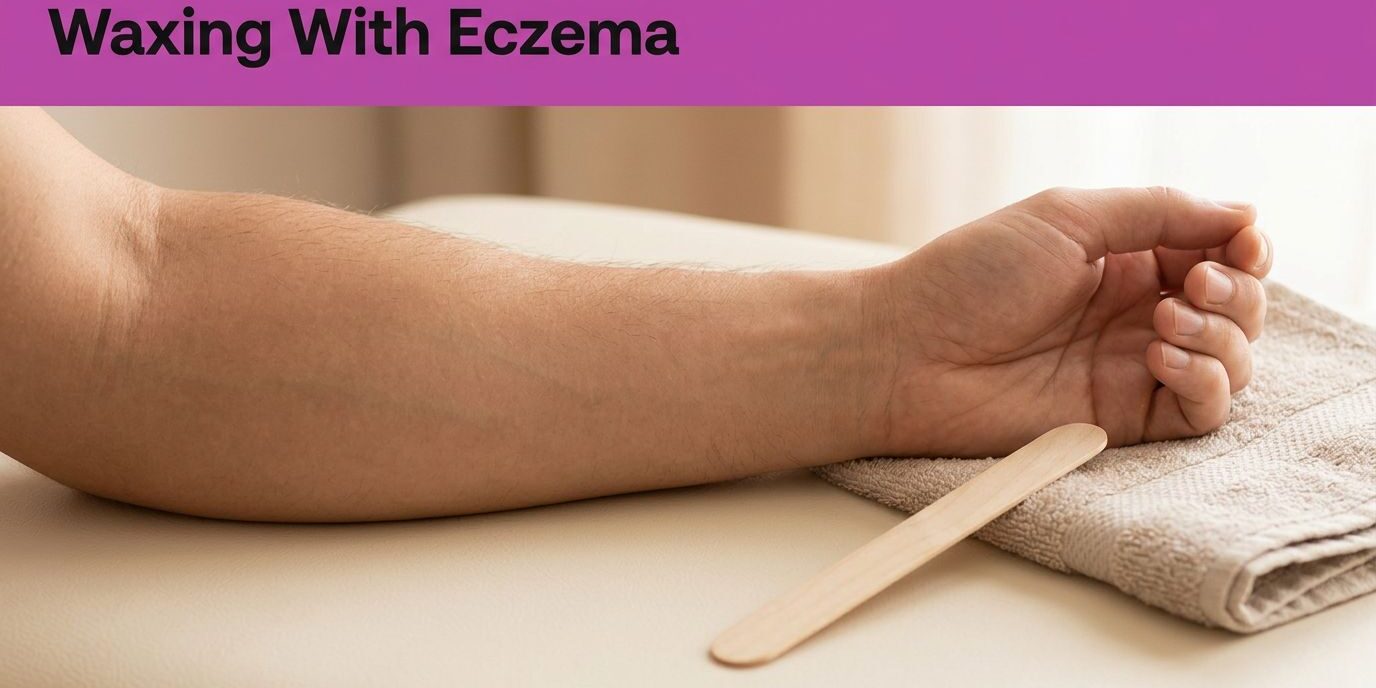
Waxing with eczema should wait during a flare-up if the area is broken, weeping, or has active itching. Advice depends on your symptoms and skin condition.
Consider an appointment only when your skin is calm and intact. Prioritize comfort over a fixed grooming schedule.
Key Takeaways
- Pause waxing during an eczema flare or when the treatment area is broken, weeping, tender, or actively itchy.
- Wait until skin is calm and intact. There isn’t a universal number of days to wait after a flare.
- Guarded trimming may be more comfortable than waxing, but every hair-removal method can irritate eczema-prone skin.
- Tell your esthetician about eczema, recent symptoms, medications, and past reactions, and ask a dermatologist whether waxing fits your treatment plan.
When Waxing With Eczema Should Wait
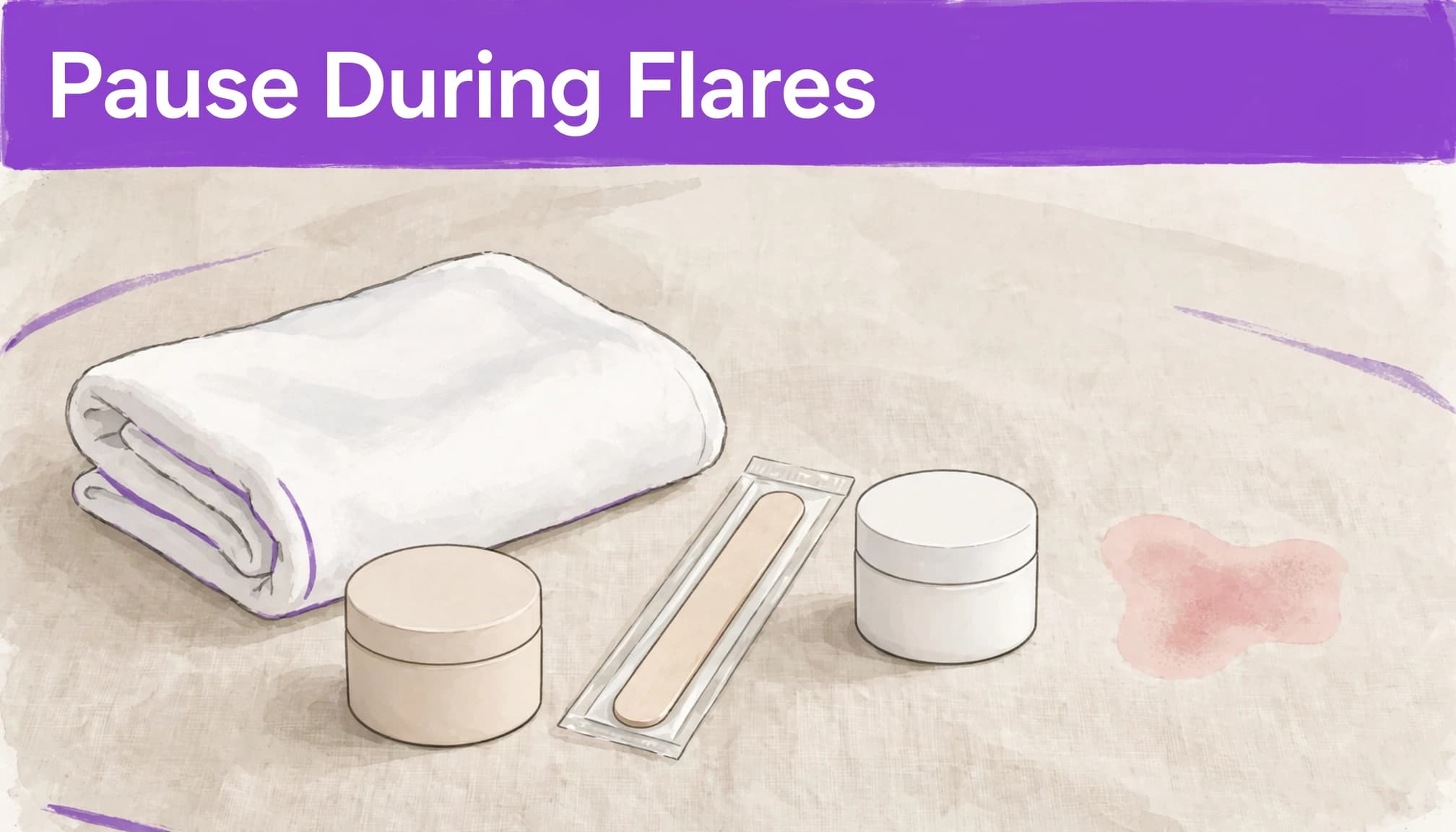
The National Eczema Association’s hair-removal guidance recommends avoiding hair removal during an active flare-up.
Check the Actual Treatment Area
Waxing combines heat, adhesion, and pulling, which can irritate sensitive skin or remove surface skin along with unwanted hair. Don’t wax an area with an active rash, broken or weeping skin, tenderness, or ongoing itching.
For pubic or groin eczema, ask a dermatologist before intimate waxing. Moisture, underwear seams, and friction can add discomfort in these areas. Keep grooming away from irritated genital skin. Beard lines, underarms, chest, and back need individual attention, even when eczema elsewhere on your body is controlled.
Let Skin Condition Guide the Timing
There isn’t a universal waiting period that makes waxing suitable after every flare. Skin should be calm and intact, without active inflammation, open areas, or tenderness.
A dry-looking patch isn’t automatically ready, particularly if it still stings when you wash. For recurring eczema, get medical advice on whether waxing fits your current treatment plan. We recommend allowing your skin to settle fully rather than booking because a certain number of days has passed. A smaller grooming area may be more manageable than extensive body waxing.
Compare Grooming Options for Eczema-Prone Skin
Our men’s waxing and manscaping services support different grooming preferences. For sensitive skin, comfort matters as much as a smooth finish.
These hair removal methods have different benefits and precautions.
| Method | Practical Benefit | Eczema Precaution |
|---|---|---|
| Guarded electric trimming | Controls length without removing hair at the root | Keep the cutting head away from irritated patches. |
| Electric shaving | May reduce nicks compared with a blade | Avoid pressure and repeated passes; the finish may be less close. |
| Wet shaving | Offers a close finish at home | Use lubrication, a sharp blade, and gentle strokes. |
| Waxing | Removes hair at the root | Heat and pulling can damage very sensitive skin. |
| Sugaring | Uses a sugar-based paste | It still pulls hair out and can irritate eczema-prone skin. |
Consider guarded trimming when closeness is less important than comfort. No method is risk-free, and waxing can irritate eczema-prone skin.
Sugaring is sometimes described as gentler, but its usual sugar, water, and lemon-based ingredients aren’t suitable for everyone. Cleveland Clinic’s sugaring guidance explains that inflammation and excessive skin-cell removal can occur, and people with this condition may need to avoid it. Unlike sugaring, waxing also pulls hair from the root.
What to Discuss Before a Waxing Appointment
Open communication helps your esthetician understand your grooming goals and the precautions your skin needs before treatment begins.
Share Eczema and Medication Details
Tell your esthetician where eczema affects you, whether you’ve had recent symptoms, and which products or medications you use there. Ask a dermatologist whether the planned treatment is medically suitable; your esthetician can explain appointment precautions.
Our guidance on waxing while using retinoids explains why the product and treatment area matter. Don’t stop prescription medication on your own.
The American Academy of Dermatology’s isotretinoin precautions advise avoiding waxing during treatment and for six months after stopping. That medication history matters even when your skin feels comfortable.
Prepare Without Extra Scrubbing
Leave hair at least one-quarter inch long for waxing, and avoid shaving immediately beforehand. Arrive with gently cleansed skin, without lotions or oils on the planned treatment area.
Don’t use aggressive scrubs on eczema-prone skin before treatment. Extra exfoliation can leave the area more sensitive before wax is applied. Wear loose clothing so waistbands, sleeves, or underwear don’t rub afterward.
Also describe previous reactions to treatment or skincare products. If you’ve developed a persistent rash after treatment, medical assessment is more useful than simply switching wax formulas and trying again.
Gentle Aftercare for Men’s Grooming
Whether you choose shaving, trimming, or waxing, simple aftercare can limit friction and product irritation after hair removal, especially when eczema affects the area.
- Cleanse gently. After shaving at home, rinse away loose hairs and products with lukewarm water. After waxing, pat the area dry with a clean towel instead of rubbing.
- Moisturize with a familiar product. Choose a moisturizer your skin already tolerates, ideally one that’s fragrance-free. Use the same moisturizer after grooming, and avoid introducing several new products at once.
- Reduce heat and friction. After waxing, avoid hot showers, saunas, and strenuous workouts for the first 24 hours. Loose, breathable clothing can protect the area.
- Allow recovery between sessions. Don’t resume shaving over soreness or repeatedly work the same patch for a closer result. Keep tools clean, use a clean razor, and don’t share razors.
For wet shaving, use a thick layer of fragrance-free gel and a clean, sharp or single-blade razor. Shave with hair growth using light pressure, and never shave dry.
Ingrown hairs can follow shaving and waxing, while folliculitis and eczema can cause similar bumps. Don’t pick, squeeze, or dig at bumps. Avoid harsh scrubs and acids on skin with eczema-related inflammation. For recurring ingrown hairs, ask a dermatologist about suitable care.
A patch test of a new product on a small area of calm, intact skin doesn’t establish that waxing will be safe for eczema. Painful bumps, pus, or worsening redness need medical assessment because folliculitis and eczema require different care.
Perfume or deodorant can irritate recently waxed or inflamed skin, so avoid either if it stings. Skip perfume on eczema patches. A fragrance-free deodorant may still cause a reaction, so stop using it if it worsens the rash. Wait to use perfume or deodorant until the area settles.
Frequently Asked Questions
Can you wax if you have eczema?
You may consider waxing when the treatment area is calm and intact, but heat and pulling can irritate eczema-prone skin. Ask a dermatologist whether waxing is suitable for your skin and treatment plan.
Should you wax during an eczema flare?
No. Avoid waxing over active rashes, broken or weeping skin, tenderness, or ongoing itching. For eczema near the pubic or groin area, ask a dermatologist before intimate waxing.
How long should you wait to wax after an eczema flare?
There isn’t a universal waiting period. Wait until the skin is calm and intact, without active inflammation, open areas, or tenderness, and ask a dermatologist if eczema keeps recurring.
What hair-removal method may be more comfortable with eczema?
Guarded electric trimming may be more manageable when comfort matters more than a close finish. Shaving, waxing, and sugaring can also irritate skin, so keep tools and products gentle and avoid irritated patches.
What should you do before and after waxing with eczema?
Tell your esthetician about your eczema, recent symptoms, medications, and past reactions, and don’t stop prescription medication on your own. After waxing, pat skin dry, use a familiar fragrance-free moisturizer, reduce heat and friction, and seek medical assessment for painful bumps, pus, or worsening redness.
Make Skin Comfort the Priority
Eczema doesn’t mean giving up grooming, but it does mean adjusting the method and timing to your skin. Choose comfortable maintenance over repeated attempts at the closest possible finish.
With eczema, let your symptoms and skin condition guide whether waxing is appropriate and when to wait. Pause waxing during an active flare or when skin is broken.