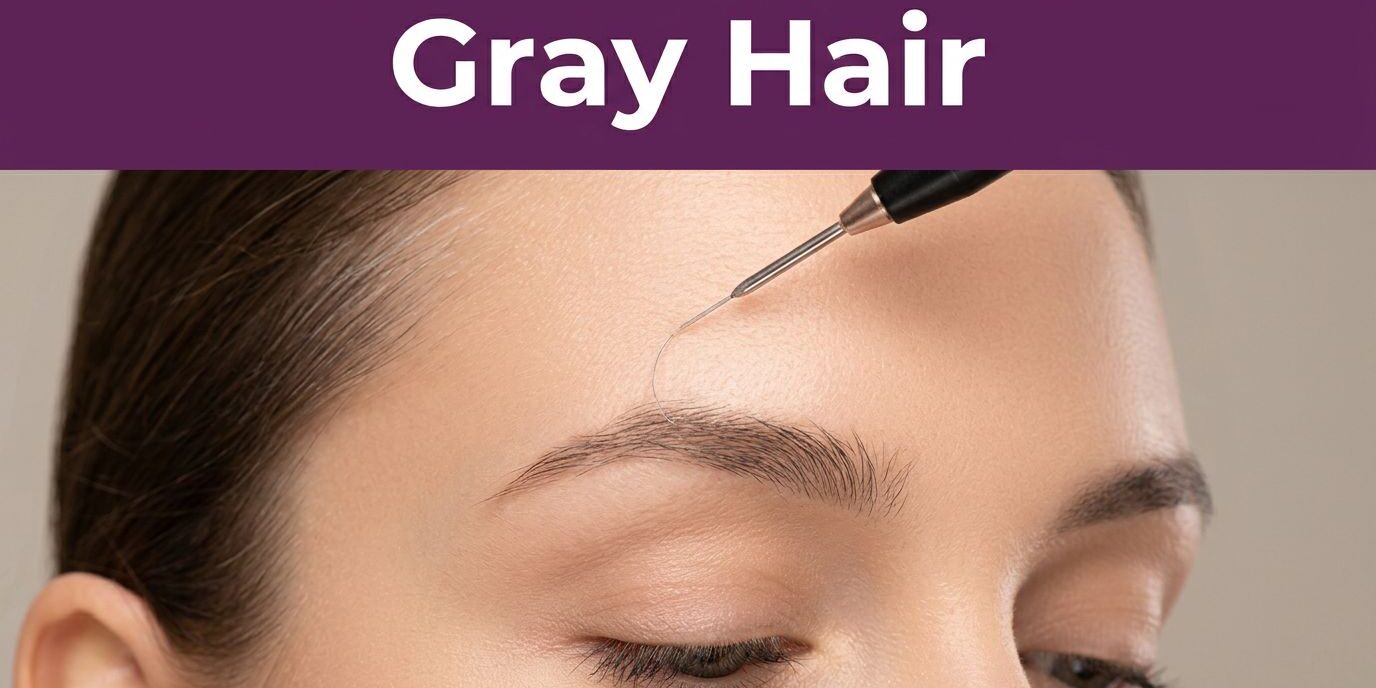
Gray and white hair can be stubborn invaders that appear at the most inconvenient times. If you are tired of seeing these hairs pop up on your brows, chin, lip, or beard line, electrolysis provides a proven path toward permanent hair removal for your facial hair.
I hear the same questions regarding these concerns all the time, and the answer is simple. While your pigment levels play a significant role in the effectiveness of laser hair removal, hair color does not affect the success of electrolysis. Whether you are dealing with coarse gray hair or fine white hair, electrolysis remains the most reliable method for achieving smooth, clear skin. Here is how I approach the process when clients sit in my chair.
Key Takeaways
- Pigment-Independent Treatment: Unlike laser hair removal, which requires melanin to target hair, electrolysis is entirely colorblind and effectively destroys gray, white, and blonde hair by treating the follicle directly.
- Permanent Hair Removal: Electrolysis is the only FDA-approved method for permanent hair removal, making it the gold standard for stubborn silver or white hairs that keep returning.
- Precision and Safety: By using a fine probe to deliver electrical current to the growth center, the procedure offers a safe, highly targeted approach for facial hair and sensitive body areas.
- Consistency is Required: Because hair grows in cycles, clients must commit to a series of professional sessions to ensure every active follicle is treated at the right stage of development.
Why Gray and White Hair Act So Different
Gray and white hair can be coarse, soft, sparse, or stubborn. The primary challenge is a lack of melanin. Because these hairs no longer contain pigment, they become a poor target for laser hair removal, which relies on color to identify and heat the hair shaft.
This is why people dealing with salt and pepper hair or a persistent chin hair often feel stuck. They may try shaving, waxing, tweezing, or even a professional laser treatment, only to wonder why the same strands keep returning. I see this with both men and women, and the complaint is always the same: they just want that specific patch of hair gone.
Electrolysis is different because it does not rely on pigment to function. Instead, it treats the hair follicle directly, destroying the growth center one hair at a time. This makes it an ideal solution for gray, white, blond, red, or mixed-color hair that other methods simply cannot reach.
It also matters where the growth occurs. Facial hair is usually the first thing people notice, but gray strands on the neck, chest, back, or beard line can be just as frustrating. If you are finished playing whack-a-mole with tweezers and want a permanent solution to remove unwanted hair, electrolysis is worth a serious look regardless of your hair color.

How Electrolysis Handles Hair Without Pigment
Electrolysis functions by sliding a fine probe into the hair follicle, carefully navigating along the hair shaft to reach the growth center. Once the probe is in position, a small electrical current is sent to the base, effectively destroying the follicle and preventing any future regrowth. This precise, targeted approach is why this method succeeds where others fail, particularly for those seeking a solution for hair that lacks pigment.
Electrolysis is the only FDA-approved method for permanent hair removal that is completely colorblind. Because it does not rely on pigment to identify the target, it remains an ideal choice for white, gray, or blonde hair. Whether you are dealing with scattered stray hairs or a larger area, this approach provides a reliable path to clear, smooth skin.
Different modalities are used to achieve this result. Thermolysis is a speed-focused option that uses high-frequency currents to generate heat for destroying the follicle, while galvanic electrolysis utilizes a chemical reaction to achieve the same end. Both are highly effective, though thermolysis is often preferred for shorter, more efficient sessions.
This process is inherently pigment-independent, meaning the success of the treatment does not depend on the color of your hair. Instead, the practitioner focuses on the growth cycle of each strand to ensure the current is applied at the most vulnerable stage of development. This level of precision is especially vital for facial hair removal, where the practitioner treats one follicle at a time to tailor the plan specifically to your needs. Because it ignores color and focuses entirely on the structure of the follicle, electrolysis stands as the gold standard for treating silver and white hairs that other technologies simply cannot see.
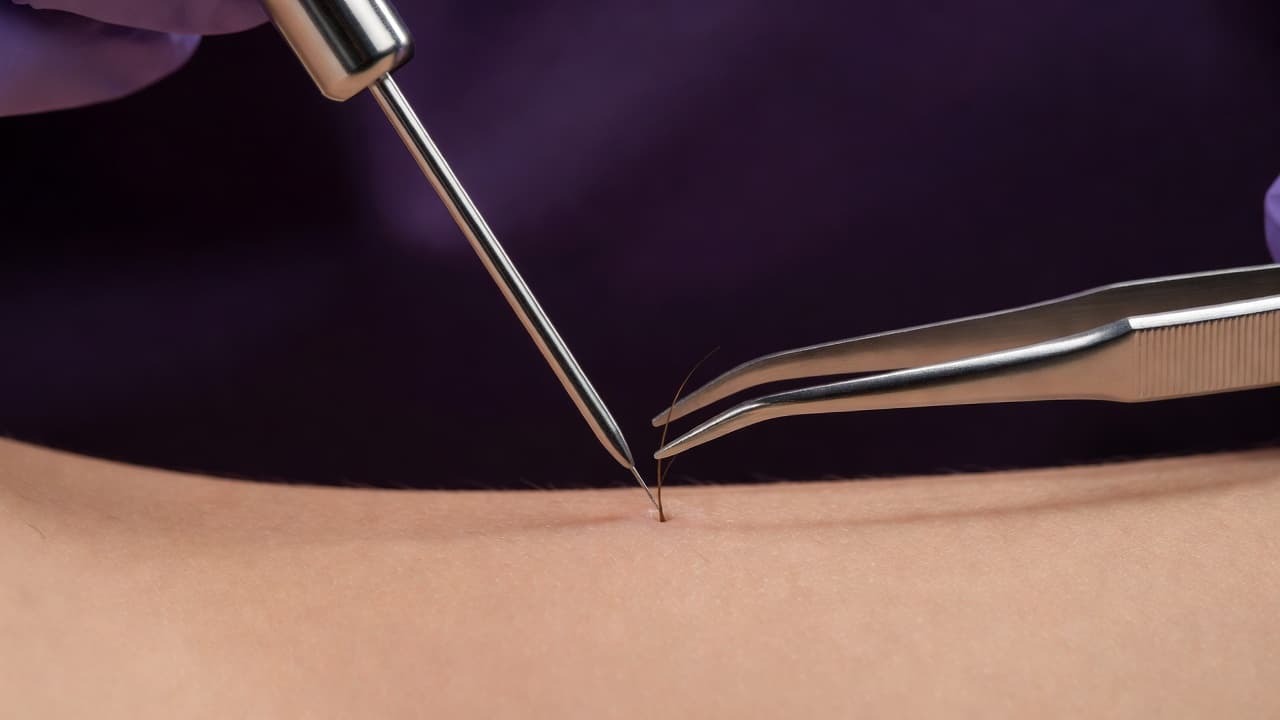
That precision is what makes electrolysis such a strong match for electrolysis gray hair concerns. It does not care if the hair is silver, white, blonde, or dark. It cares about the follicle.
Electrolysis vs Laser for Gray Hair
When people ask me whether they should choose laser or electrolysis for gray hair, I keep the answer simple. If the hair has no pigment, I do not count on laser to do the job.
If the hair has no pigment, I do not count on laser to do the job.
Here is the quick side-by-side view to help you decide on the path for permanent hair removal.
| Method | Gray, White, and Blonde Hair | Best For | Main Limitation |
|---|---|---|---|
| Electrolysis | Yes, it can treat them | Individual hairs, face and body | Needs a series of visits |
| Laser hair removal | Often poor response | Dark, coarse hair | Needs pigment in the hair |
| Tweezing or waxing | No permanent result | Temporary cleanup | Can interfere with treatment |
That table tells the story. While laser hair removal has its place for many, gray, white, and blonde hair are not its best targets. Laser treatment relies on melanin to identify the target, and silver or light hair gives the technology very little to work with.
Electrolysis does the opposite. By working directly at the hair follicle, it bypasses the need for pigment entirely. That is why I recommend electrolysis when someone comes in with scattered gray facial hair or a patch of white hairs that never seem to go away.
The best part is that once a follicle is successfully treated, you achieve permanent results. Because hair growth cycles mean that not every hair is visible at once, you do need to commit to a series of sessions. However, since electrolysis destroys the root of the hair follicle, you do not have to keep treating the same spot forever.
What Treatment Sessions Feel Like
The first appointment is usually part conversation, part map-making. As your electrolysis provider, I will evaluate your skin tone and examine each hair follicle to create a personalized, targeted removal plan. We look at the area, the hair color mix, skin sensitivity, and how much hair you want cleared to help shape the road ahead.
Modern equipment makes the treatment sessions more controlled than people expect. Most clients describe a quick pinch, a warm snap, or a little tingling. Thermolysis is often chosen because it moves efficiently, and that keeps the appointment from dragging.
I also like to set expectations early. Electrolysis is not a one-visit fix. Because hair grows in specific patterns, these treatment sessions are designed to work in harmony with your hair growth cycles. We must catch each active follicle at the right time during its growth cycle to ensure the process is effective. The exact number of appointments depends on hair density, growth patterns, and how your skin responds to the work of a licensed technician.

If you want help sorting out whether your gray facial hair, white beard hairs, or silver chin hairs are a good fit, Call Theresa’s Face and Body for an appointment and ask for a consultation.
What I want every client to leave with is clarity. You should know how the area will be cleaned, what products to skip, and when to call if something feels off. No guessing, no confusion, no mystery.
Aftercare That Helps the Skin Settle
Aftercare is where a lot of good treatment gets protected. The skin may be a little red, warm, swollen, or tender right after electrolysis. This minor inflammation is actually a positive sign that the hair follicle was effectively destroyed during your treatment sessions. Tiny pinpoint scabs can also show up, and they usually fall away on their own.
These are the rules I give most often:
- Skip makeup, regular soap, and perfume on the treated area for 24 hours.
- Avoid saunas, hot tubs, sweaty workouts, and heavy heat for a day.
- Use a cool compress if the skin feels warm or puffy.
- Keep your hands off the area, and do not pick at any tiny scabs, as leaving them alone is essential to ensure permanent results for your unwanted hair.
- Do not tweeze or wax between sessions.
A gentle cleanser is usually better than anything harsh. Some providers also recommend a mild astringent or a light cream after treatment, but I always tell clients to follow the exact plan they are given.
The big idea is simple. Let the skin calm down. Do not scrub it, do not choke it with heavy products, and do not keep disturbing the follicle area before your next visit. If you do that, recovery is usually short and manageable.
I also tell people not to panic over mild redness. That is a normal response when the follicle gets treated. It usually fades as the skin settles.
Frequently Asked Questions
Can electrolysis treat all colors of gray and white hair?
Yes, electrolysis is completely effective on all hair colors, including white, gray, blonde, and red. Since the process targets the hair follicle structure rather than the pigment in the hair shaft, your natural hair color does not influence the success of the treatment.
Why does laser hair removal fail on gray hair?
Laser hair removal relies on light energy being absorbed by the melanin, or pigment, in the hair to heat and destroy the root. Because gray and white hairs lack this necessary pigment, the laser cannot effectively identify or treat the follicle, leading to poor results.
Is electrolysis painful?
Most clients describe the sensation as a quick pinch, a warm snap, or a light tingling feeling as the current is applied. While individual sensitivity varies, modern equipment is designed to make the process as comfortable as possible during your sessions.
How many sessions will I need to see results?
Electrolysis is not a one-visit fix, as it must be performed during the active growth cycle of each hair. The total number of appointments varies based on the density of your hair and the specific area being treated, but your technician will provide a personalized plan to guide you toward permanent results.
Conclusion
Gray and white hair are not a dead end. They are simply a poor match for methods that depend on pigment to function.
Electrolysis for gray hair provides a reliable way to treat the follicle itself, which is why it remains the gold standard when silver hairs keep showing up on the face, neck, beard line, chest, or anywhere else. If you are looking for permanent hair removal, the real win is a clear plan, steady sessions, and simple aftercare.
Your hair color may change over time, but your options for smooth, hair-free skin do not have to shrink with it.