Blonde facial hair removal is a uniquely frustrating challenge. It catches the light, shows clearly under makeup, and is often unfairly dismissed as too light to matter.
This is why finding the right solution can be confusing. The process of blonde hair removal is a completely different conversation than removing dark, coarse hair from the legs or underarms. When you begin your search, you will quickly encounter the limitations of laser hair removal, which relies on pigment that light hair often lacks.
The big question is simple: can the treatment actually target the hair you want gone? Once you answer that, the decision between your available options becomes much easier.
Key Takeaways
- Laser hair removal relies on melanin: Because laser technology targets dark pigment, it is often ineffective on blonde, gray, red, or white hair that lacks sufficient melanin.
- Electrolysis is pigment-independent: Unlike lasers, electrolysis destroys the hair follicle directly, making it the superior and more reliable choice for light-colored or fine facial hair.
- Laser is for reduction, electrolysis is for removal: Professional laser treatments typically offer “permanent hair reduction,” while electrolysis is recognized by the FDA as the only method for true, permanent hair removal.
- Assess your hair accurately: Success depends on the actual color and texture of your hair in natural light; if your hair is light, soft, or peach-fuzz, electrolysis is generally the most effective path to lasting results.
Why blonde facial hair is a different problem
Hair removal advice often sounds straightforward until blonde hair enters the picture. Then the usual script falls apart.
Laser hair removal works by targeting the pigment found in hair follicles. Dark hair has a high concentration of melanin, specifically eumelanin, which provides the dark color that allows the device to lock onto the target. Conversely, blonde, gray, white, and red hair contain pheomelanin, a reddish-yellow pigment that does not absorb the light energy effectively. Because laser hair removal and IPL rely on this pigment to heat the follicle, they struggle to treat hair that lacks sufficient melanin.
Facial hair adds another layer of complexity. It is often finer than body hair, and it may consist of a mix of shades. You might have a few coarser hairs, soft gold hair on the upper lip, and nearly invisible vellus hair along the cheeks. That mix matters because a treatment can work well on dark hair and do almost nothing for hair with light pigment.
That is why some people hear conflicting advice. A clinic may say laser hair removal can help, while another suggests electrolysis is the better fit. Both statements can be true in certain cases. Coarser facial hairs with enough pigment may respond to light-based treatments, but truly blonde or pale hairs often do not.
If the hair lacks the necessary pigment, the laser has little to target.
This is where electrolysis enters the conversation. It does not rely on hair color or pigment levels at all. It treats each follicle directly, which makes it the standard choice for light facial hair that laser-based methods tend to miss.
So, if you are comparing your options for blonde hair on the face, you are not splitting hairs. You are asking the right question to ensure you get the results you want.
Where laser helps, and where it misses
Laser hair removal can be a highly effective option when the follicles are dark enough and coarse enough to absorb the necessary energy. It treats many follicles in one area simultaneously, which makes professional laser sessions faster than electrolysis on larger zones.
On the face, however, speed is only an advantage if the hair actually responds to the light.
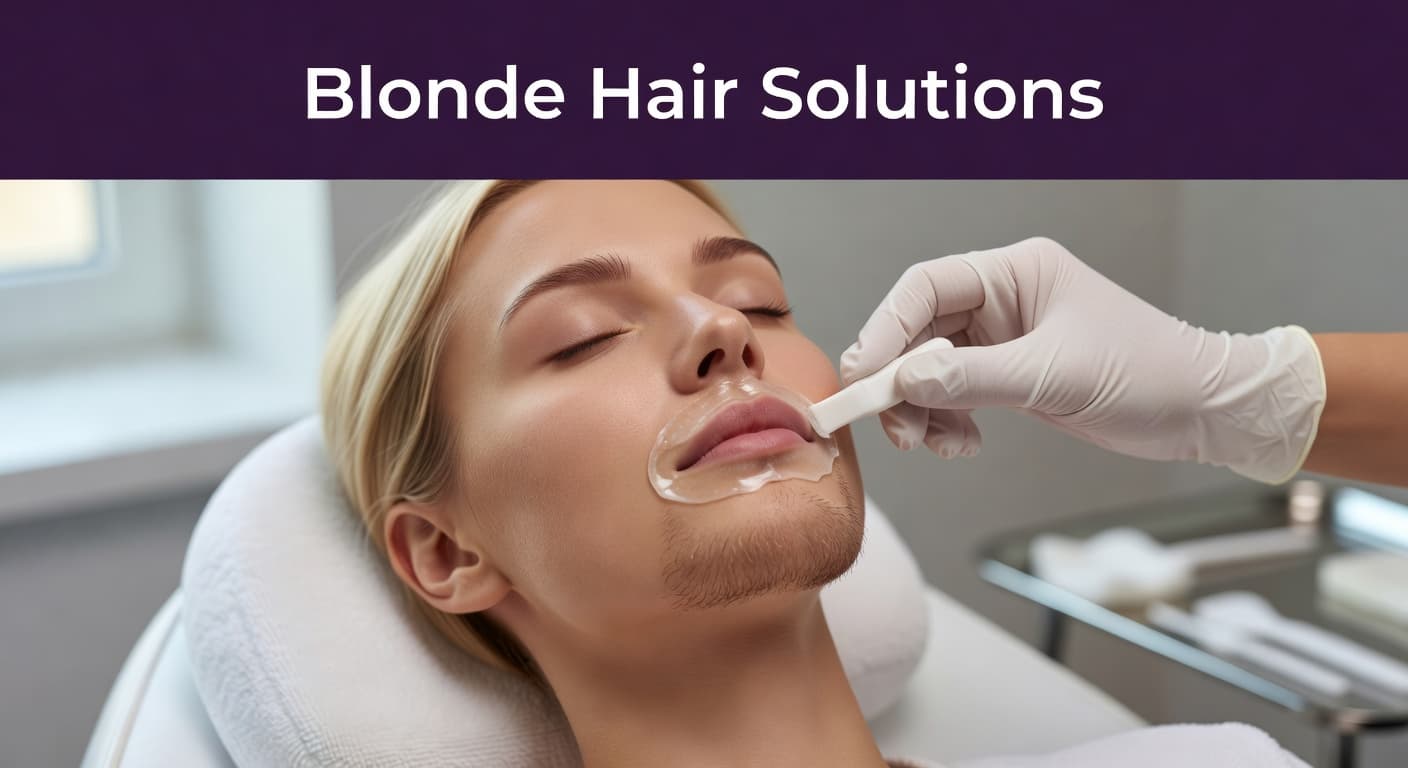
For someone with dark hair on the upper lip or chin, laser hair removal may successfully reduce density and slow regrowth. For someone with pale blonde hair, the results can be underwhelming. Sessions may go by with little visible change because the device cannot detect enough pigment to effectively damage the follicle. Laser technology relies on a specific wavelength that targets melanin, meaning it struggles to find a target in hair lacking sufficient pigment. Even a highly specialized Nd:YAG laser may struggle if the hair lacks the necessary dark pigment.
That is why professional laser services are usually described as permanent hair reduction, not permanent hair removal. It can reduce how much hair grows and how often it returns, but it does not reliably eliminate every follicle forever. When comparing options, keep in mind that at-home devices are significantly less powerful and often lack the precision wavelength needed for consistent results.
There is another issue people do not always discuss. Some practitioners are cautious with laser hair removal on fine facial hair because certain cases can lead to side effects, such as paradoxical hypertrichosis, where the treatment stimulates more noticeable growth rather than less. While these side effects are not the most common outcome, they are a real concern when the hair is fine, soft, or hormonally influenced.
This does not mean laser hair removal is inherently bad, but it does mean it is highly selective. It shines when the match is right, but it disappoints when the match is wrong. If your facial hair looks clearly brown or black, it may be a good candidate for permanent hair reduction. If your facial hair has very light pigment and appears gold, white, or peach-fuzz soft, laser is often a gamble.
Ultimately, a poor candidate for laser hair removal does not need more sessions. She needs a different method.
Why electrolysis often works better for light facial hair
Electrolysis takes a different route to treatment. A tiny probe is placed directly into the hair follicle, and energy is used to destroy the cells that produce hair. Because the target is the follicle itself rather than the hair pigment, color is not a factor.
This is the primary advantage for those seeking blonde hair removal. Unlike laser hair removal, which relies on contrast between hair and skin, electrolysis can effectively treat blonde, gray, white, red, and dark hair across all skin tones. For facial hair, especially scattered or stubborn strands, that one by one precision is often exactly what is needed.
Admittedly, this process is slower than laser hair removal. There is no way around that. Each follicle is treated individually, and because the hair growth cycle means hairs are not all active at once, you need repeated appointments to ensure every follicle is addressed during the correct phase of the hair growth cycle. Maintaining realistic expectations is crucial, as total clearance requires patience and dedication.
Still, slow and effective beats fast and ineffective. Electrolysis is the only method recognized by the FDA as permanent hair removal. Once a follicle is properly treated and destroyed, that specific area should not produce hair again.
The face does come with one complication: hormones. If you deal with PCOS, menopause related changes, or other hormonal shifts, new follicles can become active over time. This does not mean electrolysis failed; it simply means your body may be creating new hair growth later. Having realistic expectations about these hormonal influences will help you navigate your treatment plan.
Most people also want to know what to expect after a session. Temporary redness is common, and small pinpoint scabs can occur. With proper technique and aftercare, these usually heal well.
When it comes to blonde hair removal, electrolysis often wins because it is designed to fit the problem. If the hair is light and visible to you, but nearly invisible to a laser, electrolysis is the method that can finally do the job.
Cost, pain, time, and long-term results
This is where the better option depends on your specific goals. Here is a quick side-by-side comparison of your options for managing facial hair.
| Factor | Laser hair removal on the face | Electrolysis on the face |
|---|---|---|
| Works on light/blonde hair | Limited because it lacks pigment | Effective for any hair follicle |
| Best for | Dark, coarse hair | Any hair color, especially blonde hair removal |
| Claim type | Permanent hair reduction | Permanent hair removal |
| Session speed | Faster, but requires many visits | Slower, treating one hair follicle at a time |
| How it is priced | By area or session package | Often by the hour |
| Peach fuzz/Vellus hair | Poor candidate for laser | Can be treated directly via electrolysis |
| Long-term value | High for dark hair, low for light hair | High for all hair colors |
The bottom line is simple. Laser hair removal can be cheaper per session, but that does not always make it the most economical choice overall. If your facial hair barely responds to treatment, you might spend a significant amount for minimal results. Because blonde hair removal requires targeting specific structures, electrolysis often costs more in patience and time, yet less in wasted effort.
When considering the price of laser hair removal, remember that IPL and at-home devices are often marketed as budget-friendly alternatives. However, these tools usually lack the power required for effective blonde hair removal compared to professional equipment. While shaving offers an immediate and inexpensive way to manage appearance, it is only a temporary fix that requires constant maintenance compared to the lasting nature of electrolysis.
Pain is personal, and both treatments can sting. The upper lip is notoriously sensitive, while the chin is usually more manageable. Laser hair removal typically feels like quick snaps of heat, whereas electrolysis feels like repeated, tiny pinches. Neither option is entirely pain-free, though both are well-tolerated by most people. If you find the process uncomfortable, numbing creams may help.
Timing matters as well. Laser hair removal usually requires fewer, widely spaced visits. In contrast, electrolysis often starts with a schedule of regular appointments that taper off as the hair clears. Although this intensive schedule can feel daunting, it is highly effective for facial areas that require precision.
Ultimately, professional laser hair removal relies on the presence of melanin pigment to destroy the root. If your hair is too light, this light-based approach will be ineffective. While shaving is a quick way to clear your skin, it does not provide the permanent results that you get from electrolysis. When you compare the efficacy of different methods, the answer often depends on whether you value a quick process that may miss light hair or a methodical, targeted approach designed for permanent results.
How to choose the right option for your face
Start with honesty about the hair itself. Do not look at the hair you hope you have, but rather the hair you actually see in natural daylight.
If your facial hair is pale blonde, white-blonde, gray, red, or a mix of colors, electrolysis is usually the safer bet for effective blonde hair removal. If your facial hair is characterized by dark hair that is coarse and clearly visible against your skin, laser hair removal may be worth exploring.
A few practical rules help guide your decision:
- Fine, light upper lip hair usually points toward electrolysis as the preferred method.
- Scattered chin hairs, especially those with mixed pigments, often respond better to electrolysis.
- Dense patches of dark hair may be worth a laser hair removal consultation.
- Soft peach fuzz is usually not a great target for professional laser treatments.
It also helps to think about your personal goals. Do you want broad reduction, or do you want individual hairs gone? Laser hair removal is primarily designed for widespread reduction, while electrolysis offers more exact, permanent results. When setting your expectations for treatment outcomes, remember that laser hair removal is about thinning density, whereas electrolysis is about total clearance.
Always ask direct questions during your consultation. Is my hair dark enough for laser? Is there a risk of hair stimulation in this specific area? How many sessions are realistic for my hair removal process? What does long term maintenance usually look like?
If the answers provided sound vague, keep looking for a different provider.
A close in-person assessment can save you significant money and frustration. If you are specifically interested in blonde hair removal or want a face-specific opinion, Call Theresa’s Face and Body for an appointment and get a professional consultation based on your actual hair, not a generic package pitch.
Frequently Asked Questions
Why does laser hair removal struggle with blonde facial hair?
Laser hair removal works by targeting the melanin pigment within the hair follicle to heat and destroy it. Because blonde, white, and red hairs contain significantly less of the necessary pigment, the laser light fails to absorb properly and cannot effectively damage the follicle.
Is electrolysis painful?
Most people describe the sensation of electrolysis as a series of tiny, repeated pinches as the probe treats each individual follicle. While the upper lip is generally more sensitive than the chin, discomfort is usually well-tolerated and can be managed with topical numbing creams if necessary.
Can I use at-home devices for blonde facial hair?
At-home devices generally lack the power and the precise, specialized wavelengths required to treat light-colored hair effectively. Even professional-grade lasers struggle with light hair, so home-use gadgets are typically ineffective for permanent results on blonde, gray, or vellus hair.
How many electrolysis sessions will I need?
Because electrolysis treats hair individually and only during its active growth phase, the number of sessions varies depending on the density of your hair and the specific area being treated. It is a commitment that requires patience, as you will need consistent appointments over time to ensure every follicle is permanently addressed.
Conclusion
Blonde facial hair is where the typical guidance for laser hair removal often falls short. Because the pigments required for the light to lock onto are missing, the method that works beautifully on dark body hair may do little for pale, fine hair on the face. While laser hair removal remains a popular choice for many, its limitations on lighter shades are significant.
For most people comparing these two options, electrolysis is the stronger choice when facial hair is blonde, light, fine, or mixed in color. Electrolysis provides a permanent solution that is completely independent of hair color, making it a reliable alternative. On the face, the best treatment is not always the fastest one. It is the one that can truly target the hair you want gone, which is why choosing the right method is essential for successful blonde facial hair removal.