
Yes, a gentle neck massage can help ease tight muscles after desk work, although relief may be temporary. We recommend gentle pressure, regular movement, and a comfortable workstation rather than relying on massage alone.
Long hours at a computer can leave your shoulders tight and make turning your head uncomfortable. Start by understanding which muscles need attention and how to work on them safely.
Key Takeaways
- Gentle massage may ease desk-related tightness without requiring deep pressure.
- Focus on the upper shoulders, upper back, and base of the skull.
- Lasting comfort also depends on movement breaks and desk adjustments.
Why Desk Work Creates Neck Tension
Your adult head typically weighs around 10 to 12 pounds, and your neck muscles support that weight throughout the day. Forward head posture increases their workload, although fixed claims about extra pounds per inch oversimplify the mechanics.
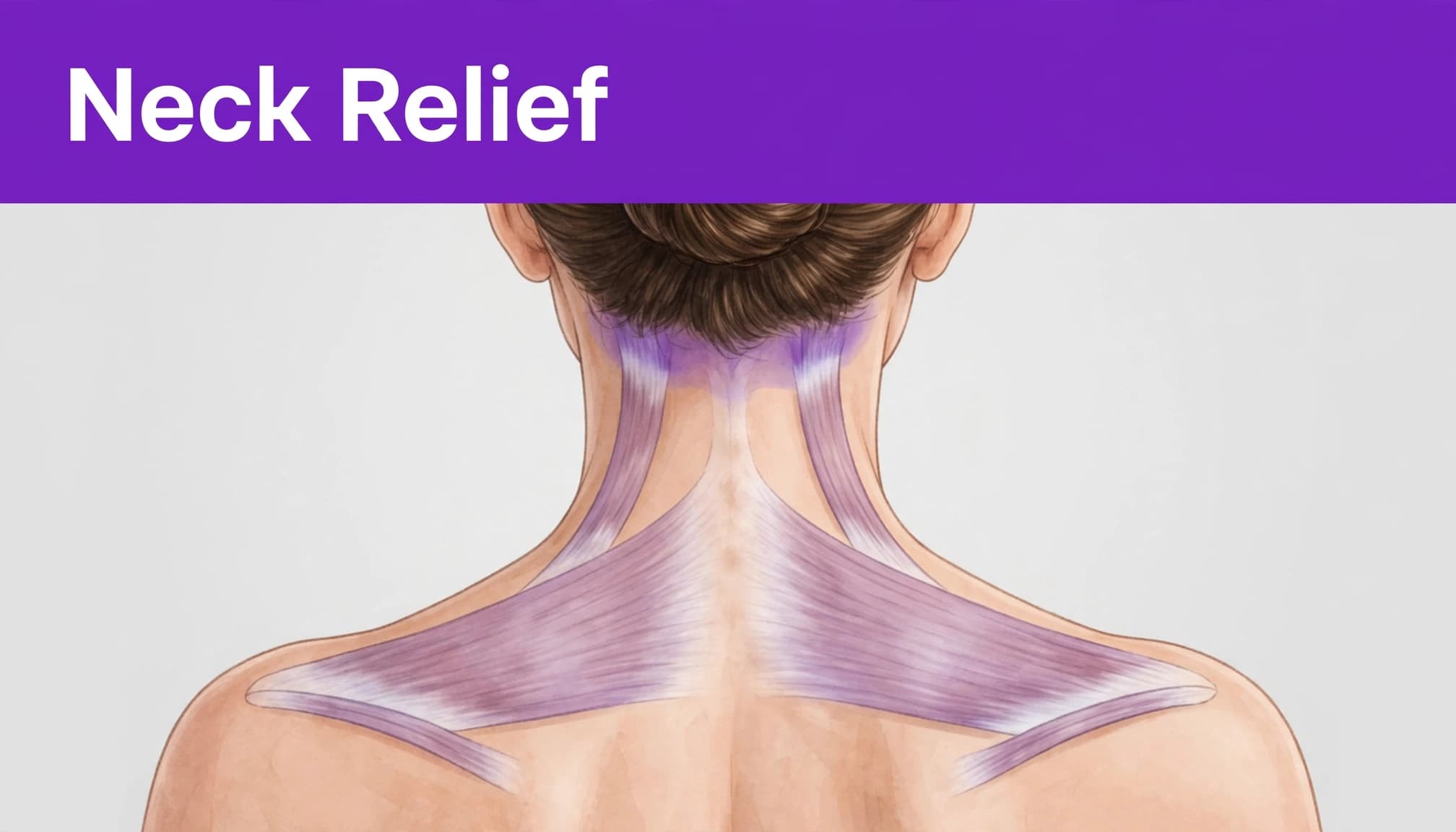
The trapezius is the large superficial muscle covering the back of your neck and extending from the skull toward the mid-back. The upper trapezius commonly feels tight across the shoulders.
The sternocleidomastoid runs along the front and side of your neck. Don’t press directly on this sensitive area.
The levator scapulae connects the transverse processes of the upper four cervical vertebrae to the upper inner corner of your shoulder blade. It can contribute to stiffness when your shoulders stay raised.
Small suboccipital muscles beneath the skull can also become tender.
Safety Before Starting Neck Massage
Avoid intense pressure on the front or sides of your neck, where arteries, lymph nodes, nerves, and other sensitive structures are located. Don’t press directly on the cervical spine.
Check with your doctor before massage if you have whiplash, a previous stroke, artery problems, cervical spine conditions, or unexplained neck pain.
Stop immediately if pressure causes pain, lightheadedness, dizziness, tingling, or numbness. Sudden severe neck pain with weakness, trouble speaking, or a severe headache needs emergency assessment. Fever with a stiff neck also needs urgent care.
A new stiff neck needs gentle handling rather than forceful stretching. Recurring or concerning symptoms, including tension headaches, deserve medical assessment instead of repeated attempts to massage them away.
A Gentle Self-Massage Routine for Neck Tension
Try this brief home massage routine as a form of self-massage, sitting comfortably with your feet supported and shoulders relaxed. Use pressure that feels comfortable and allows normal breathing throughout.
1. Loosen the Upper Shoulders
Place your opposite hand over the fleshy upper trapezius between your shoulder and neck. Use gentle gliding strokes or light kneading for about one minute per side.
For a tender spot, sometimes called a trigger point, apply light, comfortable fingertip pressure, as in acupressure, for 10 to 20 seconds, then release. This is a common myofascial release approach. Don’t increase pressure because a spot remains tight.
The upper inner corner of your shoulder blade is near the levator scapulae attachment. Work gently around the surrounding muscle, without digging into bone or reaching toward the front of your neck.
2. Soothe the Base of the Skull
Rest your fingertips against the soft tissue just beneath the back of your skull. Make small, gentle circles for about 30 seconds.
Keep your head supported and avoid pushing upward forcefully. This suboccipital area can be sensitive, so lighter pressure is usually more comfortable than deep work.
3. Use Massage Balls on the Upper Back
Place two tennis balls or massage balls side by side inside a sock, securing them so they stay together.
Stand against a wall with the balls on your upper back, below the neck, and your spine between them. Lean lightly and make small movements for 30 to 60 seconds. Keep the balls off the spine and avoid rolling them onto the neck.
Pair Massage With Better Desk Habits
Massage works on soft tissues, as described in Mayo Clinic’s massage overview. However, it doesn’t remove the daily strain caused by an awkward workstation.
Use desk ergonomics to guide workstation adjustments. Keep your monitor directly ahead, support your forearms, and allow your shoulders to relax. Mayo Clinic’s office ergonomics guide also recommends avoiding cradling a phone between your head and shoulder.
For a chin tuck, sit upright and draw your chin straight backward without tilting your head. Repeat five to ten times, up to two or three times daily, if comfortable. Take regular standing and walking breaks, and gently move your neck through a comfortable range of motion. Keep movement pain-free and stop if symptoms worsen.
Professional Massage and Comfortable Preparation
For general relaxation, Swedish massage uses flowing strokes and gentle kneading. For recurring tightness, deep tissue massage uses slower, more focused pressure. Stronger pressure isn’t automatically more effective, and treatment shouldn’t require you to tolerate pain.
Before treatment, tell your massage therapist about your symptoms, medical history, preferred pressure, and any areas you don’t want touched. Speak up if pressure feels uncomfortable. A therapist may adapt gentle fascial stretch or pin-and-stretch techniques to your comfort, but these options aren’t necessary and don’t guarantee relief.
Manscaping isn’t required before massage, and natural body hair doesn’t prevent treatment. For men’s grooming beforehand, a shower and clean clothing are enough; shaving the back, chest, or intimate areas isn’t necessary.
Avoid rushing into shaving or waxing before your appointment if your skin becomes sensitive afterward. Let us know about freshly treated areas so friction can be avoided. Drink water normally before and after treatment.
Frequently Asked Questions
Is a Massage Gun Safe for the Neck?
We recommend avoiding massage guns on the neck. Percussion can be too intense, particularly over the cervical spine and artery areas at the front and sides.
How Often Can Gentle Self-Massage Be Used?
A few times weekly is generally reasonable for otherwise healthy adults. Reduce frequency if tenderness develops, and seek medical advice if you have an injury or relevant health condition.
Comfortable Relief Starts With Gentle Care
A gentle neck massage can provide soothing relief, especially when paired with movement and better desk habits. We recommend comfortable pressure rather than forcing a tight muscle to release.
Call Theresa’s Face and Body for an appointment to discuss your concerns and a massage approach suited to your comfort.